
BY Charles Jackson
Mounting Scrutiny Over Oil Consumption in Hyundai and Kia Vehicles as Owner Complaints Persist
 Hyundai and Kia continue to face regulatory scrutiny, class-action litigation, and consumer complaints tied to excessive oil consumption in a range of gasoline direct injection (GDI) engines produced primarily between 2011 and 2021. The issue—frequently traced to carbon-stuck piston oil rings—has been widely documented in legal filings, federal safety investigations, service bulletins, and social media forums.
Engines and Models Under Review
The most commonly cited engines include the Theta II (2.0L and 2.4L), Nu (2.0L), and Gamma (1.6L) GDI platforms. Affected models span much of both automakers’ lineups, including the Hyundai Sonata, Santa Fe, and Tucson, as well as the Kia Optima, Sorento, Soul, and Sportage.
When piston rings fail to properly scrape oil from the cylinder walls, oil enters the combustion chamber and burns. Owners report symptoms including frequent low-oil warnings, engine knocking, stalling, loss of power, excessive exhaust smoke, and in some cases, vehicle fires. Manufacturer service bulletins typically define “excessive consumption” as more than one quart of oil per 1,000 miles—a threshold that can trigger diagnostic procedures or engine replacement under certain warranty programs.
Recalls and Legal Settlements
In 2025, Kia recalled more than 137,000 2021–2023 Seltos and Soul vehicles due to defective piston oil rings that could increase oil consumption and pose a fire risk. The recall followed years of engine-related campaigns and settlements involving earlier GDI engines.
In 2024, a major settlement expanded coverage to approximately 2.1 million additional vehicles equipped with the 1.6L Gamma GDI engine. Under the agreement, qualifying owners received an extended powertrain warranty of 15 years or 150,000 miles, covering inspections and repairs related to connecting rod bearing failure—a condition that can follow prolonged oil starvation.
To qualify for this extended coverage, owners must complete a free Knock Sensor Detection System (KSDS) software update at an authorized dealership. The KSDS is designed to detect early signs of bearing wear and protect the engine from catastrophic failure. Failure to obtain the update can void eligibility for certain warranty claims.
Owners are typically required to undergo a formal oil consumption test and maintain documented oil change records. Missing oil changes for extended intervals—often defined as 15,000 miles or one year—may disqualify claims under manufacturer policy.
Owner Experience Raises Additional Concerns
Beyond the broader litigation landscape, some owners report additional challenges at the dealership level.
In one case, a lessee attempted to return a Hyundai vehicle at the end of a three-year lease at South Bay Hyundai in Torrance after the originating dealership closed. Despite being within the mileage terms, the dealer allegedly refused to accept the return without a $1,000 payment. The lessee ultimately purchased the vehicle.
In 2024, the vehicle’s check engine light illuminated. South Bay Hyundai reportedly cleared the diagnostic code without performing substantive repairs. Weeks later, the issue returned. A second dealership, Hyundai of Carson, also cleared the light. On a subsequent visit, a service advisor attributed the problem to a “damaged canister,” quoting approximately $1,500 for replacement. The owner, who had an active warranty, reports that the warranty company denied the claim because the dealer characterized the part as physically damaged rather than defective.
The owner then sought independent repair. The canister was replaced, and the removed component reportedly showed no physical damage beyond normal wear. However, replacing the part did not resolve the underlying issue. The check engine light returned, and the vehicle began exhibiting more severe symptoms: engine shutdowns, excessive oil burning, and fumes entering the cabin.
Broader Implications
Consumer complaints filed with federal regulators and posted across automotive forums frequently describe similar patterns: repeated check engine light resets, oil consumption monitoring procedures, and disputed warranty claims. Legal settlements have provided engine replacements and extended warranties for millions of vehicles, yet some owners continue to report difficulty obtaining definitive repairs.
As Hyundai and Kia implement recalls, software updates, and settlement remedies, affected drivers are advised to check their VIN on the manufacturer’s recall website, confirm completion of the KSDS update where applicable, document oil consumption carefully, and retain all maintenance records.
With millions of vehicles covered under extended warranty programs, the issue remains one of the most significant engine-related consumer controversies in the modern automotive sector.
 annually on February 7. The resolution, H.Res. 1039, underscores the continued disproportionate impact of HIV/AIDS on Black Americans and calls for renewed national commitment to prevention, testing, treatment, and the elimination of health disparities.
 Why the United States Remains an Outlier on Universal Health Care
 Children’s Health Insurance Program (CHIP), and Affordable Care Act marketplaces have expanded access, coverage remains fragmented and conditional. As of recent estimates, tens of millions of Americans remain uninsured or underinsured, often delaying care because of cost concerns.
 infrastructure — similar to roads, public schools, or emergency services — healthcare in the U.S. is frequently debated through the lens of individual responsibility, market competition, and ideological resistance to government involvement.
 universal coverage, the United States spends more on healthcare per capita than any other country in the world. Yet this spending does not consistently translate into superior health outcomes. Metrics such as life expectancy, maternal mortality, and preventable hospitalizations often lag behind those of nations with universal systems. Administrative complexity, profit-driven pricing structures, and fragmented billing systems contribute to inefficiencies that inflate costs without proportional public benefit.
 Public opinion also reflects contradiction. Polling consistently shows that large majorities of Americans support protections for pre-existing conditions, Medicare for seniors, and expanded public health programs. However, support drops when proposals are framed as “government-run” or labeled with politically charged terminology, illustrating how messaging shapes perception more than policy substance.
 risk and guarantee baseline care for all residents. The United States, by contrast, continues to operate within a hybrid model that blends public programs with private profit, leaving coverage uneven and access dependent on income, employment, and geography.
 Under California Vehicle Code sections 23123 and 23123.5 (often referred to as the “Hands-Free” or “No-Touch” laws), the price of a ticket is:
 within 36 months adds one point to your driving record, which can increase your insurance rates.
 injustice. Supporting wrongdoing made you complicit in it.
 shows that the impact rarely stops with the original targets. It expands. So as we move forward, it is important to consider not only what is happening, but who we choose to stand with, and what our support — or lack of resistance — ultimately represents.
 The latest backlash emerged after Minaj appeared at a Turning Point USA event alongside conservative commentator Erika Kirk. According to reporting by the Latin Times, the appearance prompted online users to revisit a 2018 Instagram post in which Minaj described arriving in the United States as a child without legal immigration status. The resurfaced post, originally shared amid public outrage over family separations at the U.S.–Mexico border, expressed empathy for migrant children affected by enforcement policies.
 “please stop this,” according to excerpts cited by the Daily Mail. The post circulated widely during a period when images of migrant children held in detention facilities dominated news coverage.
 On January 3, 2026, the United States conducted a large-scale military operation in Venezuela that resulted in the capture of Venezuelan President Nicolás Maduro and his wife, Cilia Flores, and their transfer to the United States to face criminal charges. President Donald Trump publicly announced the success of the operation, which involved coordinated strikes in and around Caracas and culminated in Maduro’s removal from power. U.S. officials characterized the mission as necessary to enforce federal indictments against Maduro related to narcotics trafficking and terrorism-linked allegations. Maduro and Flores were subsequently arraigned in a federal courthouse in Manhattan, entering not guilty pleas to the charges they face.
 International reactions have mirrored this polarization. Many governments, especially in Latin America, Africa, and Asia, condemned the intervention as a violation of international law and of Venezuela’s sovereignty. Observers highlighted that capturing a sitting head of state through military force sets a contentious precedent and could undermine longstanding principles of non-intervention enshrined in the United Nations Charter. A U.N. emergency session underscored these concerns, with representatives from major world powers sharply divided over the legality and implications of the U.S. action.
 leaders loyal to Maduro’s government have challenged the U.S. narrative of his capture and legitimacy, resulting in competing assertions of authority within the country. This persistent ambiguity has fueled ongoing international concern about the risk of further conflict and humanitarian consequences for Venezuelan civilians.
 Traffic Laws Taking Effect in January 2026 Reflect a Broader National Push for Accountability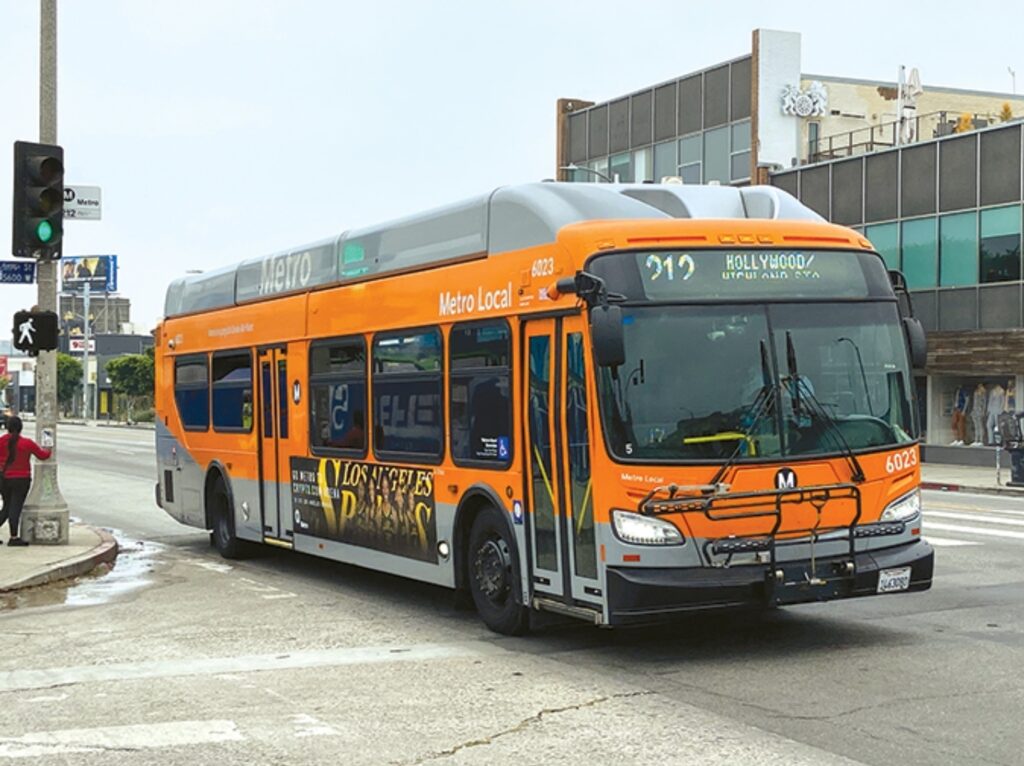
 Nikki Minaj had to know that she would never truly be welcomed under the MEGA tent, and that her evolution would end in disaster. How could she expect to go from peddling “Ho” to pimping “Holy”.
 stepped in it, trying to broaden the base by inviting a bunch of hip hopping social media ner-do-wells to join a pretentious cult. Nobody likes or trusts a benidict arnold, or a turn coat snitch. That is what Nikki represents to her liberal fan base, and it’s what she represents to far right stalwarts. In today’s identity politics, nthanothing is worse than identity “code switching.”
 Baby y’all chicks got to stay in ‘yo lane, and leave the manipulative, underhanded shenanigans to the true sharks, snakes, and charlatans on both sides.