Forbes/Reuters:
Oil Prices Hit $100 Again—Trump Touts Cost Hike Benefits
Trump touts oil price gains, saying ‘we make a lot of money,’ angering lawmakers
Oil Wealth and Public Benefit: The United States vs. the United Arab Emirates
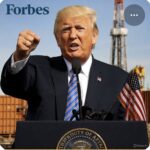 On March 12, 2026, Donald Trump wrote on Truth Social that “the United States is the largest oil producer in the world, by far, so when oil prices go up, ‘we’ make a lot of money.” The statement came as gasoline prices in the United States climbed above roughly $3.60 per gallon following the escalation of the war involving Iran and disruptions to global oil shipping routes.
Forbes
Trump framed rising oil prices as manageable, even suggesting earlier in the week that higher prices were a “very small price to pay” if the conflict eliminated Iran’s nuclear threat.
Yahoo
However, the economic structure of oil wealth in the United States differs sharply from the system used in the United Arab Emirates. A comparison between the two reveals that while both countries produce large amounts of oil, the way oil revenue reaches ordinary citizens is fundamentally different.
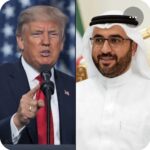 Oil Production vs. Public Benefit in the United States
The United States is currently the world’s largest oil producer, generating millions of barrels of crude oil per day through a combination of conventional drilling and shale production.
FactCheck.org
Yet the financial gains from oil production primarily flow through private industry rather than directly to citizens.
Most U.S. oil production is carried out by private corporations. Revenue from oil sales is distributed to shareholders, corporate executives, and investors, while governments receive tax revenue and royalties. Those funds then enter general federal and state budgets rather than being distributed directly to individuals.
 Economists frequently note that because oil is traded on a global market, American consumers still pay global prices even if the country produces large amounts of oil domestically. If companies can sell oil at higher prices abroad, they will do so, leaving U.S. consumers exposed to the same market forces affecting other countries.
PBS
As a result, rising oil prices generally mean higher costs for American households—especially for gasoline, transportation, and goods whose production relies heavily on petroleum.
The United States does provide some indirect public benefit from energy production through tax revenues, infrastructure spending, and employment in the energy sector. But there is no national program that distributes oil revenue directly to citizens. In practice, higher oil prices tend to benefit energy companies and investors more directly than ordinary consumers.
The UAE Model:
Oil Revenue as Public Welfare
In contrast, the system used in the United Arab Emirates distributes oil wealth to citizens through a government-funded welfare structure.
Although the federation includes several emirates such as Dubai and Abu Dhabi, roughly 96 percent of the UAE’s oil reserves are located in Abu Dhabi. Oil revenue from these resources forms a major pillar of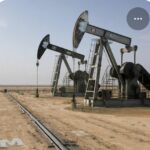 the country’s public
finances.
Rather than distributing cash payments directly, the UAE government channels oil wealth into extensive social benefits for Emirati citizens. These include:
Free or heavily subsidized healthcare
Government-funded education through university
Subsidized utilities
Land grants and interest-free loans for housing
High employment in the public sector
No personal income tax
About 90 percent of working Emirati citizens are employed in government jobs, reflecting the state’s central role in distributing economic benefits.
Dubai itself now relies less on oil and more on tourism, finance, and trade, yet Emirati citizens there still benefit from the broader national system funded in large part by oil revenue.
Two Different Economic Models
The contrast between the United States and the UAE illustrates two very different approaches to natural resource wealth.
In the United States, oil production operates largely through a market-driven private sector model. Oil companies produce and sell energy on global markets, and profits flow primarily to investors and corporations. Government receives tax revenue but does not distribute oil income directly to the population.
In the UAE, oil production is tied closely to state-managed wealth distribution. The government uses oil revenue to fund social programs, infrastructure, and employment that directly benefit citizens.
As a result, when oil prices rise globally, Americans generally experience higher fuel and consumer costs, while in the UAE the financial gains from oil exports more directly support the welfare system that benefits citizens.
Conclusion
The United States and the United Arab Emirates are both major oil producers, yet their citizens experience the results of that production very differently.
Statements suggesting that higher oil prices mean “we make a lot of money” reflect the macroeconomic reality that the United States produces large amounts of oil. But the distribution of that wealth depends on how the industry is structured.
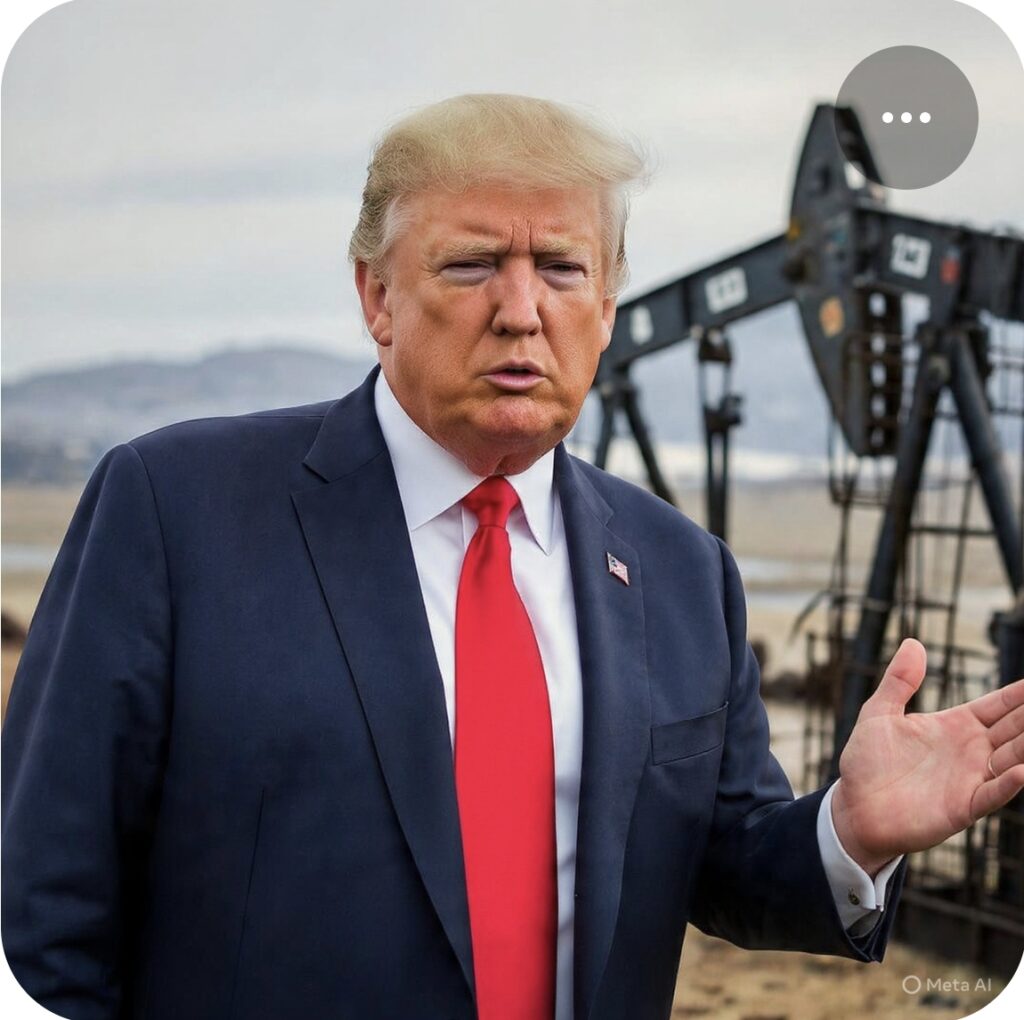 In the American system, oil revenue primarily strengthens corporate profits and government tax receipts, while consumers continue to pay global energy prices. In the UAE’s model, oil income is used more directly to finance public benefits for citizens.
The difference highlights how the management of natural resources—not just the amount produced—determines whether national oil wealth translates into tangible benefits for the public.
While citizens of the UAE are beloved members of the nation’s largesse, sharing in the wealth and bounty of the country, including free health care and higher education,citizens of the United States are scorned and often put upon, should they fall upon the mercy of the state.
When Donald trump smiles, boasts and posts about the bountiful position that the “excursions” of war are raining down – he ain’t talking to or about you, peasant.

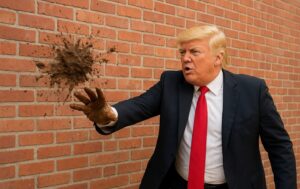 What began as a supposedly nonpartisan national celebration appears to have taken a sharp detour into campaign-country.
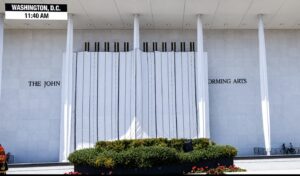 During his first term, Trump successfully lobbied FIFA and secured the winning joint “United Bid” for the U.S., Canada, and Mexico to host the 2026 World Cup.The FIFA World Cup 2026 is officially underway in the United States, Canada, and Mexico. Major city centers across the U.S. are hosting, and “watch parties” are circling the venues and perhaps portions of the world.
 By comparison, China’s power consumption ratio is 51% while the US ratio is a mere 17%. So the big guy’s got me there… Sorta.
 “He” moves forward with his “MY WAY OR THE HIGHWAY, AMERICA” threat. In the middle of a war, he threatens to do nothing for the next nine months, forcing the Constitution to bend to his will, changing voting laws in the middle of the stream, ahead of existing law, hoping to end the established practice of mail-in voting, amidst any other changes that he can institute as a means of complicating the upcoming midterm elections. That “he is certain”, will spell the end of his reign of terror.
 Why the United States Remains an Outlier on Universal Health Care
 Children’s Health Insurance Program (CHIP), and Affordable Care Act marketplaces have expanded access, coverage remains fragmented and conditional. As of recent estimates, tens of millions of Americans remain uninsured or underinsured, often delaying care because of cost concerns.
 infrastructure — similar to roads, public schools, or emergency services — healthcare in the U.S. is frequently debated through the lens of individual responsibility, market competition, and ideological resistance to government involvement.
 universal coverage, the United States spends more on healthcare per capita than any other country in the world. Yet this spending does not consistently translate into superior health outcomes. Metrics such as life expectancy, maternal mortality, and preventable hospitalizations often lag behind those of nations with universal systems. Administrative complexity, profit-driven pricing structures, and fragmented billing systems contribute to inefficiencies that inflate costs without proportional public benefit.
 Public opinion also reflects contradiction. Polling consistently shows that large majorities of Americans support protections for pre-existing conditions, Medicare for seniors, and expanded public health programs. However, support drops when proposals are framed as “government-run” or labeled with politically charged terminology, illustrating how messaging shapes perception more than policy substance.
 risk and guarantee baseline care for all residents. The United States, by contrast, continues to operate within a hybrid model that blends public programs with private profit, leaving coverage uneven and access dependent on income, employment, and geography.
 injustice. Supporting wrongdoing made you complicit in it.
 shows that the impact rarely stops with the original targets. It expands. So as we move forward, it is important to consider not only what is happening, but who we choose to stand with, and what our support — or lack of resistance — ultimately represents.
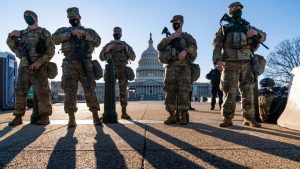 On January 3, 2026, the United States conducted a large-scale military operation in Venezuela that resulted in the capture of Venezuelan President Nicolás Maduro and his wife, Cilia Flores, and their transfer to the United States to face criminal charges. President Donald Trump publicly announced the success of the operation, which involved coordinated strikes in and around Caracas and culminated in Maduro’s removal from power. U.S. officials characterized the mission as necessary to enforce federal indictments against Maduro related to narcotics trafficking and terrorism-linked allegations. Maduro and Flores were subsequently arraigned in a federal courthouse in Manhattan, entering not guilty pleas to the charges they face.
 “Just last month, Congress repealed two separate authorizations of military force in Iraq, but Donald Trump once again chose to unilaterally attack, and ignore Congress’ Constitutional role. It is Congress that authorizes such force, and Trump’s abuse of power demands a serious and immediate response from Congressional members of both parties. Donald Trump has now gone so far as to publicly boast about his detention of Nicolás Maduro and his wife and to suggest that he can unilaterally determine who governs Venezuela or even claim authority to run the country himself. That is not strength. It is reckless, delusional, and extremely dangerous.”
 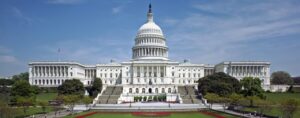 International reactions have mirrored this polarization. Many governments, especially in Latin America, Africa, and Asia, condemned the intervention as a violation of international law and of Venezuela’s sovereignty. Observers highlighted that capturing a sitting head of state through military force sets a contentious precedent and could undermine longstanding principles of non-intervention enshrined in the United Nations Charter. A U.N. emergency session underscored these concerns, with representatives from major world powers sharply divided over the legality and implications of the U.S. action.
 leaders loyal to Maduro’s government have challenged the U.S. narrative of his capture and legitimacy, resulting in competing assertions of authority within the country. This persistent ambiguity has fueled ongoing international concern about the risk of further conflict and humanitarian consequences for Venezuelan civilians.
 Congresswoman Maxine Waters, on Friday sharply condemned the federal government’s handling of food-assistance payments as part of the ongoing funding standoff, and directed families in her district to local relief resources while the legal fight over SNAP continues.
 Waters’ statement pointed constituents to concrete, actionable resources in Los Angeles County and in the cities that fall within California’s 43rd Congressional District — including Inglewood, Hawthorne, Gardena, Lawndale, Compton and Torrance — where municipal and nonprofit networks are expanding emergency assistance while the federal picture remains unsettled. Her office listed phone and web contacts for food help and programs that serve seniors, families and young children.
 Urgent Communication
 The office of Maxine Waters (D-CA) has issued a strong condemnation of what it describes as a “mass firing” at the U.S. Department of Housing and Urban Development (HUD) during the current federal government shutdown. On October 14, 2025, Waters — ranking Democrat on the House Financial Services Committee — released a statement asserting that roughly 442 HUD employees have been terminated, citing figures from the Office of Management and Budget (OMB).
 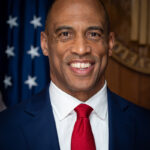 allegations that the agency under Scott Turner may be planning to shutter a significant portion of its regional presence. In April 2025 she sent a letter to the Government Accountability Office (GAO) and HUD’s Office of Inspector General seeking inquiry into whether HUD was meeting its legal obligations to maintain regional offices.