No Matter Who Is At Fault, A Tent Is Not A Home.
Congresswoman Maxine Waters Condemns Trump Administration’s Attack on Homelessness Programs
By Charles Jackson
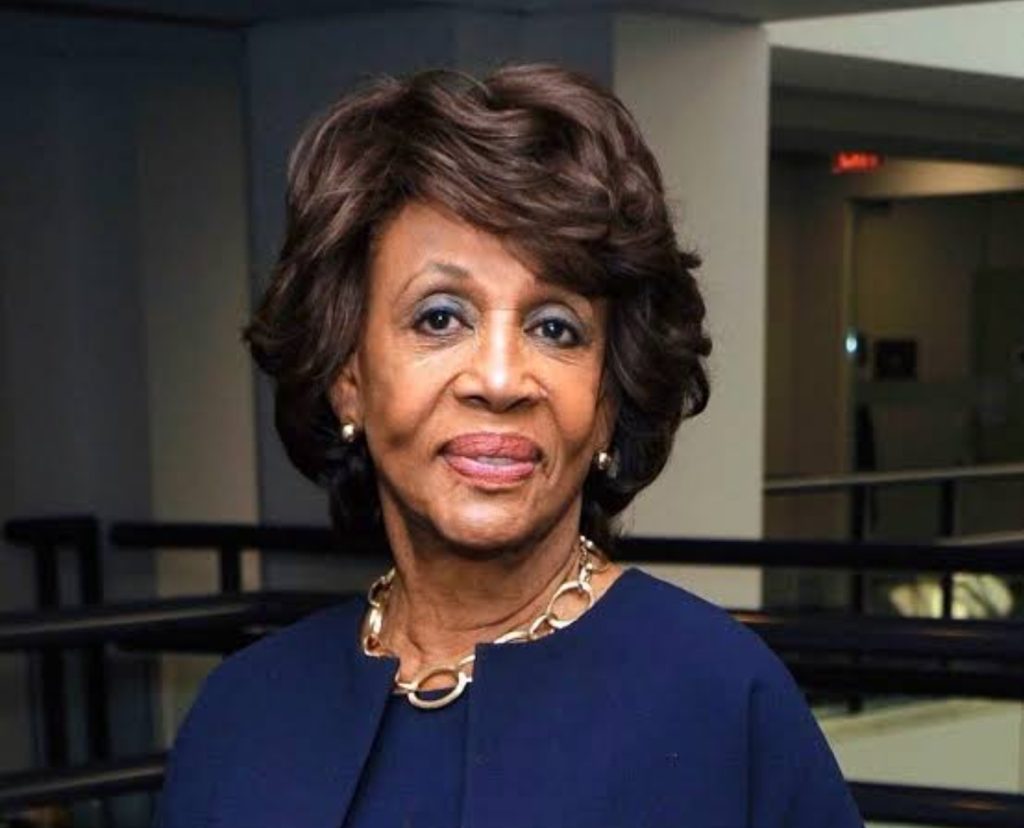
 Congresswoman Maxine Waters has delivered a forceful rebuke of the Trump administration over its latest confrontation with Los Angeles and the agencies attempting to address one of the region’s most persistent humanitarian problems: homelessness.
Waters, who represents California’s 43rd Congressional District and serves as the ranking Democrat on the House Financial Services Committee, praised a federal court decision temporarily preventing the administration from suspending the Los Angeles Homeless Services Authority from federal homelessness grant programs.
At stake is approximately $241 million in federal funding, along with additional near-term funding supporting programs that provide services to more than 11,000 people.
For Waters, however, the dispute goes well beyond dollars.
Los Angeles County continues to face a staggering homelessness crisis, with nearly 73,000 people experiencing homelessness on any given night. They are individuals and families already living at society’s most vulnerable edge. Removing services designed to help them, Waters argues, does nothing to solve homelessness. It risks making an already desperate situation considerably worse.
Her criticism of the administration is unmistakable.
Rather than joining Los Angeles officials in confronting the shortage of affordable housing and the complicated causes of homelessness, Waters contends that the federal government has chosen confrontation. Suspending funding would threaten services without providing a meaningful alternative for the thousands of people depending upon them.
That is what makes the policy particularly troubling.
Government certainly has the right—and the responsibility—to demand accountability for taxpayer money. Homelessness programs should be expected to demonstrate results, operate efficiently and correct failures when they occur.
But accountability and abandonment are not the same thing.
 Taking money away from programs serving people who have nowhere else to go does not magically produce housing. It does not lower rents, create shelter beds, expand mental-health treatment or provide permanent supportive housing.
It simply removes resources.
U.S. District Judge David O. Carter’s intervention temporarily stopped that from happening, a decision Waters welcomed as an important reprieve. Yet she cautioned against confusing a courtroom victory with a solution to homelessness itself.
The larger problem remains.
Americans need affordable housing, stable communities and a federal housing policy capable of recognizing homelessness as something more complicated than people sleeping on sidewalks.
Waters has advocated increased federal investment through her Ending Homelessness Act and has also pointed to bipartisan congressional efforts on housing as evidence that lawmakers with significant political differences can still work toward practical solutions.
Her message is ultimately a simple one: Government cannot claim to be fighting homelessness while simultaneously weakening the programs responsible for helping homeless people find their way back into housing.
The court may have protected these programs for the moment.
But the people sleeping in tents, automobiles, shelters and on sidewalks tonight cannot live on temporary court orders.
They need somewhere to live.
=====================
Ms. Waters’ full text
https://iqconnect.house.gov/iqextranet/view_newsletter.aspx?id=107826&c=CA43MW

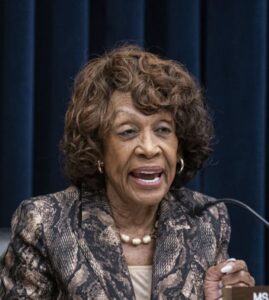 hosted a telephone town hall for residents of California’s 43rd Congressional District. The event followed a familiar and increasingly important format in modern civic life: structured, accessible, and designed to reach a broad audience across a large and diverse community.
 to replicate the intensity or spontaneity of live, in-person gatherings. Instead, they serve a different purpose: scale and accessibility.
 For many residents, especially seniors or those balancing work and family responsibilities, this may be the most realistic way to connect with their representative.
 able to speak—sharing concerns about housing affordability, economic opportunity, healthcare access, and public safety. These are not new issues in the district, but they remain urgent, and the town hall provided a platform for them to be voiced directly.
 The 43rd District operates within the broader framework of Los Angeles County, a region often described as aligned with sanctuary policies. This context shapes many of the conversations around public safety, immigration, and community trust.
 writer of this article, have attended several of Congresswoman Waters’ live town halls, and that perspective is important. Those settings often allow for a different kind of energy—sometimes more assertive, sometimes more interactive, but always more immediate.
 Nonviolent protest, silent marches, and sit-ins were not just acts of resistance; they were also acts of presence. They created space for voices to be seen and felt, even without extended dialogue.
 annually on February 7. The resolution, H.Res. 1039, underscores the continued disproportionate impact of HIV/AIDS on Black Americans and calls for renewed national commitment to prevention, testing, treatment, and the elimination of health disparities.
 injustice. Supporting wrongdoing made you complicit in it.
 shows that the impact rarely stops with the original targets. It expands. So as we move forward, it is important to consider not only what is happening, but who we choose to stand with, and what our support — or lack of resistance — ultimately represents.
 International reactions have mirrored this polarization. Many governments, especially in Latin America, Africa, and Asia, condemned the intervention as a violation of international law and of Venezuela’s sovereignty. Observers highlighted that capturing a sitting head of state through military force sets a contentious precedent and could undermine longstanding principles of non-intervention enshrined in the United Nations Charter. A U.N. emergency session underscored these concerns, with representatives from major world powers sharply divided over the legality and implications of the U.S. action.
 leaders loyal to Maduro’s government have challenged the U.S. narrative of his capture and legitimacy, resulting in competing assertions of authority within the country. This persistent ambiguity has fueled ongoing international concern about the risk of further conflict and humanitarian consequences for Venezuelan civilians.
 The Fair Competition for Small Business Act seeks to close this enforcement gap by amending the Clayton Act to explicitly authorize state attorneys general to bring civil actions for monetary damages when violations of the Robinson-Patman Act occur. This change would place Robinson-Patman enforcement on similar footing with other federal antitrust laws, giving states the ability not only to stop unlawful practices but also to recover damages on behalf of affected businesses.
 Public reaction reflected in local, national, and industry-focused social media discussions has highlighted several recurring themes. Small business owners and advocacy groups have shared firsthand accounts of struggling to compete with larger rivals due to unequal pricing and contractual terms. Community organizations have emphasized the connection between independent retailers and neighborhood stability, noting that store closures can exacerbate food access challenges and economic decline, particularly in underserved areas. At the same time, policy analysts and legal commentators have pointed to recent regulatory actions and court filings as signs of renewed attention to antitrust enforcement more broadly, framing the legislation as part of a larger shift in competition policy.
 1man1vote:
  Over the course of a packed two-day schedule, Congresswoman Maxine Waters engaged with thousands of residents across Los Angeles County’s 43rd District, participating in seven major community events centered on public health, small business development, food security, veterans’ support, LGBTQ+ history, and youth-focused service initiatives. Across social media platforms, attendees documented an active weekend marked by large turnouts, community partnerships, and—in several cases—high levels of volunteer engagement.
 than 1,000 participants. As Co-Chair of the Congressional Task Force on Alzheimer’s Disease, she addressed the crowd with an emphasis on federal investment and caregiver support. She noted her longstanding collaboration with national Alzheimer’s organizations and highlighted the substantial growth in federal research funding achieved over the past decade.
 Basement’s newest South Bay location and its accompanying SnowFest celebration. The event drew families, outdoor recreation groups, and local officials.
 of LGBTQ+ civil rights leader Morris Kight’s ashes atop the Chapel of the Gower Mausoleum. Kight, a pioneering activist whose influence shaped both Los Angeles and the national movement, was commemorated by advocates, historians, and community partners.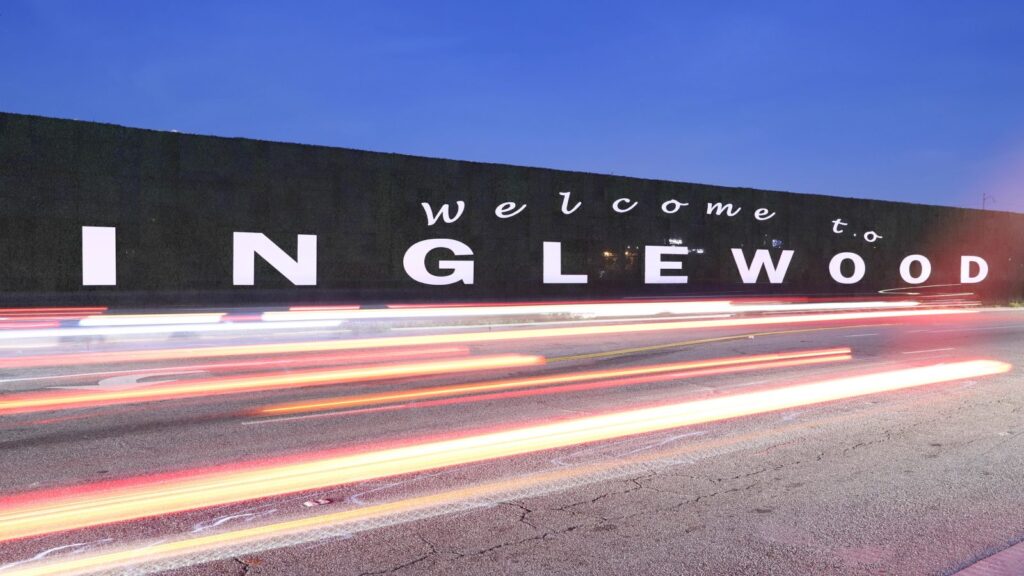
 From Jesse Owens Park, the Congresswoman moved to Hawthorne VFW Post 2075 to assist with its annual Thanksgiving dinner for veterans. Established in 1943, the post is one of the oldest in the South Bay and continues to serve as a center of support, connection, and service.
 different dimension of community need. Her schedule ranged from health advocacy to LGBTQ+ historical recognition, and from family assistance efforts to fitness-based community gatherings.
 Waters’ statement pointed constituents to concrete, actionable resources in Los Angeles County and in the cities that fall within California’s 43rd Congressional District — including Inglewood, Hawthorne, Gardena, Lawndale, Compton and Torrance — where municipal and nonprofit networks are expanding emergency assistance while the federal picture remains unsettled. Her office listed phone and web contacts for food help and programs that serve seniors, families and young children.
 v- Wade, the ACA has been on the resident’s seek and destroy list every since President Obama “clowned” Donald Trump was at the 2011 White House Correspondents’ Dinner, where he heavily mocked trumplethinskin over the “birther” conspiracy theory.