
Los Angeles Community Weighs In as Metro Advances La Brea Avenue Bus Priority Lanes.
Los Angeles
As the Los Angeles County Metropolitan Transportation Authority (Metro) moves forward with expanding bus priority lanes along La Brea Avenue, planners and residents are preparing to engage in public hearings this week. The project, intended to improve regional transit service, has prompted debate over traffic impacts for drivers and commuters who use the corridor daily.
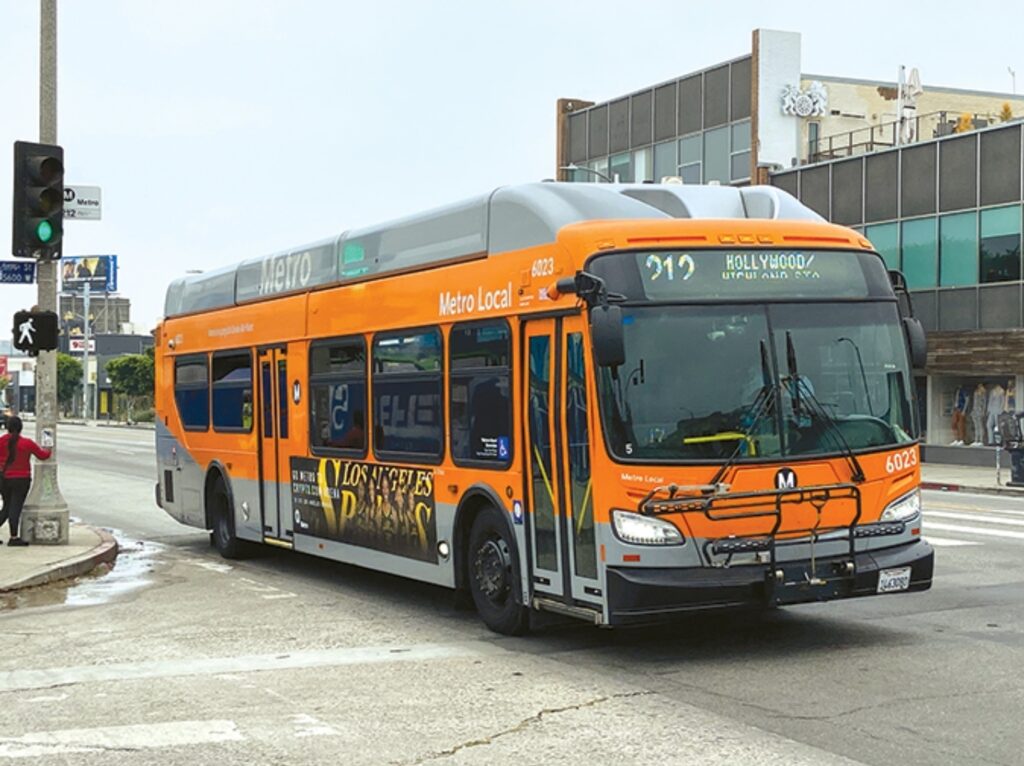
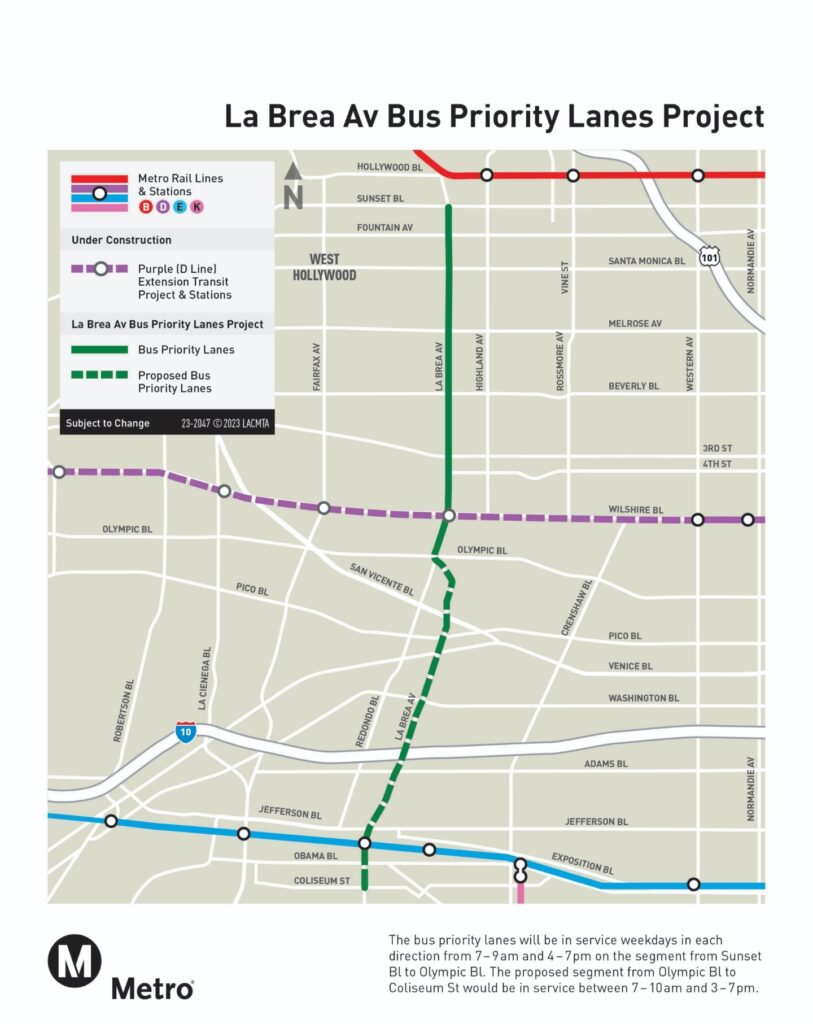
The La Brea Avenue Bus Priority Lanes Project currently operates peak-hour bus-only lanes between Sunset Boulevard and Olympic Boulevard. These curbside lanes are active on weekdays from 7 a.m. to 9 a.m. and 4 p.m. to 7 p.m., when buses are granted exclusive use to improve transit travel times and reliability. Parking and general traffic are restricted in these lanes during designated hours, although vehicles may enter to make legal right turns.
LA Metro
Metro has scheduled two stakeholder engagement sessions as part of outreach on the southern extension of the bus priority lanes — a virtual meeting on Wednesday, January 7, 2026, and an in-person listening session on Saturday, January 10, 2026. These events offer community members opportunities to pose questions and convey support or concerns directly to project staff.
According to Metro’s publicly posted project information, the objective is to “improve bus speed, frequency and reliability” on one of the region’s most heavily used corridors. Buses running on Metro Line 212 presently serve nearly 9,000 riders daily along La Brea Avenue, Metro reports, carrying commuters between neighborhoods and key transit connections.
LA Metro
Metro officials have highlighted the broader goals of the project in statements accompanying the current configuration of the lanes. Metro CEO Stephanie Wiggins emphasized the agency’s commitment to reliable transit service for riders who depend on buses for daily travel: “Angelenos deserve a Metro system that can get them where they need to go reliably, quickly and safely.” She noted that improvements like the bus priority lanes help advance those goals, particularly through congested urban corridors.
LA Metro
L.A. County Supervisor and Metro Board Member Lindsey P. Horvath pointed to the project’s role in enhancing connections to job centers and ongoing regional transit expansions, such as the forthcoming D (Purple) Line. “These priority lanes will drastically improve service and increase access for our residents who rely on safe, efficient transportation to move throughout the region,” Horvath said in an official Metro press release.
Mass Transit Magazine
Community responses to the initiative, as reflected in local media and social channels, are mixed. Some residents have expressed concern that repurposing existing travel lanes during peak periods effectively removes roadway capacity for general traffic, potentially leading to longer car commute times. Others point to similar implementations — such as bus lanes on Wilshire Boulevard — where dedicated lanes have aimed to improve bus reliability without adding roadway space.
Beverly Press & Park Labrea News
Metro and local partners have also taken steps toward enforcement and compliance. Beginning in late 2024, camera-equipped buses on corridors including La Brea received warnings for vehicles blocking bus lanes during peak hours, with citations scheduled to follow as part of an enforcement pilot program between Metro and the City of Los Angeles. Metro Board Chair Janice Hahn underscored the importance of such measures, stating that “buses carry hundreds of thousands of people every single day” and enforcement is vital to keeping transit moving.
MyNewsLA.com
Supporters of the extension argue that bus priority lanes are a cost-efficient solution to traffic congestion and a means of moving more people without widening streets or increasing infrastructure spend. Metro’s outreach materials emphasize that the lanes do not require widening existing roadways and are part of its NextGen Bus Network strategy to enhance service reliability across Los Angeles County.
LA Metro
Critics of the plan — particularly among motorists and daily commuters — counter that reducing roadway space for private vehicles during peak hours could worsen congestion, especially on routes that commuters rely on for east-west travel across Hollywood and Mid-City. This view has surfaced in community social forums and underscores ongoing tension between transit improvements and car traffic in dense urban corridors.
With listening sessions scheduled this week, Metro officials have indicated they are gathering community input to refine plans for the southern extension toward Coliseum Street, which would expand priority bus lanes further into South Los Angeles. Residents and commuters are encouraged to participate in the scheduled meetings to ensure their perspectives are included in the public record ahead of final design decisions.
Having driven the 212 LaBrea line, both as a commuter, and a bus operator, there are pros and cons enough to go around for everybody considered. As a commuter, that curbside lane comes in awfully handy during the peak hours that are up for grabs during the same hours that bus riders depend on to get them over the hill either going or coming.
Admittedly, as a commuter before I retired, I regularly weaved in and out of what is now the contested curb lane along the 212 La Brea bus line. That was before Metro implemented its camera-driven enforcement system. Since the launch of automated ticketing in February 2025, targeting vehicles illegally parked on La Brea, the dynamic has changed significantly. What was once an informal practice now carries a steep penalty, with violations costing drivers upward of $200.
Play Ball
