No Matter Who Is At Fault, A Tent Is Not A Home.
Congresswoman Maxine Waters Condemns Trump Administration’s Attack on Homelessness Programs
By Charles Jackson
 Congresswoman Maxine Waters has delivered a forceful rebuke of the Trump administration over its latest confrontation with Los Angeles and the agencies attempting to address one of the region’s most persistent humanitarian problems: homelessness.
Waters, who represents California’s 43rd Congressional District and serves as the ranking Democrat on the House Financial Services Committee, praised a federal court decision temporarily preventing the administration from suspending the Los Angeles Homeless Services Authority from federal homelessness grant programs.
At stake is approximately $241 million in federal funding, along with additional near-term funding supporting programs that provide services to more than 11,000 people.
For Waters, however, the dispute goes well beyond dollars.
Los Angeles County continues to face a staggering homelessness crisis, with nearly 73,000 people experiencing homelessness on any given night. They are individuals and families already living at society’s most vulnerable edge. Removing services designed to help them, Waters argues, does nothing to solve homelessness. It risks making an already desperate situation considerably worse.
Her criticism of the administration is unmistakable.
Rather than joining Los Angeles officials in confronting the shortage of affordable housing and the complicated causes of homelessness, Waters contends that the federal government has chosen confrontation. Suspending funding would threaten services without providing a meaningful alternative for the thousands of people depending upon them.
That is what makes the policy particularly troubling.
Government certainly has the right—and the responsibility—to demand accountability for taxpayer money. Homelessness programs should be expected to demonstrate results, operate efficiently and correct failures when they occur.
But accountability and abandonment are not the same thing.
 Taking money away from programs serving people who have nowhere else to go does not magically produce housing. It does not lower rents, create shelter beds, expand mental-health treatment or provide permanent supportive housing.
It simply removes resources.
U.S. District Judge David O. Carter’s intervention temporarily stopped that from happening, a decision Waters welcomed as an important reprieve. Yet she cautioned against confusing a courtroom victory with a solution to homelessness itself.
The larger problem remains.
Americans need affordable housing, stable communities and a federal housing policy capable of recognizing homelessness as something more complicated than people sleeping on sidewalks.
Waters has advocated increased federal investment through her Ending Homelessness Act and has also pointed to bipartisan congressional efforts on housing as evidence that lawmakers with significant political differences can still work toward practical solutions.
Her message is ultimately a simple one: Government cannot claim to be fighting homelessness while simultaneously weakening the programs responsible for helping homeless people find their way back into housing.
The court may have protected these programs for the moment.
But the people sleeping in tents, automobiles, shelters and on sidewalks tonight cannot live on temporary court orders.
They need somewhere to live.
=====================
Ms. Waters’ full text
https://iqconnect.house.gov/iqextranet/view_newsletter.aspx?id=107826&c=CA43MW


 What began as a supposedly nonpartisan national celebration appears to have taken a sharp detour into campaign-country.
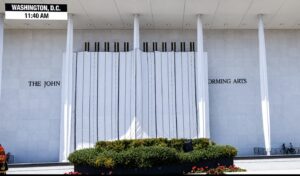 During his first term, Trump successfully lobbied FIFA and secured the winning joint “United Bid” for the U.S., Canada, and Mexico to host the 2026 World Cup.The FIFA World Cup 2026 is officially underway in the United States, Canada, and Mexico. Major city centers across the U.S. are hosting, and “watch parties” are circling the venues and perhaps portions of the world.
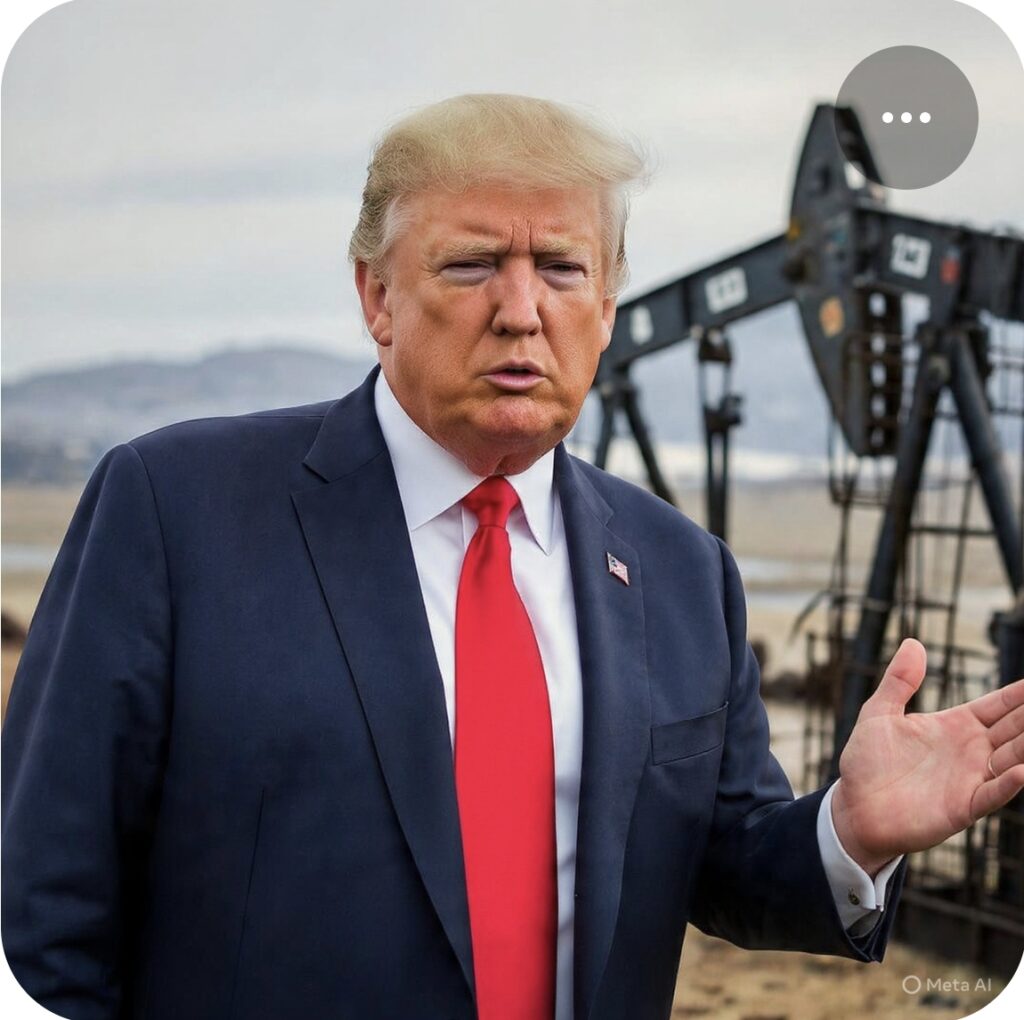
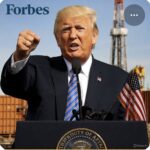 On March 12, 2026, Donald Trump wrote on Truth Social that “the United States is the largest oil producer in the world, by far, so when oil prices go up, ‘we’ make a lot of money.” The statement came as gasoline prices in the United States climbed above roughly $3.60 per gallon following the escalation of the war involving Iran and disruptions to global oil shipping routes.
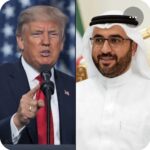 Oil Production vs. Public Benefit in the United States
 Economists frequently note that because oil is traded on a global market, American consumers still pay global prices even if the country produces large amounts of oil domestically. If companies can sell oil at higher prices abroad, they will do so, leaving U.S. consumers exposed to the same market forces affecting other countries.
 the country’s public
 In the American system, oil revenue primarily strengthens corporate profits and government tax receipts, while consumers continue to pay global energy prices. In the UAE’s model, oil income is used more directly to finance public benefits for citizens.
 “He” moves forward with his “MY WAY OR THE HIGHWAY, AMERICA” threat. In the middle of a war, he threatens to do nothing for the next nine months, forcing the Constitution to bend to his will, changing voting laws in the middle of the stream, ahead of existing law, hoping to end the established practice of mail-in voting, amidst any other changes that he can institute as a means of complicating the upcoming midterm elections. That “he is certain”, will spell the end of his reign of terror.
 For more than seven decades, U.S. policy in the Middle East has oscillated between direct intervention, strategic patronage, and coercive containment. Iran sits at the center of that arc. The bilateral relationship can be understood as two sharply distinct phases: a Cold War security partnership anchored in monarchical rule, and a post-revolutionary rivalry defined by ideological hostility, sanctions, and proxy competition.
 the relationship remains adversarial and structurally unstable. U.S. policy continues to rely heavily on financial sanctions, export controls, and diplomatic isolation aimed at curbing Iran’s nuclear expansion and regional projection. Iranian authorities have incrementally limited international inspection access while expanding enrichment capacity and maintaining influence through aligned actors across the Levant and Gulf.
 Why the United States Remains an Outlier on Universal Health Care
 Children’s Health Insurance Program (CHIP), and Affordable Care Act marketplaces have expanded access, coverage remains fragmented and conditional. As of recent estimates, tens of millions of Americans remain uninsured or underinsured, often delaying care because of cost concerns.
 infrastructure — similar to roads, public schools, or emergency services — healthcare in the U.S. is frequently debated through the lens of individual responsibility, market competition, and ideological resistance to government involvement.
 universal coverage, the United States spends more on healthcare per capita than any other country in the world. Yet this spending does not consistently translate into superior health outcomes. Metrics such as life expectancy, maternal mortality, and preventable hospitalizations often lag behind those of nations with universal systems. Administrative complexity, profit-driven pricing structures, and fragmented billing systems contribute to inefficiencies that inflate costs without proportional public benefit.
 Public opinion also reflects contradiction. Polling consistently shows that large majorities of Americans support protections for pre-existing conditions, Medicare for seniors, and expanded public health programs. However, support drops when proposals are framed as “government-run” or labeled with politically charged terminology, illustrating how messaging shapes perception more than policy substance.
 risk and guarantee baseline care for all residents. The United States, by contrast, continues to operate within a hybrid model that blends public programs with private profit, leaving coverage uneven and access dependent on income, employment, and geography.
 Nikki Minaj had to know that she would never truly be welcomed under the MEGA tent, and that her evolution would end in disaster. How could she expect to go from peddling “Ho” to pimping “Holy”.
 stepped in it, trying to broaden the base by inviting a bunch of hip hopping social media ner-do-wells to join a pretentious cult. Nobody likes or trusts a benidict arnold, or a turn coat snitch. That is what Nikki represents to her liberal fan base, and it’s what she represents to far right stalwarts. In today’s identity politics, nthanothing is worse than identity “code switching.”
 Baby y’all chicks got to stay in ‘yo lane, and leave the manipulative, underhanded shenanigans to the true sharks, snakes, and charlatans on both sides.
 v- Wade, the ACA has been on the resident’s seek and destroy list every since President Obama “clowned” Donald Trump was at the 2011 White House Correspondents’ Dinner, where he heavily mocked trumplethinskin over the “birther” conspiracy theory.