A Lifeline for South Los Angeles:

A Lifeline for South Los Angeles: Kaiser Permanente Invests in MLK Community Hospital

By Charles Jackson

In South Los Angeles, where access to timely medical care can mean the difference between recovery and tragedy, two respected health care institutions are joining forces to strengthen a hospital that has become indispensable to the community.

Kaiser Permanente announced Aug. 11 that it will provide a $25 million grant to Martin Luther King Jr. Community Hospital, along with the use of a modular medical building valued at $7 million. Together, the commitments represent an investment of up to $32 million in expanded emergency care for South Los Angeles.

The partnership is worth celebrating—not simply because of the dollar amount, but because it responds directly to a critical and growing need.

MLK Community Hospital opened in 2015 as a private, nonprofit, 131-bed acute-care facility. Its Hope Emergency Center was designed with as many as 29 treatment bays and an anticipated capacity of approximately 25,000 visits annually. Today, it handles about 125,000 visits a year—five times the number it was originally designed to accommodate.

That extraordinary demand has forced the hospital to triage and sometimes treat patients in temporary tents erected in its parking lot. Kaiser Permanente’s investment will help fund a permanent expansion of the emergency department while providing temporary modular treatment space so patients can continue receiving care during construction.

The numbers tell only part of the story.

As a technician, I have installed and serviced medical equipment at both MLK Community Hospital and Kaiser Permanente facilities. I have seen firsthand that a hospital is much more than a building with beds. It is a complicated, carefully coordinated network of medical professionals, technology, equipment and support systems—all of which must function properly when a patient arrives in distress.

A monitor, imaging system or other medical device may look like another piece of machinery to an outside observer. To a doctor, nurse or patient, however, that equipment can provide the information needed to make an urgent decision. Technology, physical capacity and skilled medical personnel must work together. When any part of that system is stretched too thin, the consequences can affect an entire community.

I am also a longtime Kaiser Permanente member. From that perspective, this partnership demonstrates an important understanding of what community health should mean. Kaiser is investing beyond the walls of its own hospitals and medical offices to reinforce another institution serving people with some of the greatest health care needs in Los Angeles County.

Approximately 80% of MLK Community Hospital’s patients are covered by Medi-Cal. Nearly 95% of its emergency department visits involve people insured through Medi-Cal or Medicare, or patients who have no insurance. The hospital also states that it serves everyone, regardless of immigration status or ability to pay.

Those figures help explain why MLK is more than a neighborhood hospital. It is an essential part of the region’s medical safety net.

Despite its financial and capacity pressures, MLK Community Hospital has maintained strong federal quality ratings. Its work is especially important in communities that continue to experience higher rates of chronic illness and preventable hospitalization, along with longstanding barriers involving transportation, housing, income and access to primary and specialty care.

“This gift—the largest in MLK’s history—strengthens our ability to offer care in the safe, dignified setting our community deserves,” MLK Community Healthcare CEO Dr. Elaine Batchlor said in announcing the partnership.

That emphasis on dignity is important. Patients should not have to receive emergency treatment in an overcrowded setting simply because of their ZIP code, income or insurance status. Families in South Los Angeles deserve the same safe, efficient and technologically capable health care environment available in more affluent communities.

Kaiser Permanente Chairman and CEO Greg A. Adams described the investment as more than an emergency department expansion. He said it is intended to strengthen the health care infrastructure Los Angeles families will depend upon for generations.

The partnership also offers a practical model for how major nonprofit health systems can support independent community hospitals. Instead of viewing institutions such as MLK only as facilities handling overflow or serving patients outside a particular membership system, Kaiser is recognizing that every strong hospital contributes to a healthier and more resilient region.

When one emergency department becomes overwhelmed, the effects do not remain inside that building. Ambulances may be redirected, waiting times may increase elsewhere, and patients may postpone treatment until their conditions become more serious. Expanding MLK’s capacity can therefore benefit South Los Angeles while easing pressure across the broader county health care network.

The $25 million grant will help build permanent capacity. The $7 million modular facility will help preserve access while that work is underway. One addresses the future; the other recognizes that people need care today.

For those of us who have worked inside these institutions, used their services or watched family members depend upon them, this investment carries special meaning. It represents confidence in MLK Community Hospital, respect for its medical professionals and a commitment to the people they serve.

The name Martin Luther King Jr. carries a continuing call for justice, equality and human dignity. By helping this hospital expand emergency care, Kaiser Permanente is supporting those principles in a direct and measurable way.

This is what an effective health care partnership should look like: one institution recognizing another’s essential role, responding to an urgent need and investing in a healthier future for the entire community.



Skunked!

Republic Services Reminds Inglewood Customers to Avoid Overage Charges

INGLEWOOD, Calif. — 

Republic Services is reminding Inglewood residents and businesses that keeping trash, recycling and organics containers properly closed is essential for safe and efficient collection and can help customers avoid unnecessary service issues or additional charges.

An “overage” occurs when a cart or dumpster is filled beyond its capacity, preventing the lid from closing completely. 

Overage conditions also include materials protruding above the rim of a container or bags and other items placed on top of or around the cart or dumpster.

According to Republic Services, overfilled containers create safety hazards for collection crews, slow service routes and can contribute to litter in neighborhoods. Keeping container lids fully closed helps maintain clean streets and ensures waste is collected safely throughout the City of Inglewood.

Customers can reduce the likelihood of overages by:

Keeping all materials below the rim of the container.

Making sure the lid closes completely before collection day.

Breaking down cardboard boxes before placing them in recycling carts.

Upgrading to a larger cart or dumpster, or scheduling additional collection service if containers are consistently full.

Commercial customers should be aware that repeated overages may result in additional service charges. Before fees are assessed, customers will be notified and given an opportunity to correct the problem. Continued overfilling, however, could lead to added charges.

Residential customers with overfilled carts may find their containers tagged to indicate an overage. In situations where an overfilled container cannot be collected safely, Republic Services may be unable to provide service until the issue has been corrected.

Republic Services encourages all customers to properly manage waste volumes to help keep Inglewood neighborhoods clean, improve collection efficiency and protect the safety of sanitation workers.


 

URGENT SIDE NOTE

As a 25 year resident, I have only recently noticed the presence of mephitis, the    the scientific name for the stripped skunk. I spotted one wandering nocturnally, eastbound on west Hillsdale, off of Eucalyptus. A week later my dog  came in the house “skunked”, and I smelled one nearby last week, and my neighbor’s dog was having a fit on his side of the fence. Just another good reason to keep it tidy in and around you trash cans. 


Litter bug alert! 

ALERT. Litter bug alert!

While California has not yet authorized standard, automated traffic cameras, to issue citations for litterbugs.

State-level vehicle code only allows automated traffic enforcement systems for specific violations like running red lights, speeding, or illegally using bus lanes.

​. However, there are two related surveillance rollouts causing recent buzz:

Garbage Truck Cameras:

Major waste management companies in California (like Recycling and Waste Management) have recently equipped their residential collection trucks with cameras to photograph and fine customers for overfilled trash bins.

​Localized Anti-Dumping Cameras: Cities like San Jose, Oakland, and Vallejo utilize localized, mobile surveillance cameras hidden at known hotspots to catch and prosecute major illegal dumping, rather than tracking casual littering on standard roads.

BUT Here’s a BOLO Alert.

Those discretionary Cameras on the sanitation trucks only look down into the hopper and at the bins to flag overfilled or contaminated dumpsters. They are managed by the waste disposal companies to assess fees, not by traffic enforcement to issue parking tickets on trash pickup days.

​. However, if a vehicle blocks a trash pickup zone, the driver can still be cited the traditional way if parking enforcement or a street sweeper with automated cameras passes by.

I’ve been known to participate in – let’s call it, the prediction markets, like Kalshi. I can’t help but wonder about the odds that some wise guy in the tech department might not cross connect the trash sweeper and the parking control folks and turn the trash sweepers into an A.I. snitch.

  • Ok. I’ll pause here. I’m headed into the twilight zone…


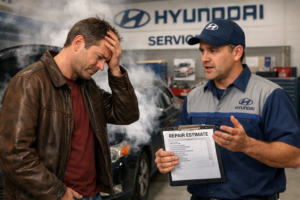
Hyundai: Warranty Promise vs. Customer Reality

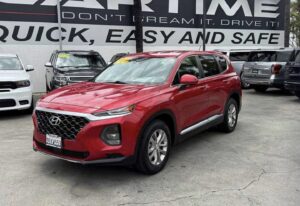
The 2020 Hyundai Santa Fe: Warranty Promise vs. Customer Reality

The 2020 Hyundai Santa Fe was marketed with one of the most aggressive value propositions in the auto industry: a 10-year/100,000-mile powertrain warranty, positioned as a safeguard against exactly the kind of catastrophic engine issues that concern long-term owners. On paper, it is a compelling offer. In practice, a growing number of cases suggest that the pathway to actually using that warranty can be far more complicated.
A Pattern of Deflection at the Dealership Level

Across multiple service encounters, a consistent pattern emerges: initial symptoms are minimized, redirected, or reclassified in ways that move responsibility away from Hyundai.

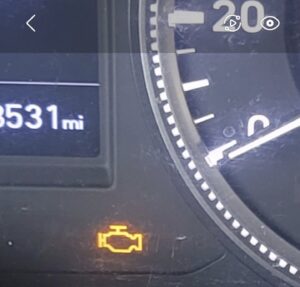
Customers report bringing vehicles in with check engine lights, oil consumption, or drivability issues—only to receive:

Temporary fixes, such as clearing diagnostic codes

Secondary explanations (like EVAP system issues) that do not address underlying engine performance

Diagnoses that attribute problems to “external damage,” which can immediately disqualify warranty coverage

In many instances, the first diagnosis becomes the most important—not because it is correct, but because it shapes how warranty claims are evaluated downstream.

The “Damage” Narrative and Warranty Denials

One of the more consequential trends involves labeling issues as impact-related or customer-caused damage. Once this classification is entered into the service record:

Third-party warranty providers often deny claims outright

Hyundai’s own warranty coverage may be sidestepped

The financial burden shifts to the customer

Independent inspections in some cases have contradicted dealership claims of damage, raising concerns about whether these determinations are always technically sound—or strategically convenient.

Engine Concerns: The Issue Beneath the Surface

Beyond isolated components, the more serious concern centers on engine reliability in certain Hyundai and Kia models from this era.

Reported symptoms include:

Excessive oil consumption

Engine knocking or ticking

Stalling at idle or in traffic

Sudden loss of power or complete shutdown

These issues have been widely discussed in both mechanic circles and owner communities, often tied to internal engine wear involving bearings and other core components. Hyundai has acknowledged some of these risks through recalls and extended warranties, but accessing those remedies typically requires specific diagnostic confirmation—which not all dealerships appear eager to establish early.

Delayed Recognition, Escalated Damage

A critical failure point in many cases is timing. When early warning signs appear:

Vehicles are often returned to service without deep mechanical inspection

Drivers continue operating cars with unresolved internal issues

Minor symptoms evolve into major engine failure

By the time the problem becomes undeniable—stalling in traffic, failure to restart, or severe knocking—the damage may be extensive. At that stage, customers often face a new hurdle: proving that the failure qualifies under warranty terms.

Structural Tension: Warranty vs. Business Incentives

There is also a structural dynamic at play. Dealerships operate within a system where:

Warranty repairs are reimbursed at controlled rates

Customer-paid repairs are more profitable

This creates a subtle but important incentive: classifying a repair as non-warranty can be financially advantageous. While not universal, this tension appears frequently enough in customer accounts to raise legitimate concern about consistency and objectivity in diagnostics.


Recall Awareness Without Resolution

Hyundai has issued recalls and software updates tied to engine monitoring systems, such as knock detection. However, owners often report that:

Recall visits focus narrowly on the required update

Broader engine complaints are not addressed unless failure thresholds are met

Preventative intervention is limited

This approach can leave customers in a reactive cycle—waiting for failure rather than preventing it.

The Customer Experience: Friction and Financial Exposure

For many Santa Fe owners, the result is a frustrating loop:

Repeated service visits with inconsistent conclusions

Out-of-pocket expenses for disputed repairs

Difficulty getting independent mechanics involved

Escalation attempts through consumer channels with limited resolution

Even with warranty coverage theoretically in place, customers may find themselves paying thousands of dollars while driving vehicles that remain mechanically unstable.

Conclusion: A Warranty That Requires Navigation

The 2020 Hyundai Santa Fe is not defined solely by its engineering or its features, but increasingly by the experience owners have when something goes wrong.

The central issue is not whether Hyundai offers strong warranty coverage—it does. The issue is how that coverage is applied, interpreted, and accessed in real-world situations.

For many customers, the challenge is not just mechanical failure. It is navigating a system where:

Diagnoses can shift

Responsibility can be reassigned

And the burden of proof often falls on the owner

In that environment, the promise of long-term protection becomes less about coverage—and more about persistence.


As a member of the Hyundai owner losers club, I can only offer a cautionary tale. I foolishly ignored the fact that my service technician never looked me in the eye when he was lying to my face. Because I have been a consistent cash cow, replacing tires and brakes on their say so. He misdirected my vehicle’s problem to a damaged canister. (whatever that is) But when a retired relative sent me to another certified mechanic, I discovered that the canister was not defective and not the cause of my problem. I have the part stashed away.

     But where does one go from here?  The internet has hinted at a class action lawsuit already underway, but I was hoping to just have my car repaired.  The BBB has already failed to resolve the matter through arbitration, and a Lemon Law Lawyer is standing by waiting for discussions with the Office of the Attorney General, who might be looking to make a stink as we approach the election.

My car sat in the repair shop as I was forced to retreat into a rental car for a week. The initial problem was a bad starter. I suggested that the starter failed because the engine kept stalling, which forced repeated restarts. Fortunately, the extended warranty covered that resolution.  There still remained the check engine light that had plagued the vehicle for over a year. The same codes were displayed, and the technician initially called it a failure due to a non OEM, aftermarket MAP SENSOR, but when an OEM part was installed, the system still failed. after a week of testing, and a $600 repair, the check engine light and several other lights appeared. The engine sputtered, failed and then would not start for an hour.

Now I am back in a rental car, and likely will require another flatbed tow.

Jesse and Me

“Jesse and Me”

A Statement from Congresswoman Maxine Waters 


The very Reverend Jesse Jackson, presidential candidate and civil rights leader, was not only my close friend and confidant, he was my longtime political ally and mentor. Rev. Jesse Jacskson was my idol and spiritual and political leader. He was a brilliant, gifted and courageous civil rights leader who inspired millions. He registered millions to vote and challenged and changed Democratic Party politics.

Rev. Jackson was one of the youngest followers and supporters of the Rev. Dr. Martin Luther King, Jr. and spent his life continuing to protect and save the gains that were made during the civil rights movement. I became a dedicated and committed follower of Jesse Jackson. I worked with Rev. Jackson in both the 1984 and 1988 presidential campaigns. I was a top advisor on the national campaign and was appointed by Rev. Jackson to Chair and lead the California campaign.


I was a closeup witness to Rev. Jackson’s brilliant campaign strategies and developments. He used his voice and his organizing skills to create the beautiful Rainbow Coalition. Long before there was any understanding or appreciation for diversity, equity, and inclusion, for all intents and purposes, Rev. Jackson created diversity, equity, and inclusion in his campaign. His campaign included Blacks, Latinos, Asians, Native Americans, Whites, women, LGBTQ, organized labor and others. He brought together pastors, preachers, and multi-faith leaders from all over the country. I recall his work and his outreach to small farmers in rural areas and to Native Americans on reservations.


He was responsible for cracking open the doors of America’s corporate community and those in Silicon Valley. Rev. Jackson was also an international ambassador for peace. He used his tremendous influence to champion human rights. I worked with him in the Free South Africa movement where we helped free Nelson Mandela and bring an end to apartheid in South Africa. We had a wonderful experience of attending the inauguration when Nelson Mandela became president of South Africa. And of course, Rev. Jackson helped to secure the release of U.S. hostages around the world, but the one that stands out to me is when he went to Syria and negotiated the release of U.S. Navy Lt. Robert. Goodman Jr.


Rev. Jackson has more than earned his place in history and rightfully so. His work will never be forgotten and will be taught in communities all over the world, in places low and high, in our schools and universities. I will live the rest of my life with the memories I cherish for the time, the effort, and the phenomenal work that I experienced with The Reverend Jesse Jackson, presidential candidate and civil rights leader.


###


I had to jump in for a second with my own message…


Back in 2010, in the aftermath of the Bush administration, I was losing my home. I received an invitation to attend an assistance program hosted by “NACA” (National Assistance Corporation of America) Although I was there seeking assistance, I was also there in my role as a news hound for Inglewood Today. News. At that gathering, Ms. Waters happened to be there. She incidentally introduced me to the Reverend Jesse Jackson. We shared a quick laugh when he quipped that “We may have started on the same plantation.”

That’s the end of my segment of the story – I did manage to receive a loan modification due to that event, and we are still in the home.

Story: Charles Jackson


New Rules Jan. 27

   Under California Vehicle Code sections 23123 and 23123.5 (often referred to as the “Hands-Free” or “No-Touch” laws), the price of a ticket is:

​First Offense: $162 minimum total (based on a $20 base fine plus mandatory court fees and assessments).

​Subsequent Offenses: $272 minimum total (based on a $50 base fine).

​Key Penalties & Rules

​License Points: A second violation within 36 months adds one point to your driving record, which can increase your insurance rates.

​No Touching: As of 2025, the law is strictly “no-touch.” You cannot hold or touch your phone for any reason—even at red lights—unless it is mounted and requires only a single swipe or tap to operate.

​Minors: Drivers under 18 are prohibited from using any electronic device, even in hands-free mode.


New Rules 2026

Traffic Laws Taking Effect in January 2026 Reflect a Broader National Push for Accountability
As 2026 begins, drivers across the United States are facing a sweeping set of new traffic regulations that signal a coordinated shift toward stricter enforcement, expanded use of monitoring technology, and tougher penalties for high-risk behavior. While traffic laws remain primarily state-governed, the scale and similarity of changes taking effect this January point to a nationwide recalibration of road safety policy.

One of the most consequential changes is Louisiana’s “touch” law, which becomes fully enforceable on January 1 following a public education grace period. Unlike earlier hands-free statutes that focused on texting or phone calls, the new rule prohibits drivers from physically touching a mobile device while operating a vehicle. Limited exceptions apply only when vehicles are safely parked or when contacting emergency services. Penalties escalate quickly, starting at $100 for a first offense and rising to $300 for repeat violations, with possible license suspension in aggravated cases. Crowdsourced discussions on regional social platforms have highlighted confusion during the grace period, but state officials have emphasized that enforcement will be consistent once the law is active.

Red-light enforcement is also expanding through automated systems. In Maryland, red-light cameras at nine intersections completed a warning-only phase in December, with fines beginning January 5. Violations now trigger $75 citations mailed directly to registered vehicle owners. California municipalities are moving in a similar direction, with local governments authorized to deploy red-light cameras that capture detailed images of vehicles and drivers. Online community forums have raised privacy concerns, while traffic safety advocates continue to share collision data supporting camera deployment at high-risk intersections.

License plate misuse has emerged as another major enforcement target. In California, a new statute effective January 1 explicitly bans license plate “flippers,” tinted covers, and other devices designed to obscure or manipulate plate visibility. While such devices were technically restricted under earlier laws, enforcement gaps allowed widespread retail and online sales. Under the updated rules, drivers using prohibited equipment face $250 fines, while manufacturers and sellers can be penalized up to $1,000 per item. Social media videos showing toll evasion tactics and altered plates have played a notable role in drawing public attention to the issue.

California has also enacted new penalties targeting high-tech tools associated with vehicle theft. Possession of key-programming devices and signal extenders with intent to commit burglary now carries potential fines of up to $1,000 and possible jail time. Automotive professionals and locksmiths have used industry forums to emphasize the importance of carrying documentation to demonstrate legitimate use.

Additional California measures include expanded “slow down and move over” requirements that now apply to any stationary vehicle using hazard lights or safety equipment, authorization of work-zone speed enforcement pilots using radar and laser systems, and locally adjustable school-zone speed limits. These updates have been widely discussed in community safety groups, particularly in areas experiencing frequent work-zone collisions.

Beyond California and Louisiana, other states are tightening regulations tied to emerging risk trends. Colorado lawmakers are advancing legislation targeting street racing events increasingly organized through social media platforms. Proposed penalties include vehicle immobilization, daily storage fees, and expanded use of livestream footage as evidence. Viral videos of large racing gatherings have been repeatedly cited by residents and local officials as justification for tougher laws.

Driver education requirements are also evolving. Connecticut now requires cameras to remain on during online driver education courses, and new teen permit holders must complete specialized safety training focused on roadside and highway work zones. In Oklahoma, aggravated DUI offenses were elevated to felony status in November, while North Carolina implemented late-2025 changes reinforcing enforcement of high-risk driving behaviors.

Taken together, these measures reflect a broader national shift away from leniency and toward proactive enforcement supported by technology, data, and digital evidence. As January 2026 unfolds, drivers are encountering a new regulatory environment that places greater emphasis on accountability, compliance, and the prevention of behaviors that have increasingly been amplified through online platforms. The message from lawmakers and transportation agencies is clear: routine habits that once drew warnings are now far more likely to result in significant penalties.


METRO NEW RULES

La Brea Avenue Bus Priority Lanes.


La Brea Avenue Bus Priority Lanes.


La Brea Avenue Bus Priority Lanes.

Los Angeles Community Weighs In as Metro Advances La Brea Avenue Bus Priority Lanes.

Los Angeles

As the Los Angeles County Metropolitan Transportation Authority (Metro) moves forward with expanding bus priority lanes along La Brea Avenue, planners and residents are preparing to engage in public hearings this week. The project, intended to improve regional transit service, has prompted debate over traffic impacts for drivers and commuters who use the corridor daily.

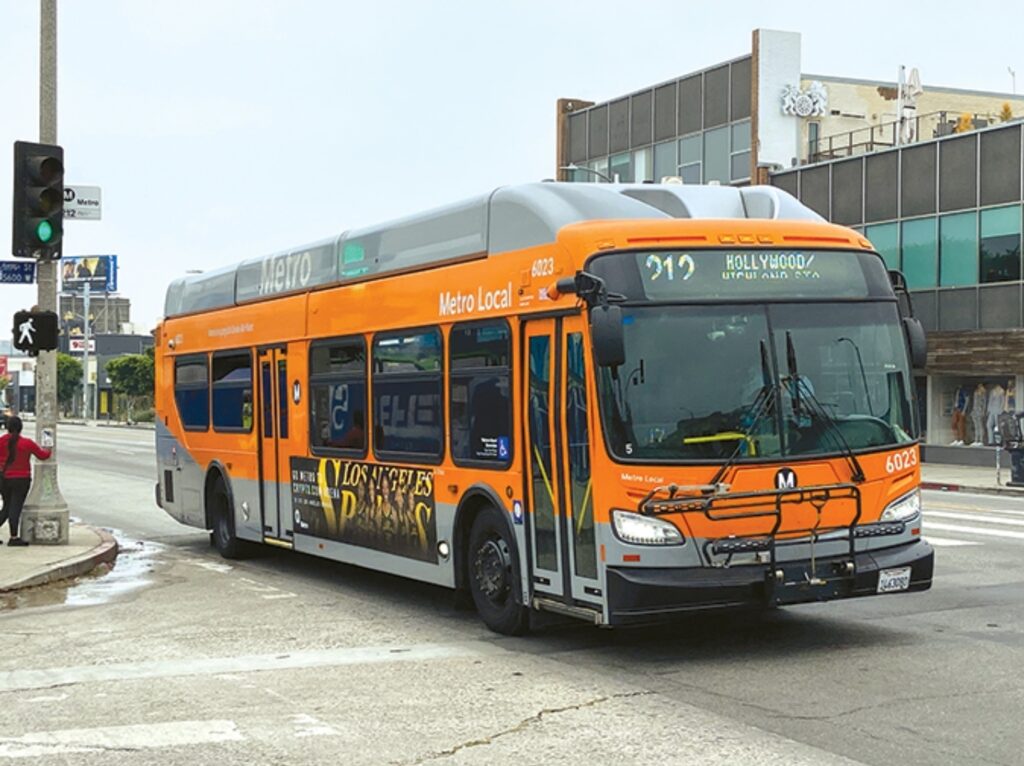
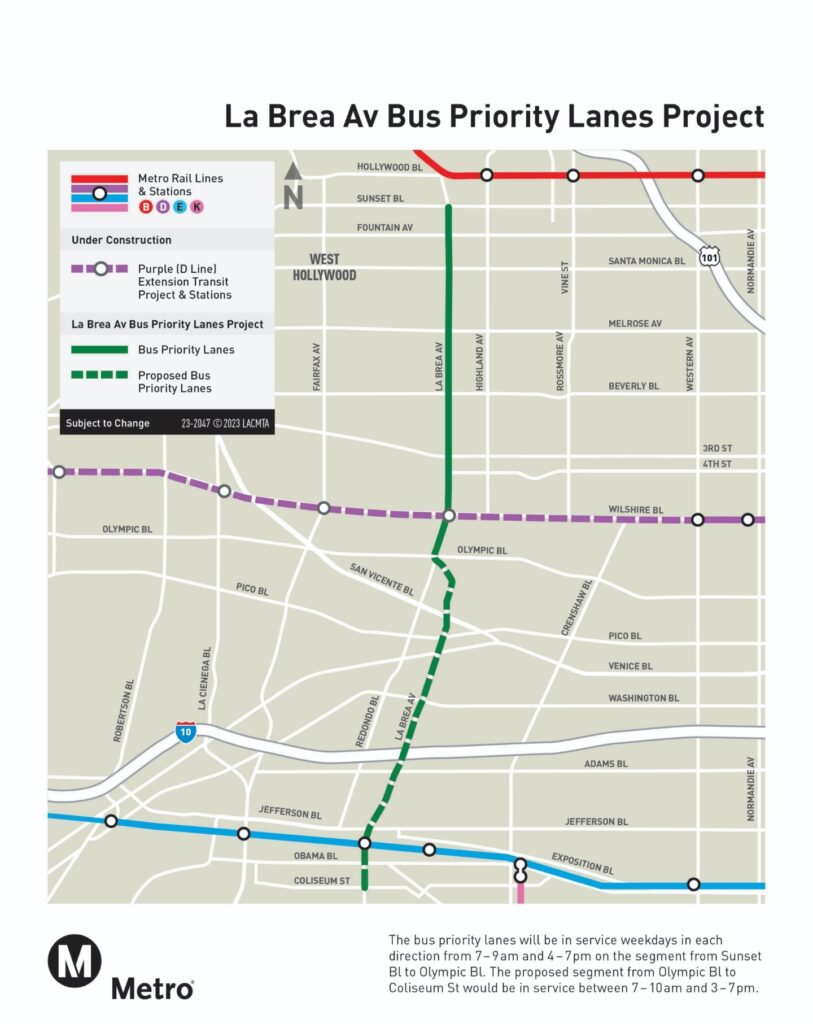
The La Brea Avenue Bus Priority Lanes Project currently operates peak-hour bus-only lanes between Sunset Boulevard and Olympic Boulevard. These curbside lanes are active on weekdays from 7 a.m. to 9 a.m. and 4 p.m. to 7 p.m., when buses are granted exclusive use to improve transit travel times and reliability. Parking and general traffic are restricted in these lanes during designated hours, although vehicles may enter to make legal right turns.

LA Metro

Metro has scheduled two stakeholder engagement sessions as part of outreach on the southern extension of the bus priority lanes — a virtual meeting on Wednesday, January 7, 2026, and an in-person listening session on Saturday, January 10, 2026. These events offer community members opportunities to pose questions and convey support or concerns directly to project staff.

According to Metro’s publicly posted project information, the objective is to “improve bus speed, frequency and reliability” on one of the region’s most heavily used corridors. Buses running on Metro Line 212 presently serve nearly 9,000 riders daily along La Brea Avenue, Metro reports, carrying commuters between neighborhoods and key transit connections.

LA Metro

Metro officials have highlighted the broader goals of the project in statements accompanying the current configuration of the lanes. Metro CEO Stephanie Wiggins emphasized the agency’s commitment to reliable transit service for riders who depend on buses for daily travel: “Angelenos deserve a Metro system that can get them where they need to go reliably, quickly and safely.” She noted that improvements like the bus priority lanes help advance those goals, particularly through congested urban corridors.


LA Metro

L.A. County Supervisor and Metro Board Member Lindsey P. Horvath pointed to the project’s role in enhancing connections to job centers and ongoing regional transit expansions, such as the forthcoming D (Purple) Line. “These priority lanes will drastically improve service and increase access for our residents who rely on safe, efficient transportation to move throughout the region,” Horvath said in an official Metro press release.


Mass Transit Magazine

Community responses to the initiative, as reflected in local media and social channels, are mixed. Some residents have expressed concern that repurposing existing travel lanes during peak periods effectively removes roadway capacity for general traffic, potentially leading to longer car commute times. Others point to similar implementations — such as bus lanes on Wilshire Boulevard — where dedicated lanes have aimed to improve bus reliability without adding roadway space.


Beverly Press & Park Labrea News

Metro and local partners have also taken steps toward enforcement and compliance. Beginning in late 2024, camera-equipped buses on corridors including La Brea received warnings for vehicles blocking bus lanes during peak hours, with citations scheduled to follow as part of an enforcement pilot program between Metro and the City of Los Angeles. Metro Board Chair Janice Hahn underscored the importance of such measures, stating that “buses carry hundreds of thousands of people every single day” and enforcement is vital to keeping transit moving.


MyNewsLA.com

Supporters of the extension argue that bus priority lanes are a cost-efficient solution to traffic congestion and a means of moving more people without widening streets or increasing infrastructure spend. Metro’s outreach materials emphasize that the lanes do not require widening existing roadways and are part of its NextGen Bus Network strategy to enhance service reliability across Los Angeles County.


LA Metro

Critics of the plan — particularly among motorists and daily commuters — counter that reducing roadway space for private vehicles during peak hours could worsen congestion, especially on routes that commuters rely on for east-west travel across Hollywood and Mid-City. This view has surfaced in community social forums and underscores ongoing tension between transit improvements and car traffic in dense urban corridors.

With listening sessions scheduled this week, Metro officials have indicated they are gathering community input to refine plans for the southern extension toward Coliseum Street, which would expand priority bus lanes further into South Los Angeles. Residents and commuters are encouraged to participate in the scheduled meetings to ensure their perspectives are included in the public record ahead of final design decisions.


Having driven the 212 LaBrea line, both as a commuter, and a bus operator, there are pros and cons enough to go around for everybody considered. As a commuter, that curbside lane comes in awfully handy during the peak hours that are up for grabs during the same hours that bus riders depend on to get them over the hill either going or coming.


Admittedly, as a commuter before I retired, I regularly weaved in and out of what is now the contested curb lane along the 212 La Brea bus line. That was before Metro implemented its camera-driven enforcement system. Since the launch of automated ticketing in February 2025, targeting vehicles illegally parked on La Brea, the dynamic has changed significantly. What was once an informal practice now carries a steep penalty, with violations costing drivers upward of $200.


Play Ball

Story: Charles Jackson


Modder’s Pop-up Jamaican Style Pizzas

Modder’s Pop-up Jamaican Style Pizzas

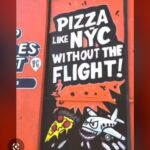
    On a recent day at the busy corner of Pico Boulevard and La Brea Avenue in Los Angeles, a spontaneous yet carefully organized community gathering unfolded that reflected the evolving food, art, and cultural landscape of Mid-City. At 4972 W. Pico Blvd., a well-known Black-owned New York–style pizzeria became the setting for a pop-up collaboration that drew neighbors, creatives, and longtime supporters into a shared public moment centered on food, local enterprise, and cultural expression.

The event was anchored by a partnership between Nehemiah Anderson, also known as Westside Five, and the shop’s proprietor, Esteban “Esco” Gutierrez. Together, they introduced a limited pop-up menu under the banner of Modder’s Kitchen, blending traditional New York pizza with Jamaican-inspired flavors. Two specialty offerings defined the collaboration: jerk chicken pizza and oxtail pizza. These items combined the familiar format of oversized New York slices with seasoning profiles more commonly associated with Caribbean cooking, creating a fusion that resonated with attendees without departing from the pizzeria’s core identity.

The location itself is already a recognized neighborhood fixture. Founded by Harlem native Esteban Gutierrez, the pizzeria has built its reputation on authentic New York–style pizza, emphasizing thin, crispy crusts and generously sized slices. Gutierrez brings more than 20 years of experience rooted in his father’s New York pizzeria, and that lineage is central to the shop’s appeal. For many patrons—particularly former East Coast residents—the taste and presentation closely match what they remember from New York City. This consistency has helped the business earn a loyal following in Mid-City Los Angeles.
Beyond pizza, the shop offers a broad menu that includes wings, salads, customizable calzones, and desserts such as Nutella knots, which are frequently cited by customers as a standout item. Vegan options are a notable part of the menu, with clearly labeled plant-based slices such as vegan Margherita, Veggie, and Pesto Cheese. These pizzas use vegan cheese sourced from local providers like Vromage, reinforcing the business’s emphasis on local partnerships and inclusive dining options.

The Pico and La Brea location is known not only for its food but also for its atmosphere. The interior features New York–inspired decor, including a Knicks-themed logo and design elements that reference subway cars in some areas. While there is limited indoor and outdoor seating, the shop is widely regarded as a takeout-friendly spot where customers often interact directly with Gutierrez himself. His visible presence and engagement with patrons are frequently mentioned in local and social media posts as part of what makes the establishment feel personal and community oriented.

That sense of community was amplified during the pop-up event. Alongside the food collaboration, the gathering featured on-the-spot apparel printing by Taylor’s Tees, producing shirts and caps for attendees in real time. Sleep Dawg’s classic artistic designs were also present, adding a visual and cultural layer to the event. Together, these elements transformed the corner of Pico and La Brea into more than a food stop; it became a temporary outdoor showcase for local creativity and small business collaboration.

According to posts and images shared on social media, the turnout included a broad cross-section of the neighborhood, with people stopping by for slices, conversation, and merchandise. The event unfolded without formal staging or ticketing, reinforcing its open, accessible nature. Music, casual conversation, and foot traffic contributed to an atmosphere that resembled a block-level celebration rather than a conventional promotional event.

In 2025, the business continues to operate as a Black-, Latino-, and woman-owned enterprise, with Gutierrez partnered with entrepreneur Aryn Drake-Lee. The shop is open daily from 11:00 a.m. to 11:00 p.m. and offers dine-in, takeout, and catering services. Popular menu items include Margherita and pepperoni slices, typically priced around six dollars, as well as specialty offerings like white clam pizza finished with fresh lemon. Orders can be placed in person or through online platforms such as Slice and the shop’s official website.

Events like the Modder’s Kitchen pop-up reflect how the pizzeria positions itself beyond a standard food business. By hosting local collaborations and welcoming artists, designers, and chefs into the space, the shop reinforces its role as a neighborhood hub. Social media reactions to the Pico and La Brea gathering highlighted appreciation for both the food and the sense of collective presence, with particular attention given to the jerk chicken and oxtail pizzas as well as the opportunity to support multiple local brands at once.

At its core, the gathering demonstrated how a single corner in Mid-City Los Angeles can serve as a meeting point for culinary tradition, cultural fusion, and community engagement. Without speculation or exaggeration, the event reflected what the pizzeria has consistently aimed to provide: authentic food, open doors, and a space where local partnerships are not an exception but part of the everyday rhythm of the neighborhood.

     BTW. In the spirit of Stevie Wonder’s Bus Full of Toys, the brothers placed a cap on the spirit of Christmas. These young entrepreneurs stepped up their game, one more leg up, sponsoring a walk-up toy giveaway, dubbed “Table Full of Toys.” These young fellas thought of every little thing. Keep up the good work.

VIDEO

Inglewood Christmas Tree Lighting

Inglewood’s 2025 Holiday Tree Lighting Ceremony Marked a Successful Start to the Season


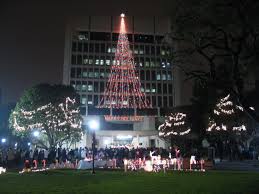
Inglewood’s annual Holiday Tree Lighting Ceremony took place on Wednesday, December 3, 2025, and stood out as one of the city’s most well-attended community traditions of the year. The event, held at the Kia Forum near the EV6 Gate off Kareem Court, ran from 5:00 p.m. to 8:00 p.m. and brought together families, neighborhood groups, and local stakeholders in a celebration that emphasized unity, generosity, and seasonal tradition.

The evening began with a parade along Prairie Avenue, which concluded shortly before the formal tree lighting at 6:30 p.m. Residents and visitors lined the route, and social-media posts across local community channels consistently noted the parade’s strong turnout and the enthusiasm of participants representing youth programs, civic organizations, and volunteer groups. Attendees captured images of decorated vehicles, coordinated dance groups, and marching units that highlighted the city’s cultural diversity.


Activity at the Forum grew steadily as crowds transitioned from the parade route to the EV6 Gate area. Families circulated through Santa’s Village, which had been arranged with craft stations, holiday décor, and a designated photo area for visits with Santa. According to posts shared on neighborhood platforms, parents reported short wait times and efficient coordination by event staff, which allowed children to move easily between craft tables, game booths, and the popular hot-chocolate stand. Multiple accounts also referenced the availability of seasonal treats, which were distributed throughout the evening by volunteers and city staff.


One of the most frequently mentioned features was the snow zone, a recurring attraction that offered children an opportunity to play in manufactured snow. Social-media imagery showed consistent crowd engagement, with families remarking that the snow area remained active from the beginning of the event until closing. For many younger attendees, this component served as the highlight of the night.


The city’s annual toy giveaway, conducted in partnership with local organizations and Forum-based facilitators, remained a central draw. Community posts reported long but orderly lines, and photos showed volunteers organizing distributions efficiently. Families described the process as well structured, and comments across various platforms emphasized the value of the giveaway for households preparing for the holiday season. As in prior years, the distribution prioritized children from families experiencing economic hardship, which reinforced the event’s emphasis on community support.


Musical performances and holiday-themed entertainment filled the space throughout the evening. Observers noted that the sound system carried clearly across the Forum plaza, contributing to the overall festive atmosphere. Several neighborhood accounts referenced the inclusion of local youth groups and choirs that performed brief sets leading up to the tree-lighting moment.


At 6:30 p.m., city officials initiated the lighting of the holiday tree. Crowd videos showed a collective countdown, followed by applause as the display illuminated the plaza. The lighting served as the symbolic start of the holiday season in the “City of Champions,” and participants shared images of the tree across multiple platforms well into the night.


Crowd-sourced reporting from local, national, and international observers who monitor major public gatherings identified no major disruptions. Feedback across public channels characterized the event as well managed, with efficient crowd flow and positive interactions among attendees. Consistently noted features included accessible entry points, visible security coordination, and the availability of staff to guide families through the various activity zones.


The city’s partnership with the Kia Forum again demonstrated Inglewood’s capacity to host large-scale civic events. Many commenters from the region emphasized that the collaboration allowed for adequate space, structured programming, and a central location that was familiar to residents. By maintaining long-standing civic traditions while incorporating activities tailored for families, the 2025 ceremony reflected the city’s approach to building community identity during the holiday season.


By the time the event concluded at 8:00 p.m., the sentiment expressed across community networks reflected the same message: the 2025 Holiday Tree Lighting Ceremony had delivered a successful, well-organized, and inclusive celebration. For Inglewood residents, it marked the beginning of the holiday period with a renewed focus on togetherness, neighborhood pride, and the collective spirit that continues to define the city’s signature festivities.