This might be worse than I thought. Not only is AI going to take all of our jobs but AI is also going to waste all of our time.
The big story right now is that AI agents have officially overtaken humans as the largest source of internet traffic.
According to data just released by Cloudflare, automated AI bots and agents now account for 57.4% of all web traffic (via HTTP requests), leaving humans with the remaining 42.6%.
Here is what is happening under the hood:
The Multiplier Effect: When a human asks a chatbot a single question (like shopping for a camera or researching a topic), the human looks at maybe four or five sites. An AI agent will aggressively scour hundreds or thousands of websites simultaneously to synthesize that one answer.
The “Dead Internet” Shift: This marks a fundamental shift from a web designed for humans clicking around, to an internet dominated by machine-to-machine data retrieval.
The Regional Divide: This bot traffic is heavily concentrated in North America, where agents make up nearly 69% of all web traffic, while regions like India still remain overwhelmingly human-driven (over 84%).
While humans still win on total actual engagement time (like streaming videos or doomscrolling social feeds),
AI agents completely dominate the rapid-fire loading of web pages.
So while you are swiping left and right and up and down, the chat agents are doing stuff – lots of plain old boring businessey stuff.
I won’t go as far as to say he’s lying when he claims that China is successful because they burn a lot more coal than we do in the states.
By comparison, China’s power consumption ratio is 51% while the US ratio is a mere 17%. So the big guy’s got me there… Sorta.
The US has proudly converted to renewable energy as a means of burning quieter wicks of coal – and the big guy doesn’t like progressive shenanigans when good old fashioned ancients will do. I won’t twist your arms today and get into a debate about pneumoconiosis. That’s another story about another day. Google it yourself.
I will argue that China’s use of coal has dropped from 70% down to 51% coal to renewable ratio, their population is 4x the size of ours in the US.
So as to avoid hurt feelings, I will spieak softly about looking at the world, through rose-colored glasses while China’s reliance on coal power is well in decline, as was ours until our guy decided again to dig and burn baby, dig and burn our way back into the cave man days. (did I mention pneumoconiosis?)
I get it. Competition. Without competition, we would be obliged to work together. We want to fire up the space race again and be the first ones to dig a hole on the moon, while at the same time we want to be the first ones to dig a deeper hole on planet Earth.
The Day the Music Industry Let the Robots Into the Studio.
For decades, the record business treated artificial intelligence the way Dracula treated daylight: avoid at all costs, issue dramatic legal threats, and send expensive lawyers carrying sharpened cease-and-desist letters. Now? The vampires appear to be installing Wi-Fi in the castle.
In what may become one of the strangest turning points in modern music history, newsroom.spotify.com and universalmusic.com announced a new licensing partnership that will allow fans and creators to generate AI-powered cover songs and remixes using participating artists’ catalogs. Spotify.
The same music industry that once acted like a teenager downloading LimeWire in 2002 was equivalent to nuclear espionage is now apparently saying: “Alright… maybe the robots can sing a little.”
According to Spotify’s official announcement, its new feature will launch as a paid add-on for Premium subscribers and will focus on AI-generated licensed covers and remixes. Spotify says the system is built around three magic corporate buzzwords: “consent, credit, and compensation.” Translation:
“We finally found a way to monetize the apocalypse.”
The move represents a dramatic cultural shift for major labels, especially Universal Music Group, which only recently spent considerable energy battling unauthorized AI music platforms and defending artist copyrights. In fact, UMG previously reached agreements with AI music companies like Udio after legal warfare over copyrighted training material. UMG
Now the same industry that once screamed, “AI is stealing music!” is quietly adjusting the studio microphone for it. And honestly, maybe they had no choice.
The internet already resembles a cyberpunk karaoke bar at 3 a.m. Somewhere right now, a teenager in Nebraska is probably generating an AI version of Frank Sinatra singing a Kendrick Lamar diss track while an AI Elvis harmonizes in the background. The toothpaste is not merely out of the tube — the toothpaste has released three mixtapes and launched a Patreon.
Spotify appears to understand this reality better than most. The company is aggressively leaning into AI products as part of its future business strategy. Beyond music remixes, Spotify also unveiled AI-generated podcast tools and other “superfan” features intended to drive new revenue growth through 2030. Reuters
Wall Street loved it. Spotify stock reportedly jumped sharply after the announcement. Of course it did.
Investors hear phrases like “new monetization ecosystem” and immediately begin levitating several inches above the floor.
Still, the announcement raises massive questions about the future of artists, creativity, and authenticity. Will listeners care whether a song is sung by a human being anymore?
Or are we entering an era where audiences simply shrug and say:
“If it slaps, it slaps.”
That possibility terrifies traditional musicians. For years, artists fought to preserve the mystique of originality — the idea that music carried fragments of human struggle, heartbreak, and experience. But AI systems can now mimic vocal styles, recreate production aesthetics, and manufacture emotionally convincing songs in seconds.
The result could become musical chaos. Imagine:
* AI Tupac featuring AI Prince.
* A synthetic Johnny Cash singing trap music.
* An AI-generated Motown ballad accidentally becoming a global hit.
Five million fake Drake songs appeareing online before breakfast.
Some of that sounds hilarious. Some sounds horrifying. Most sounds inevitable. And the record labels know it.
That is why this Spotify-UMG agreement matters. It signals that major labels may be abandoning the old strategy of trying to stop AI altogether. Instead, they appear ready to build toll booths around it.
If people are going to make robot music anyway, the industry wants a percentage.
To be fair, Spotify and UMG insist participating artists will opt in voluntarily and receive royalties from AI-generated creations.
That could create a bizarre but lucrative future where artists license “digital vocal likenesses” the same way celebrities license action figures or video gam
e appearances.
In other words: Your favorite singer may someday retire from touring entirely while their AI clone keeps dropping albums every six months forever. Immortality, but with subscription billing.
Meanwhile, researchers are already racing to create systems that can detect.
AI-generated music because distinguishing humans from algorithms is becoming increasingly difficult.
That may soon become necessary because the next generation of listeners could grow up in a world where the line between “artist” and “software operator” barely exists. And perhaps that is the real story here.
The music industry once feared AI would burn down the building.
Now it is inviting the robots inside, handing them backstage passes, and asking whether they would like merchandising rights.
If you’re old enough, you may have been forced to accept the synthesizer that sounded just like your original $895 74-key Fender Rhodes. You learned to appreciate the first drum machine that landed in the studio. The magic of Pro-Tools was hard to swallow, but before long, using that tool to sample and share your name on a split sheet with James Brown, the most sampled musician of all times didn’t hurt hardly at all.
Ultimately It may well be wiser and more profitable to happily split the check, than grumble and complain yourself into the poor house.
It’s better to play ball, than to be the ball.
The 2020 Hyundai Santa Fe: Warranty Promise vs. Customer Reality
The 2020 Hyundai Santa Fe was marketed with one of the most aggressive value propositions in the auto industry: a 10-year/100,000-mile powertrain warranty, positioned as a safeguard against exactly the kind of catastrophic engine issues that concern long-term owners. On paper, it is a compelling offer. In practice, a growing number of cases suggest that the pathway to actually using that warranty can be far more complicated.
A Pattern of Deflection at the Dealership Level
Across multiple service encounters, a consistent pattern emerges: initial symptoms are minimized, redirected, or reclassified in ways that move responsibility away from Hyundai.
Customers report bringing vehicles in with check engine lights, oil consumption, or drivability issues—only to receive:
Temporary fixes, such as clearing diagnostic codes
Secondary explanations (like EVAP system issues) that do not address underlying engine performance
Diagnoses that attribute problems to “external damage,” which can immediately disqualify warranty coverage
In many instances, the first diagnosis becomes the most important—not because it is correct, but because it shapes how warranty claims are evaluated downstream.
The “Damage” Narrative and Warranty Denials
One of the more consequential trends involves labeling issues as impact-related or customer-caused damage. Once this classification is entered into the service record:
Third-party warranty providers often deny claims outright
Hyundai’s own warranty coverage may be sidestepped
The financial burden shifts to the customer
Independent inspections in some cases have contradicted dealership claims of damage, raising concerns about whether these determinations are always technically sound—or strategically convenient.
Engine Concerns: The Issue Beneath the Surface
Beyond isolated components, the more serious concern centers on engine reliability in certain Hyundai and Kia models from this era.
Reported symptoms include:
Excessive oil consumption
Engine knocking or ticking
Stalling at idle or in traffic
Sudden loss of power or complete shutdown
These issues have been widely discussed in both mechanic circles and owner communities, often tied to internal engine wear involving bearings and other core components. Hyundai has acknowledged some of these risks through recalls and extended warranties, but accessing those remedies typically requires specific diagnostic confirmation—which not all dealerships appear eager to establish early.
Delayed Recognition, Escalated Damage
A critical failure point in many cases is timing. When early warning signs appear:
Vehicles are often returned to service without deep mechanical inspection
Drivers continue operating cars with unresolved internal issues
Minor symptoms evolve into major engine failure
By the time the problem becomes undeniable—stalling in traffic, failure to restart, or severe knocking—the damage may be extensive. At that stage, customers often face a new hurdle: proving that the failure qualifies under warranty terms.
Structural Tension: Warranty vs. Business Incentives
There is also a structural dynamic at play. Dealerships operate within a system where:
Warranty repairs are reimbursed at controlled rates
Customer-paid repairs are more profitable
This creates a subtle but important incentive: classifying a repair as non-warranty can be financially advantageous. While not universal, this tension appears frequently enough in customer accounts to raise legitimate concern about consistency and objectivity in diagnostics.
Recall Awareness Without Resolution
Hyundai has issued recalls and software updates tied to engine monitoring systems, such as knock detection. However, owners often report that:
Recall visits focus narrowly on the required update
Broader engine complaints are not addressed unless failure thresholds are met
Preventative intervention is limited
This approach can leave customers in a reactive cycle—waiting for failure rather than preventing it.
The Customer Experience: Friction and Financial Exposure
For many Santa Fe owners, the result is a frustrating loop:
Repeated service visits with inconsistent conclusions
Out-of-pocket expenses for disputed repairs
Difficulty getting independent mechanics involved
Escalation attempts through consumer channels with limited resolution
Even with warranty coverage theoretically in place, customers may find themselves paying thousands of dollars while driving vehicles that remain mechanically unstable.
Conclusion: A Warranty That Requires Navigation
The 2020 Hyundai Santa Fe is not defined solely by its engineering or its features, but increasingly by the experience owners have when something goes wrong.
The central issue is not whether Hyundai offers strong warranty coverage—it does. The issue is how that coverage is applied, interpreted, and accessed in real-world situations.
For many customers, the challenge is not just mechanical failure. It is navigating a system where:
Diagnoses can shift
Responsibility can be reassigned
And the burden of proof often falls on the owner
In that environment, the promise of long-term protection becomes less about coverage—and more about persistence.
As a member of the Hyundai owner losers club, I can only offer a cautionary tale. I foolishly ignored the fact that my service technician never looked me in the eye when he was lying to my face. Because I have been a consistent cash cow, replacing tires and brakes on their say so. He misdirected my vehicle’s problem to a damaged canister. (whatever that is) But when a retired relative sent me to another certified mechanic, I discovered that the canister was not defective and not the cause of my problem. I have the part stashed away.
But where does one go from here? The internet has hinted at a class action lawsuit already underway, but I was hoping to just have my car repaired. The BBB has already failed to resolve the matter through arbitration, and a Lemon Law Lawyer is standing by waiting for discussions with the Office of the Attorney General, who might be looking to make a stink as we approach the election.
My car sat in the repair shop as I was forced to retreat into a rental car for a week. The initial problem was a bad starter. I suggested that the starter failed because the engine kept stalling, which forced repeated restarts. Fortunately, the extended warranty covered that resolution. There still remained the check engine light that had plagued the vehicle for over a year. The same codes were displayed, and the technician initially called it a failure due to a non OEM, aftermarket MAP SENSOR, but when an OEM part was installed, the system still failed. after a week of testing, and a $600 repair, the check engine light and several other lights appeared. The engine sputtered, failed and then would not start for an hour.
Now I am back in a rental car, and likely will require another flatbed tow.
Access, Engagement, and the Modern Town Hall:A Reflection on Congresswoman Maxine Waters’ Forum. This is how we roll.
On April 2, 2026.
Congresswoman Maxine Waters hosted a telephone town hall for residents of California’s 43rd Congressional District. The event followed a familiar and increasingly important format in modern civic life: structured, accessible, and designed to reach a broad audience across a large and diverse community.
For many constituents, especially those who may not attend in-person events, this format offers something valuable—a practical entry point into civic participation. And that is worth recognizing at the outset.
A Gateway to Participation
Telephone town halls are not meant to replicate the intensity or spontaneity of live, in-person gatherings. Instead, they serve a different purpose: scale and accessibility.
In a district as expansive and complex as the 43rd—encompassing Inglewood, South Los Angeles, and surrounding areas—bringing thousands of voices into even a shared listening space is no small achievement. The ability to dial in, hear directly from a sitting member of Congress, and potentially ask a question lowers the barrier to engagement.
For many residents, especially seniors or those balancing work and family responsibilities, this may be the most realistic way to connect with their representative.
Structure as Stability
The April 2 event was carefully moderated, with a facilitator guiding the flow of the conversation. Callers were introduced, questions were time-limited, and transitions were smooth. While this structure can feel formal, it also ensures that the event remains focused and respectful of participants’ time.
Roughly 15 to 20 constituents were able to speak—sharing concerns about housing affordability, economic opportunity, healthcare access, and public safety. These are not new issues in the district, but they remain urgent, and the town hall provided a platform for them to be voiced directly.
Importantly, the tone of the event appeared measured and constructive. Participants were able to express concerns without the disruptions that sometimes characterize large public meetings. In that sense, the format created a safe and orderly environment for dialogue, even if it was necessarily brief.
Waters’ Approach: Detailed and Direct
Congresswoman Waters brought her characteristic command of policy to the discussion. Her responses reflected decades of legislative experience, particularly in areas tied to economic justice, financial systems, and community development.
She addressed questions with specificity—referencing federal programs, ongoing initiatives, and the broader legislative landscape. For constituents seeking clarity on what is being done at the federal level, this level of detail matters.
At the same time, she encouraged continued civic engagement. Her messaging emphasized that participation does not end with a phone call—it extends into voting, organizing, and staying informed. References to broader civic themes, including calls for vigilance and public involvement, underscored her long-standing belief in active citizenship.
The Sanctuary City Context
The 43rd District operates within the broader framework of Los Angeles County, a region often described as aligned with sanctuary policies. This context shapes many of the conversations around public safety, immigration, and community trust.
In a telephone town hall setting, these issues tend to be approached in a measured way. The format naturally encourages concise questions and equally concise responses, which can make it difficult to fully explore complex or sensitive topics.
However, the value of the forum lies in introducing these issues to a wide audience. Even brief exchanges can raise awareness, clarify positions, and encourage further discussion beyond the call itself.
Rather than serving as the final word on such matters, the town hall functions as a starting point—a place where concerns are surfaced and where constituents can begin to engage more deeply in the issues that affect their communities.
Complementing, Not Replacing, In-Person Dialogue
It is important to view telephone town halls as one piece of a larger civic ecosystem. They are not designed to replace in-person meetings, where longer exchanges, follow-up questions, and more dynamic interaction can take place.
It should be noted that I, as the writer of this article, have attended several of Congresswoman Waters’ live town halls, and that perspective is important. Those settings often allow for a different kind of energy—sometimes more assertive, sometimes more interactive, but always more immediate.
The telephone format, by contrast, offers reach over depth. And in a district of this size, both are necessary.
A Broader Tradition of Engagement
There is also value in remembering that civic participation takes many forms. The legacy of Martin Luther King Jr. reminds us that engagement can be quiet as well as vocal—structured as well as spontaneous.
Nonviolent protest, silent marches, and sit-ins were not just acts of resistance; they were also acts of presence. They created space for voices to be seen and felt, even without extended dialogue.
In a different way, telephone town halls also create space—less visible, perhaps, but still meaningful. They allow people to listen, reflect, and begin to form their own responses.
Finding the Balance
The April 2 town hall illustrates a balance that many public officials are still working to refine:
Accessibility vs. depth
Structure vs. spontaneity
Efficiency vs. extended dialogue
No single format can fully satisfy all of these needs. But when used thoughtfully, each can contribute to a more engaged and informed public.
In this case, the event appears to have succeeded in its core objective: connecting a large number of constituents with their representative in a way that was organized, informative, and approachable.
Conclusion: A Useful Starting Point
Telephone town halls may not capture the full energy of in-person civic life, but they serve an important role. They open the door to participation, especially for those who might otherwise remain on the sidelines.
Congresswoman Maxine Waters’ April 2 forum fits squarely within that purpose. It provided information, invited questions, and encouraged continued engagement—without requiring constituents to leave their homes.
And perhaps that is the most practical way to view it:
Not as the final destination for civic dialogue, but as a welcoming front porch—a place where people can gather, listen, and take the first step toward deeper involvement.
From there, the conversation can—and should—continue.
As a teenager, growing up in, southwestern Ohio, during the late 1960s, civic engagement often turned necessarily or perhaps unnecessarily ugly. We were there, because we were there. Now, we are here, because we are here, again.
Forbes/Reuters:
Oil Prices Hit $100 Again—Trump Touts Cost Hike Benefits
Trump touts oil price gains, saying ‘we make a lot of money,’ angering lawmakers
Oil Wealth and Public Benefit: The United States vs. the United Arab Emirates On March 12, 2026, Donald Trump wrote on Truth Social that “the United States is the largest oil producer in the world, by far, so when oil prices go up, ‘we’ make a lot of money.” The statement came as gasoline prices in the United States climbed above roughly $3.60 per gallon following the escalation of the war involving Iran and disruptions to global oil shipping routes.
Forbes
Trump framed rising oil prices as manageable, even suggesting earlier in the week that higher prices were a “very small price to pay” if the conflict eliminated Iran’s nuclear threat.
Yahoo
However, the economic structure of oil wealth in the United States differs sharply from the system used in the United Arab Emirates. A comparison between the two reveals that while both countries produce large amounts of oil, the way oil revenue reaches ordinary citizens is fundamentally different.
Oil Production vs. Public Benefit in the United States
The United States is currently the world’s largest oil producer, generating millions of barrels of crude oil per day through a combination of conventional drilling and shale production.
FactCheck.org
Yet the financial gains from oil production primarily flow through private industry rather than directly to citizens.
Most U.S. oil production is carried out by private corporations. Revenue from oil sales is distributed to shareholders, corporate executives, and investors, while governments receive tax revenue and royalties. Those funds then enter general federal and state budgets rather than being distributed directly to individuals.
Economists frequently note that because oil is traded on a global market, American consumers still pay global prices even if the country produces large amounts of oil domestically. If companies can sell oil at higher prices abroad, they will do so, leaving U.S. consumers exposed to the same market forces affecting other countries.
PBS
As a result, rising oil prices generally mean higher costs for American households—especially for gasoline, transportation, and goods whose production relies heavily on petroleum.
The United States does provide some indirect public benefit from energy production through tax revenues, infrastructure spending, and employment in the energy sector. But there is no national program that distributes oil revenue directly to citizens. In practice, higher oil prices tend to benefit energy companies and investors more directly than ordinary consumers.
The UAE Model:
Oil Revenue as Public Welfare
In contrast, the system used in the United Arab Emirates distributes oil wealth to citizens through a government-funded welfare structure.
Although the federation includes several emirates such as Dubai and Abu Dhabi, roughly 96 percent of the UAE’s oil reserves are located in Abu Dhabi. Oil revenue from these resources forms a major pillar of the country’s public
finances.
Rather than distributing cash payments directly, the UAE government channels oil wealth into extensive social benefits for Emirati citizens. These include:
Free or heavily subsidized healthcare
Government-funded education through university
Subsidized utilities
Land grants and interest-free loans for housing
High employment in the public sector
No personal income tax
About 90 percent of working Emirati citizens are employed in government jobs, reflecting the state’s central role in distributing economic benefits.
Dubai itself now relies less on oil and more on tourism, finance, and trade, yet Emirati citizens there still benefit from the broader national system funded in large part by oil revenue.
Two Different Economic Models
The contrast between the United States and the UAE illustrates two very different approaches to natural resource wealth.
In the United States, oil production operates largely through a market-driven private sector model. Oil companies produce and sell energy on global markets, and profits flow primarily to investors and corporations. Government receives tax revenue but does not distribute oil income directly to the population.
In the UAE, oil production is tied closely to state-managed wealth distribution. The government uses oil revenue to fund social programs, infrastructure, and employment that directly benefit citizens.
As a result, when oil prices rise globally, Americans generally experience higher fuel and consumer costs, while in the UAE the financial gains from oil exports more directly support the welfare system that benefits citizens.
Conclusion
The United States and the United Arab Emirates are both major oil producers, yet their citizens experience the results of that production very differently.
Statements suggesting that higher oil prices mean “we make a lot of money” reflect the macroeconomic reality that the United States produces large amounts of oil. But the distribution of that wealth depends on how the industry is structured. In the American system, oil revenue primarily strengthens corporate profits and government tax receipts, while consumers continue to pay global energy prices. In the UAE’s model, oil income is used more directly to finance public benefits for citizens.
The difference highlights how the management of natural resources—not just the amount produced—determines whether national oil wealth translates into tangible benefits for the public.
While citizens of the UAE are beloved members of the nation’s largesse, sharing in the wealth and bounty of the country, including free health care and higher education,citizens of the United States are scorned and often put upon, should they fall upon the mercy of the state.
When Donald trump smiles, boasts and posts about the bountiful position that the “excursions” of war are raining down – he ain’t talking to or about you, peasant.
The very Reverend Jesse Jackson, presidential candidate and civil rights leader, was not only my close friend and confidant, he was my longtime political ally and mentor. Rev. Jesse Jacskson was my idol and spiritual and political leader. He was a brilliant, gifted and courageous civil rights leader who inspired millions. He registered millions to vote and challenged and changed Democratic Party politics.
Rev. Jackson was one of the youngest followers and supporters of the Rev. Dr. Martin Luther King, Jr. and spent his life continuing to protect and save the gains that were made during the civil rights movement. I became a dedicated and committed follower of Jesse Jackson. I worked with Rev. Jackson in both the 1984 and 1988 presidential campaigns. I was a top advisor on the national campaign and was appointed by Rev. Jackson to Chair and lead the California campaign.
I was a closeup witness to Rev. Jackson’s brilliant campaign strategies and developments. He used his voice and his organizing skills to create the beautiful Rainbow Coalition. Long before there was any understanding or appreciation for diversity, equity, and inclusion, for all intents and purposes, Rev. Jackson created diversity, equity, and inclusion in his campaign. His campaign included Blacks, Latinos, Asians, Native Americans, Whites, women, LGBTQ, organized labor and others. He brought together pastors, preachers, and multi-faith leaders from all over the country. I recall his work and his outreach to small farmers in rural areas and to Native Americans on reservations.
He was responsible for cracking open the doors of America’s corporate community and those in Silicon Valley. Rev. Jackson was also an international ambassador for peace. He used his tremendous influence to champion human rights. I worked with him in the Free South Africa movement where we helped free Nelson Mandela and bring an end to apartheid in South Africa. We had a wonderful experience of attending the inauguration when Nelson Mandela became president of South Africa. And of course, Rev. Jackson helped to secure the release of U.S. hostages around the world, but the one that stands out to me is when he went to Syria and negotiated the release of U.S. Navy Lt. Robert. Goodman Jr.
Rev. Jackson has more than earned his place in history and rightfully so. His work will never be forgotten and will be taught in communities all over the world, in places low and high, in our schools and universities. I will live the rest of my life with the memories I cherish for the time, the effort, and the phenomenal work that I experienced with The Reverend Jesse Jackson, presidential candidate and civil rights leader.
###
I had to jump in for a second with my own message…
Back in 2010, in the aftermath of the Bush administration, I was losing my home. I received an invitation to attend an assistance program hosted by “NACA” (National Assistance Corporation of America) Although I was there seeking assistance, I was also there in my role as a news hound for Inglewood Today. News. At that gathering, Ms. Waters happened to be there. She incidentally introduced me to the Reverend Jesse Jackson. We shared a quick laugh when he quipped that “We may have started on the same plantation.”
That’s the end of my segment of the story – I did manage to receive a loan modification due to that event, and we are still in the home.
“He” moves forward with his “MY WAY OR THE HIGHWAY, AMERICA” threat. In the middle of a war, he threatens to do nothing for the next nine months, forcing the Constitution to bend to his will, changing voting laws in the middle of the stream, ahead of existing law, hoping to end the established practice of mail-in voting, amidst any other changes that he can institute as a means of complicating the upcoming midterm elections. That “he is certain”, will spell the end of his reign of terror.
For more than seven decades, U.S. policy in the Middle East has oscillated between direct intervention, strategic patronage, and coercive containment. Iran sits at the center of that arc. The bilateral relationship can be understood as two sharply distinct phases: a Cold War security partnership anchored in monarchical rule, and a post-revolutionary rivalry defined by ideological hostility, sanctions, and proxy competition.
I. Strategic Alignment Under the Shah (1953–1979)
The modern U.S.–Iran relationship was fundamentally shaped by the 1953 coup that removed Prime Minister Mohammad Mossadegh and consolidated authority under Mohammad Reza Pahlavi. Orchestrated with American and British intelligence support, the operation secured Western access to Iranian oil and repositioned Tehran firmly within the anti-Soviet bloc during the Cold War.
From the administrations of Dwight D. Eisenhower through Richard Nixon, Iran was elevated as a regional security pillar. Washington transferred advanced weaponry, intelligence cooperation, and civilian nuclear assistance through programs such as “Atoms for Peace.” In exchange, Tehran guaranteed oil stability and served as a counterweight to Soviet penetration in the Persian Gulf.
By the late 1970s, however, the Shah’s centralized rule, aggressive modernization campaigns, and the repression carried out by SAVAK generated broad domestic opposition. Under Jimmy Carter, U.S. messaging on human rights created diplomatic ambiguity at a moment of escalating unrest. The 1979 Islamic Revolution dismantled the monarchy and replaced it with a theocratic republic led by Ruhollah Khomeini, permanently altering the bilateral equation.
II. Revolutionary Rupture and Enduring Hostility (1979–Present)
The seizure of the U.S. Embassy in Tehran in 1979 and the ensuing hostage crisis severed diplomatic ties—a rupture that has never been formally repaired. Throughout the 1980s, the United States tilted toward Iraq during the Iran–Iraq War, deepening mutual distrust. Maritime confrontations during the “Tanker War” further militarized the Gulf.
In the decades that followed, tensions centered on two primary axes: Iran’s support for regional armed movements and its nuclear program. Washington designated Tehran a state sponsor of terrorism, while Tehran framed U.S. military presence in the region as encirclement. This dynamic hardened during successive administrations on both sides.
A significant, though temporary, de-escalation occurred in 2015 with the Joint Comprehensive Plan of Action (JCPOA), negotiated under President Barack Obama and Iranian President Hassan Rouhani. The agreement constrained Iran’s uranium enrichment in exchange for phased sanctions relief. However, in 2018 President Donald Trump withdrew the United States from the accord and reinstated sweeping economic sanctions under a “maximum pressure” framework. Tehran gradually reduced compliance with nuclear limitations in response.
III. Current Strategic Posture (2025–2026)
the relationship remains adversarial and structurally unstable. U.S. policy continues to rely heavily on financial sanctions, export controls, and diplomatic isolation aimed at curbing Iran’s nuclear expansion and regional projection. Iranian authorities have incrementally limited international inspection access while expanding enrichment capacity and maintaining influence through aligned actors across the Levant and Gulf.
The standoff is characterized less by direct warfare than by calibrated brinkmanship: cyber operations, proxy engagements, maritime seizures, and intermittent strikes attributed to shadow actors. Neither side has demonstrated sustained political willingness to restore full diplomatic normalization.
IV. Structural Drivers of Friction
Three enduring factors explain the durability of conflict:
Ideological Divergence – The Islamic Republic’s foundational narrative centers on resistance to Western dominance, while U.S. policy emphasizes nonproliferation and regional security guarantees.
Security Architecture – The United States maintains defense partnerships with Gulf states and Israel; Iran views this network as containment.
Sovereignty and Power Consolidation – Historically, states that expand economically or militarily prioritize autonomy. Even absent revolutionary ideology, a stronger Iran would likely seek independent regional influence rather than subordinate alignment.
Conclusion
The U.S.–Iran relationship is not cyclical in a simple sense; it reflects a structural shift from patron-client alignment to systemic rivalry. The pre-1979 partnership was built on shared strategic necessity during bipolar superpower competition. The post-1979 era is defined by mistrust embedded in institutional memory, domestic politics, and regional competition.
Absent a fundamental redefinition of threat perception on both sides, the relationship is likely to remain a managed confrontation—periodically volatile, occasionally negotiable, but strategically adversarial.
And I submit the peace will never hold in an international Society because in order for peace to hold there will always be a triad. A parent, a child and an impatiently, suffering subordinate. That whimpering, hermit crab faction will
ultimately boil over and spoil the peace.
What of…
Camp David Accords (1978): A historic basis for the 1979 Egypt–Israel Peace Treaty.
Oslo Accords (1993/1995): A set of agreements between Israel and the PLO aimed at achieving a peace treaty based on UN resolutions.
Wadi Araba Agreement (1994): The formal peace treaty signed between Israel and Jordan.
Abraham Accords (2020): A series of normalization agreements between Israel and several Arab nations, including the UAE, Bahrain, and Morocco.
Based on the rampage of recent naming conventions, when the smoke clears, history books will surely bear the name; “the big beautiful, Donald J Trump Peace Forge.”
The Other Side of the American Dream: Tracking the Rise in Americans Moving Abroad
For generations, the United States symbolized upward mobility and global opportunity. In recent years, however, a quieter countercurrent has emerged: a measurable increase in Americans choosing to live elsewhere. Although the federal government does not maintain a precise count of citizens residing overseas, independent estimates place the expatriate population between 5 million and 9 million.
A Notable Shift in Migration Patterns
Recent demographic analyses indicate that 2025 marked a significant inflection point. Approximately 180,000 Americans relocated abroad during the year, contributing to what researchers describe as the first instance of negative net migration—more people leaving the country than arriving—since the Great Depression. Projections for 2026 vary widely, but some models suggest that outbound migration could exceed inbound migration by anywhere from 150,000 to 900,000 individuals.
Formal expatriation is also increasing. Data released in early 2025 show that quarterly renunciations of U.S. citizenship doubled compared to late 2024 levels. While renunciation figures remain a small fraction of total outbound movers, the upward trend is noteworthy because it reflects a more permanent break rather than temporary relocation.
Where Americans Are Going
Mexico remains the leading destination for American emigrants. Proximity, lower living costs, established expatriate communities, and simplified residency pathways make it attractive for retirees and remote workers alike.
Canada follows, offering geographic familiarity and a social welfare system often cited by migrants concerned about healthcare affordability. The United Kingdom and Germany also rank among the top destinations, drawing professionals and dual nationals seeking economic stability and robust public services.
Southern European nations—particularly Portugal and Spain—have gained visibility in social media forums and relocation networks due to digital nomad visas and comparatively affordable urban centers. These programs enable Americans to maintain U.S.-based employment while residing in lower-cost economies.
Drivers Behind the Movement
Crowd-sourced discussions across relocation forums, expatriate groups, and international lifestyle networks consistently point to three core motivations: economic pressure, political climate, and work flexibility.
Economic Pressure. Rising housing costs in major U.S. metropolitan areas, coupled with healthcare expenses that remain high relative to other developed nations, are frequently cited as primary push factors. Middle-income professionals report difficulty building savings while managing rent, insurance premiums, and childcare. By contrast, many European and Latin American cities offer lower housing costs and more predictable healthcare systems.
Political and Social Climate. Online discussions reveal heightened concern over domestic polarization, public safety debates, and broader cultural tensions. While political dissatisfaction has long influenced migration patterns, the scale and intensity of discourse since 2024 appear to have amplified relocation considerations for some households.
Remote Work Expansion. The normalization of remote employment has significantly reduced geographic constraints. Professionals in technology, consulting, media, and finance increasingly leverage U.S.-based salaries while residing abroad. This arbitrage—earning in dollars while spending in euros or pesos—reshapes traditional cost-of-living calculations.
Contextualizing the “Exodus”
It is important to maintain scale. Even at the higher end of projections, outbound migration represents a small fraction of the nation’s 330+ million population. The United States continues to attract substantial inbound immigration and remains a dominant economic and cultural center.
Nonetheless, the shift toward negative net migration carries symbolic weight. Historically, the U.S. has been defined by net inflows of people seeking opportunity. A reversal—even modest—invites scrutiny about domestic affordability, institutional trust, and quality-of-life metrics.
Social media has amplified visibility around relocation logistics, tax strategies, residency permits, and cost comparisons. Communities that once operated quietly are now algorithmically surfaced, normalizing the idea that international relocation is both attainable and pragmatic rather than exceptional.
The Broader Question
The phrase “American Dream” traditionally implied that prosperity required arrival within U.S. borders. The current migration trend suggests a reframing: for some citizens, that aspiration now includes geographic mobility beyond them.
Whether this movement represents a temporary recalibration or a durable demographic shift remains uncertain. What is clear is that a measurable subset of Americans is re-evaluating where opportunity, stability, and quality of life intersect.
The equation, ultimately, is individual. In a world where borders are increasingly navigable for skilled workers and retirees, the concept of home has become more fluid—and the American Dream, for some, more portable than ever.
Without pointing the finger at anyone in particular it does seem like perhaps he might want America all to himself.

 This might be worse than I thought. Not only is AI going to take all of our jobs but AI is also going to waste all of our time.
 By comparison, China’s power consumption ratio is 51% while the US ratio is a mere 17%. So the big guy’s got me there… Sorta.
 For decades, the record business treated artificial intelligence the way Dracula treated daylight: avoid at all costs, issue dramatic legal threats, and send expensive lawyers carrying sharpened cease-and-desist letters. Now? The vampires appear to be installing Wi-Fi in the castle.
 studio microphone for it. And honestly, maybe they had no choice.
 Will listeners care whether a song is sung by a human being anymore?
 The 2020 Hyundai Santa Fe was marketed with one of the most aggressive value propositions in the auto industry: a 10-year/100,000-mile powertrain warranty, positioned as a safeguard against exactly the kind of catastrophic engine issues that concern long-term owners. On paper, it is a compelling offer. In practice, a growing number of cases suggest that the pathway to actually using that warranty can be far more complicated.
 drivability issues—only to receive:
 financially advantageous. While not universal, this tension appears frequently enough in customer accounts to raise legitimate concern about consistency and objectivity in diagnostics.
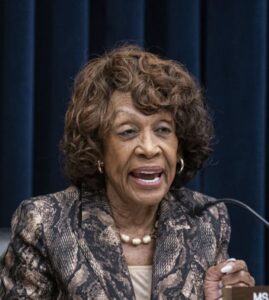 hosted a telephone town hall for residents of California’s 43rd Congressional District. The event followed a familiar and increasingly important format in modern civic life: structured, accessible, and designed to reach a broad audience across a large and diverse community.
 to replicate the intensity or spontaneity of live, in-person gatherings. Instead, they serve a different purpose: scale and accessibility.
 For many residents, especially seniors or those balancing work and family responsibilities, this may be the most realistic way to connect with their representative.
 able to speak—sharing concerns about housing affordability, economic opportunity, healthcare access, and public safety. These are not new issues in the district, but they remain urgent, and the town hall provided a platform for them to be voiced directly.
 The 43rd District operates within the broader framework of Los Angeles County, a region often described as aligned with sanctuary policies. This context shapes many of the conversations around public safety, immigration, and community trust.
 writer of this article, have attended several of Congresswoman Waters’ live town halls, and that perspective is important. Those settings often allow for a different kind of energy—sometimes more assertive, sometimes more interactive, but always more immediate.
 Nonviolent protest, silent marches, and sit-ins were not just acts of resistance; they were also acts of presence. They created space for voices to be seen and felt, even without extended dialogue.
 On March 12, 2026, Donald Trump wrote on Truth Social that “the United States is the largest oil producer in the world, by far, so when oil prices go up, ‘we’ make a lot of money.” The statement came as gasoline prices in the United States climbed above roughly $3.60 per gallon following the escalation of the war involving Iran and disruptions to global oil shipping routes.
 Oil Production vs. Public Benefit in the United States
 Economists frequently note that because oil is traded on a global market, American consumers still pay global prices even if the country produces large amounts of oil domestically. If companies can sell oil at higher prices abroad, they will do so, leaving U.S. consumers exposed to the same market forces affecting other countries.
 the country’s public
 In the American system, oil revenue primarily strengthens corporate profits and government tax receipts, while consumers continue to pay global energy prices. In the UAE’s model, oil income is used more directly to finance public benefits for citizens.
 became president of South Africa. And of course, Rev. Jackson helped to secure the release of U.S. hostages around the world, but the one that stands out to me is when he went to Syria and negotiated the release of U.S. Navy Lt. Robert. Goodman Jr.
 “He” moves forward with his “MY WAY OR THE HIGHWAY, AMERICA” threat. In the middle of a war, he threatens to do nothing for the next nine months, forcing the Constitution to bend to his will, changing voting laws in the middle of the stream, ahead of existing law, hoping to end the established practice of mail-in voting, amidst any other changes that he can institute as a means of complicating the upcoming midterm elections. That “he is certain”, will spell the end of his reign of terror.
 For more than seven decades, U.S. policy in the Middle East has oscillated between direct intervention, strategic patronage, and coercive containment. Iran sits at the center of that arc. The bilateral relationship can be understood as two sharply distinct phases: a Cold War security partnership anchored in monarchical rule, and a post-revolutionary rivalry defined by ideological hostility, sanctions, and proxy competition.
 the relationship remains adversarial and structurally unstable. U.S. policy continues to rely heavily on financial sanctions, export controls, and diplomatic isolation aimed at curbing Iran’s nuclear expansion and regional projection. Iranian authorities have incrementally limited international inspection access while expanding enrichment capacity and maintaining influence through aligned actors across the Levant and Gulf.
 increasing. Data released in early 2025 show that quarterly renunciations of U.S. citizenship doubled compared to late 2024 levels. While renunciation figures remain a small fraction of total outbound movers, the upward trend is noteworthy because it reflects a more permanent break rather than temporary relocation.
 Without pointing the finger at anyone in particular it does seem like perhaps he might want America all to himself.