Code Switching

Nikki Minaj had to know that she would never truly be welcomed under the MEGA tent, and that her evolution would end in disaster. How could she expect to go from peddling “Ho” to pimping “Holy”.

Turning Point itself is in the midst of turning on itself, in what’s being called a civil war, with hoards of MEGA mooches scratching and clawing for control of that Charlie Kirk brand, money, and Christian/political messaging. Poor Erika Kirk has already stepped in it, trying to broaden the base by inviting a bunch of hip hopping social media ner-do-wells to join a pretentious cult. Nobody likes or trusts a benidict arnold, or a turn coat snitch.  That is what Nikki represents to her liberal fan base, and it’s what she represents to far right stalwarts.  In today’s identity politics, nthanothing is worse than identity “code switching.”
Nikki was hoping to get a pardon for her criminal boyfriend, and has now messed up her own money, as the fan base that she was trying to bring to market has kicked her to the curb, and MAGA does not trust Erika’s introduction of those people into their fold and will surely not accept their inclusion.
Baby y’all chicks got to stay in ‘yo lane, and leave the manipulative, underhanded shenanigans to the true sharks, snakes, and charlatans on both sides.

We don’t need you over here!


Ooh Child

In early September 2025, human remains were discovered in the front trunk of a Tesla impounded at a Hollywood tow yard. The car had been ticketed, towed, and abandoned on a street in the Hollywood Hills. 

The vehicle is registered to the singer D4vd (born David Anthony Burke), a rising artist with millions of monthly listeners, known for songs like “Romantic Homicide” and “Here with Me.” 


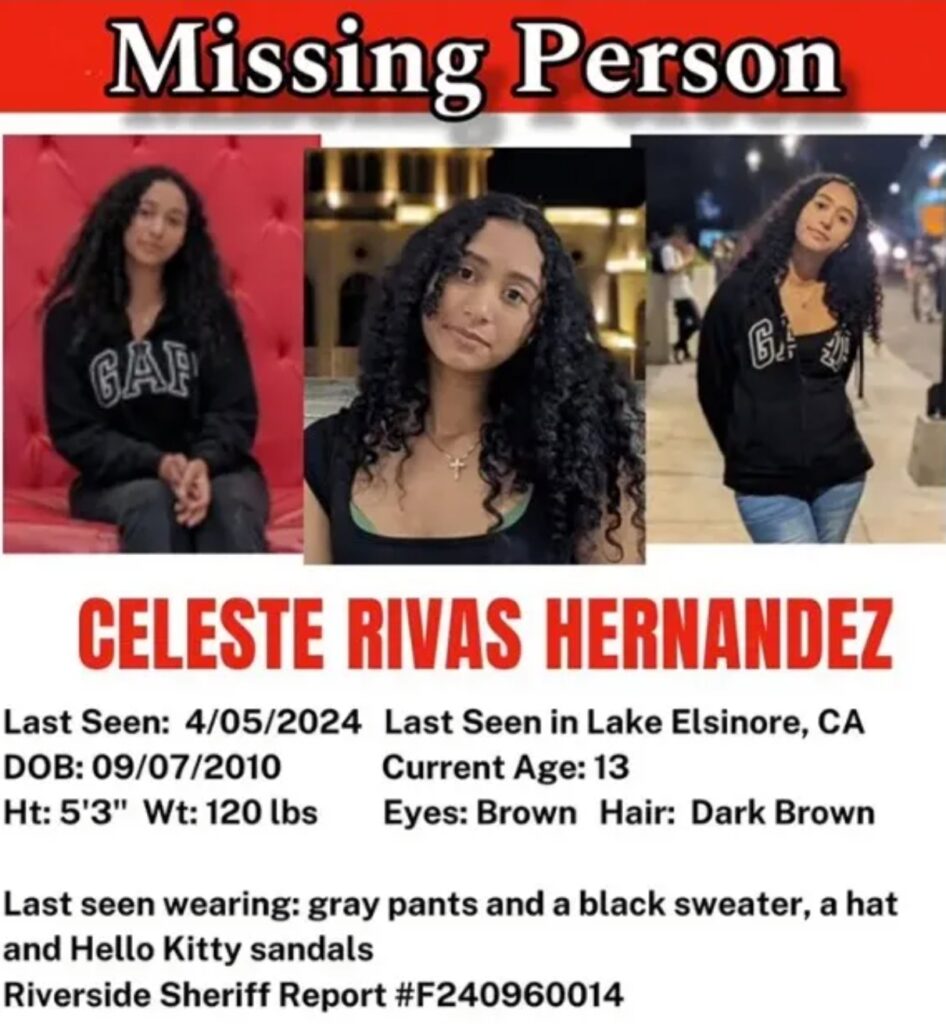
The body was eventually identified as 15-year-old Celeste Rivas Hernandez, who had been reported missing in April 2024 from Lake Elsinore, California.  The medical examiner described the remains as severely decomposed, and determined the death appeared to have occurred some time before the car was impounded.  Authorities are investigating the case as a homicide, though no official charges have been announced. 


According to police, the Tesla had been parked on Bluebird Avenue in the Hollywood Hills for weeks.  Transforming this, the impound came after a parking citation for violating a 72-hour parking rule; two days after that citation, the car was towed.  Then, on September 8, tow yard workers alerted police to a foul odor; officers searched the car and discovered the remains in a bag inside the front trunk.

Investigators later executed a search warrant at a Hollywood Hills residence associated with D4vd. Electronics, computers, and other items were seized.  Meanwhile, D4vd canceled the rest of his U.S. tour dates. 


Family, fans, and community members have expressed deep grief. A vigil was held in Lake Elsinore, her hometown.  According to reports, Celeste had a “Shhh…” tattoo on her right index finger – a detail that drew attention because photos show the same tattoo on D4vd’s finger.  However, authorities have not confirmed a personal relationship or romantic involvement between the two. 


Law enforcement officials claim that D4vd has not cooperated with the investigation.  As of now, no formal suspect has been publicly named, including D4vd. The cause of death also remains under review, due to the advanced state of decomposition. 

This case has drawn widespread media attention and social media discussion — in part because of the singer’s fame, the shocking circumstances, and questions about how and when the girl’s body ended up in his vehicle. But as of now, public reporting remains focused on confirmed facts: the identity of the victim, her disappearance, the discovery in the Tesla, the investigation, and the cooperation of Burke (D4vd).

     As I was watching the story unfold, I started to wonder about how this twenty something unknown somehow became so well known. One does not  just show up and perform at the Hollywood Bowl, without some degree of clout. Reading further, I recognized his last name Burke. Early in my career, I was a part of a decent band. Locally, in Dayton Ohio, we often showed up at the Lakeview Palladium, as an opening act.

The Stairsteps

We crossed paths with another group of kids by the name of the Five Stairsteps. They were experiencing some degree of success – ahead of the Jackson 5. I met one of the Stairstep kids – a young man named Kenny Burke. My curiosity paid off, and I discovered that Kenny of Five Stairsteps fame is the grandfather of young David Burke.

     Bingo or perhaps Eureka is the better word. Kenny – now known as Keni Burke has remained tangentially relevant in the music business. Since the days with his other four siblings, when Burke recorded the Stan Vincent hit record

Keni Burke

, “Ooo Child” his most recent original releases were the single “So Real” in 2011 and the album “Nothin’ But Love” in 1998. His older hit, “Risin’ to the Top,” remains popular and has seen recent re-releases and remixes. The mystery surrounding Keni’s grandson remains a mystery as of this writing, but the mystery surrounding the young man’s talent as well as his rise to the top is for now resolved. We wish him well, and hope that the evolving mystery of the life and death of Celeste Rivas Hernandez is also resolved and that her memory will be a blessing.


Story: Charles Jackson

Apartheid Refugee Resettlement

So under their stated mandates, it seems that Elon Musk,Trump, the GOP congress and DOGE did not halt any of the following services under the category of waste, fraud, and abuse.

Refugees resettled in the United States, including those from South Africa under the “Mission South Africa” program, typically receive a range of services designed to help them integrate and achieve self-sufficiency. This assistance is primarily managed by the U.S. Department of State’s Bureau of Population, Refugees, and Migration (PRM) and the Department of Health and Human Services’ Office of Refugee Resettlement (ORR), working with various non-profit resettlement agencies.

Here’s a breakdown of the kind of resettlement assistance provided:

Initial Resettlement (First 3 months – Reception and Placement Program):

* Airport Reception: Refugees are met by staff or volunteers from a local resettlement affiliate, private sponsors, or family/friends upon arrival.

* Housing: Assistance in securing initial housing, which is often furnished.

* Basic Needs: Provision of a one-time initial resettlement money (e.g., $900 per person) to help with immediate expenses like security deposits, transportation, food, and clothing.

* Cultural Orientation: Information and guidance on life in the U.S., including laws, customs, and community resources.

* Access to Services: Help with:

* Applying for Social Security cards.

* Registering children for school.

* Accessing medical care and health screenings.

* Applying for federal benefits they may be eligible for (e.g., Refugee Cash Assistance, Refugee Medical Assistance).

* Connecting with employment services.

* English language training.

Longer-Term Assistance (Beyond 3 months):

* Refugee Cash Assistance (RCA): For those not eligible for other forms of cash aid (like Temporary Assistance for Needy Families – TANF), RCA provides temporary financial assistance for basic needs (food, shelter, transportation). This is often linked to employment services. The duration of RCA can vary, but generally, it’s for up to 12 months from their date of admission.

* Refugee Medical Assistance (RMA): For those not eligible for Medicaid, RMA provides health insurance coverage. Similar to RCA, the duration of RMA can vary.

* Matching Grant (MG) Program: An alternative to RCA, this program focuses on early self-sufficiency through intensive case management and employment services. The goal is to help refugees become economically self-sufficient within 240 days of arrival without relying on public cash assistance.

* Employment Services: These are crucial for long-term self-sufficiency and include:

* Job training and preparation.

* Assistance with job search, placement, and retention.

* Help with building resumes and interview skills.

* English Language Training (ELT): Classes to help refugees improve their English skills, which is vital for integration and employment.

* Social Adjustment Services: Connecting refugees with community-based organizations and support networks to help them adjust to their new environment.

* Specialized Programs: ORR also funds programs for vulnerable populations, such as victims of torture, and provides services like trauma assistance, childcare, and transportation assistance.

The specific “Mission South Africa” program expedited the processing of refugee applications for white South Africans. While the underlying claims for this program are controversial, the individuals granted refugee status under it would be eligible for the standard resettlement assistance provided to all refugees in the U.S.


$Trump

Congressional Democrats Introduce “Stop TRUMP in Crypto Act” to Counter Alleged Presidential Profiteering


The most poignant statement that Congresswoman Waters hurled, directly addressed these concerns: “I know my Republican colleagues fear Trump, but I urge them to stand with me and my Democratic colleagues to pass this bill and send a clear message that the White House is not a platform for personal profit.”


In a move aimed at curbing financial conflicts of interest at the highest levels of government, Congresswoman Maxine Waters (D-CA), Ranking Member of the House Financial Services Committee, unveiled the “Stop Trading, Retention, and Unfair Market Payoffs in Crypto Act of 2025” — or the “Stop TRUMP in Crypto Act” — on May 22, 2025. This landmark legislation, also known as H.R. 3573, seeks to bar the President, Vice President, Members of Congress, and their immediate families from engaging in a range of activities involving digital assets.

The bill prohibits covered officials from owning a significant stake in any digital asset that would allow them to unilaterally influence it, from serving as officers or directors of digital asset issuers, and from promoting or profiting from digital assets. It also bans trading based on material non-public information, effectively addressing concerns about insider knowledge and manipulation.


The legislation was introduced against a backdrop of controversy surrounding President Trump’s cryptocurrency ventures, including his personal memecoin, $TRUMP, which has been at the center of public scrutiny. Reports indicate that $TRUMP has inflated the former president’s net worth by over $350 million, while investors have reportedly lost billions of dollars. In addition, Melania Trump has launched the $MELANIA memecoin, and the Trump-backed stablecoin, USD1, has drawn attention for its ties to foreign investors and national security implications.


Just hours before the bill’s unveiling, President Trump hosted a private dinner for top $TRUMP coin holders at his luxury golf resort. Attendees reportedly paid millions for a seat at the table, and the event coincided with a significant surge in $TRUMP’s value in the preceding 24 hours. This development, in the eyes of Waters and other Democratic lawmakers, underscores the urgent need for legislative action to prevent public officials from using their offices for personal enrichment.


“Donald Trump is preparing to dine with the top donors of his memecoin who’ve made him, and his family, richer,” said Congresswoman Waters in a statement. “Meanwhile, American families are getting poorer and growing increasingly anxious under his failed leadership.”


Waters’ concerns were echoed by other Democratic colleagues. Congressman Stephen Lynch, Ranking Member of the Subcommittee on Digital Assets, Financial Technology, and Artificial Intelligence, characterized Trump’s actions as “disrespect for the rule of law.” Congresswoman Nydia Velázquez highlighted the potential for foreign influence in Trump’s crypto dealings, while Congressman Brad Sherman warned that selling access to the presidency through digital assets undermines the credibility of the United States on the global stage.


Congressman Al Green added that President Trump’s second term has seen “corruption in this country reach new heights,” and that the bill is vital to ensure no future public official uses digital assets for personal gain. Similar sentiments were voiced by Congressmen Emanuel Cleaver, Bill Foster, and others who cosponsored the legislation.


The bill has also garnered the support of outside groups such as Public Citizen, Accountable.US, and Americans for Financial Reform, who see it as a critical measure to restore public trust and safeguard democratic institutions.


The proposed legislation comes amid a broader debate over the role of digital assets in the U.S. financial system and the need for clear regulations to prevent their misuse. While crypto enthusiasts tout the potential for innovation and new investment opportunities, lawmakers like Waters emphasize that, without oversight, these assets can become tools for self-dealing and corruption.


The “Stop TRUMP in Crypto Act” is now under consideration by the House Financial Services Committee, where Waters and her Democratic colleagues are pushing for bipartisan support. They argue that the bill’s scope — which extends to any President, Vice President, or Member of Congress — ensures it is not a partisan measure, but a necessary safeguard against future abuses of power.


“This bill will stop Trump’s brazen crypto corruption and prevent any President, Vice President, Members of Congress, or their immediate families from exploiting crypto in this way,” Waters said. “Enough is enough. Congress can no longer ignore the biggest scam and abuse of power in American history.”


The push for this legislation reflects growing concern that financial entanglements at the highest levels of government erode democratic norms and expose the country to undue foreign influence. As the bill moves forward, supporters say it is a vital step toward ensuring that the presidency and Congress remain dedicated to public service — not personal profit.


The outcome of this legislative effort remains to be seen. But if passed, the “Stop TRUMP in Crypto Act” would mark a significant turning point in regulating the intersection of digital assets and political power, establishing guardrails to protect the public and uphold the integrity of America’s democratic institutions.


The full text of the bill is available at link below:


https://1man1vote.com/wp/?page_id=787



CLASS Act

During his morning monologues, The late Rush Limbaugh used to sermonize that“words mean things”. The word “Doge” has a couple of distinct meanings:

Historically, “Doge” refers to an elected lord and head of state in medieval Venetian and Renaissance periods, and later it transferred onward into the time of Benito Mussolini.

Somehow today’s search for Government Efficiency has perhaps unfortunately or ironically carried DOGE back into our popular lexicon of modern usage. Although the concept of authoritarianism made its way alongside our modern usage, this four letter word is but an acronym that the GOP used to sweep themselves into power, promising maximum productivity and austerity,

What we ended up with is policies that tend to hurt some, and ultimately help none. The present administration is so busy enacting public policy, that the concept of public service is never even mentioned on their side of the aisle.


But there is still the other side of the aisle. In a renewed effort to protect students from predatory educational practices, Congresswoman Maxine Waters and Senate Democratic Whip Dick Durbin have reintroduced the Court Legal Access and Student Support (CLASS) Act. The bicameral legislation is designed to ensure students defrauded by for-profit colleges have the right to take legal action, ending the widespread use of mandatory arbitration clauses that often deny students their day in court.


The CLASS Act seeks to prohibit institutions of higher education from accessing federal Title IV student aid funds if they include mandatory arbitration agreements in their enrollment contracts or otherwise limit students’ ability to file claims in court. The legislation targets for-profit colleges, many of which have historically relied on these clauses to shield themselves from legal scrutiny, even in cases of fraud or misrepresentation.


“For years, students have been stripped of their basic rights through fine print in enrollment contracts,” Waters said during the announcement. “Predatory for-profit colleges have used these clauses to avoid accountability while continuing to profit off public funds and students’ futures.”


Durbin echoed similar concerns, calling the legislation an important step toward ending exploitative tactics that leave students without recourse when they are misled about programs, job placement rates, or accreditation status.


Under the proposed law, any for-profit institution that includes forced arbitration clauses would be disqualified from participating in federal student aid programs. The bill also ensures that the Federal Arbitration Act does not apply to student enrollment agreements, effectively nullifying arbitration mandates that have been upheld in past legal disputes. The legislation would take effect one year after enactment, giving schools a transition period to bring their policies into compliance.


The CLASS Act does not apply to legitimate non-profit colleges and universities, which typically do not include such restrictive clauses in their agreements. The bill is narrowly tailored to address ongoing issues within the for-profit education sector, which has seen repeated enforcement actions, campus closures, and bankruptcy filings in recent years, leaving thousands of students in financial and academic limbo.


On social media, student advocacy groups and consumer protection organizations have rallied behind the bill. Some commenters shared firsthand experiences of being denied access to legal recourse after discovering that arbitration agreements blocked them from suing for tuition refunds or damages.


Supporters say the legislation is a critical step in restoring fairness to higher education, particularly for low-income and first-generation college students who are disproportionately targeted by for-profit institutions. They argue that public funds should not support schools that deprive students of the ability to hold them accountable.


If passed, the CLASS Act would mark a significant shift in the federal government’s oversight of for-profit colleges and mark a major win for student rights. Advocates, across the country, are in support of the way forward for the student body – the citizens.


Play ball.


Beyond Trump’s little sneak attack on Ramaphosa, China is a strong supporter of South Africa. Their relationship has deepened significantly over the years, moving beyond just economic ties to encompass strategic, political, and even military cooperation.

Here’s a breakdown of how China supports South Africa:

1. Economic Partnership:

* Major Trading Partner: China is South Africa’s largest trading partner, with bilateral trade soaring to tens of billions of dollars annually.

* Investment: Chinese companies have substantial investments in South Africa, particularly in mining, manufacturing, energy, and infrastructure. They also participate in South Africa’s Belt and Road Initiative projects.

* Loans: China provides loans to South Africa, though some analysts raise concerns about potential debt sustainability.

* Market Access: China has committed to opening its markets to more South African products, especially agricultural goods, to help address South Africa’s persistent trade deficit with China (where South Africa primarily exports raw materials and imports manufactured goods).

2. Political and Strategic Alignment:

* “All-Round Strategic Cooperative Partnership”: The relationship has been elevated to this high level, signifying strong political, economic, and social ties.

* Global South Solidarity: Both countries emphasize their commitment to strengthening cooperation within the Global South and advocating for a more equitable international order.

* BRICS Membership: South Africa’s inclusion in the BRICS group (Brazil, Russia, India, China, South Africa) in 2010 was largely facilitated by China and has further solidified their economic and political ties.

* Multilateral Coordination: China supports South Africa’s role in international forums, including its G20 presidency, and encourages greater African participation in alternative global institutional architectures.

* Support for South Africa’s Development: China has expressed firm support for South Africa’s chosen path of economic and social development, offering to share experience in poverty alleviation and rural revitalization.

3. Other Areas of Cooperation:

* Infrastructure: China has committed to investing in South Africa’s infrastructure build program, including ports, rail, and road networks.

* Energy: Chinese companies are investing in South Africa’s energy sector, including renewable energy and addressing its electricity challenges.

* Technology Transfer: There are initiatives for skills transfer and technology collaboration, especially in areas like manufacturing and advanced technologies.

* Military Ties: China and South Africa engage in joint military training and defense sales.

While the relationship is characterized by strong support from China, it’s also important to note that the trade imbalance favoring China and concerns about the nature of some Chinese investments and loans are subjects of ongoing discussion and analysis.


Play Ball


The Fruit of The Rotten Tree

I never got to know my grandfather, who died when I was 18 months old. He was a child of the depression, and a sharecropper. How much of his upbringing was passed on to his

W.H. Smith

five children would be a guessing game. My mother was the baby of the family. I knew her oldest brother – my uncle, but he was bed-ridden, and living at the VA hospital for the entire time that I knew him. His kids were the closest I came to having older siblings. He had a daughter that retired from the Dayton, Ohio police department and his youmgest son retired military. I had another first cousin who was a Detroit policeman, my youngest brother was in the Air Force, and my sister apparently went through grade school and college with straight A’s  I said all of that to say that my grandfather must have passed some of his values down to his decendents. Of course not all of us faired so well. Some of us stumbled, and some failed, but we all spent time in church and there is no evidence of overt hatred for mankind. As young kids my mother would not allow us to visit Alabama. She would only say that having grown up in the north ” we did not know how to talk to white people.” I found out later that she was reacting to the death of Emit Till.

That being said, I cant lean too

Continue reading “The Fruit of The Rotten Tree”

Maxine Waters Commemorates World AIDS Day


Maxine Waters Commemorates World AIDS Day

On December 1, 2024, Congresswoman Maxine Waters issued a statement in honor of World AIDS Day, celebrating the progress made in combating the HIV/AIDS epidemic while expressing grave concern over proposed funding cuts for critical programs.

Rep. Waters, a long-time advocate for health equity and access, emphasized the significance of ongoing investments in prevention, awareness, and treatment efforts. She praised advancements that have significantly reduced transmission rates and improved the quality of life for those living with HIV/AIDS, while also acknowledging the challenges that persist, particularly among marginalized communities disproportionately affected by the disease.

In her statement, Rep Waters highlighted how federal funding has been instrumental in providing access to lifesaving medications, education campaigns, and community-based initiatives. She pointed to the Ryan White HIV/AIDS Program and the President’s Emergency Plan for AIDS Relief (PEPFAR) as examples of programs that have demonstrated measurable success in reducing new infections and ensuring care for millions worldwide.

However, she strongly condemned recent Republican proposals to slash federal funding for these essential programs. She warned that such cuts could reverse decades of progress, particularly in underserved communities already facing barriers to healthcare. “The fight against HIV/AIDS is far from over,” she stated. “This is a public health crisis that requires sustained resources and commitment. Any reduction in funding is not only shortsighted but dangerous.”

As World AIDS Day 2024 concluded, Waters urged bipartisan action to reaffirm the nation’s dedication to eradicating the epidemic. She called on Congress to protect and expand funding for HIV/AIDS programs, reminding lawmakers that the fight against HIV/AIDS is not just a health issue but a matter of justice and humanity.

Rep. Waters’ advocacy continues to spotlight the critical need for political and financial commitment to end the HIV/AIDS epidemic once and for all.

An audible version of Rep. Waters’ speech is availbe link below, read by 1M1V-Audio/video

Continue reading “Maxine Waters Commemorates World AIDS Day”

This Challenge, Earth

Here in Los Angeles County,  unless you frequent the area around the Sepulveda Flood Basin, the idea of residential flooding seldom comes to mind.

Rep. Maxine Waters Advocates for National Flood Insurance Debt Relief to Protect California Communities

Congresswoman Maxine Waters, a longtime champion for equitable disaster recovery solutions, has issued a resounding call for debt forgiveness within the National Flood Insurance Program (NFIP). Waters, who represents parts of Los Angeles County, warns that without immediate action, vulnerable California communities face severe financial and environmental crises due to climate change’s escalating impacts.

In a statement addressing policymakers and the public, Rep. Waters emphasized the urgency of reforming the NFIP,  ( National Flood Insurance Program) which is managed by the Federal Emergency Management Agency (FEMA). The program, designed to provide affordable flood insurance to homeowners in high-risk areas, is currently grappling with a debt of over $20 billion, accrued from payouts linked to increasingly destructive hurricanes, floods, and other natural disasters.

Rep. Waters underscored how California, despite its reputation for droughts and wildfires, is not immune to catastrophic flooding. Atmospheric rivers, rising sea levels, and aging infrastructure have heightened flood risks across the state. Coastal cities like Los Angeles and agricultural hubs in the Central Valley are especially vulnerable. Yet many residents, particularly those in low-income communities, cannot afford the rising premiums tied to FEMA’s updated risk assessment models.

“The National Flood Insurance Program was created to protect homeowners, not burden them with unsustainable debt,” Waters stated. “Without relief, these costs will force working families out of their homes and leave entire neighborhoods defenseless against climate-related disasters.”

Waters is urging Congress to forgive the NFIP’s debt, arguing that the current financial strain limits FEMA’s ability to prepare for future disasters. Debt forgiveness, she contends, would free up federal resources to invest in flood mitigation projects, such as levee repairs, stormwater management systems, and wetland restoration efforts.

Rep. Waters has also proposed increasing subsidies for low-income policyholders, ensuring that vulnerable populations are not priced out of essential coverage. “California families shouldn’t have to choose between putting food on the table and protecting their homes,” she declared.

While the proposal has drawn praise from environmental advocates and urban planners, Congress. Opponents argue that forgiving the NFIP’s debt could set a dangerous precedent for other federally funded programs. Some policymakers are also calling for stricter reforms, such as incentivizing property owners to relocate from flood-prone areas—a solution that Waters has criticized as inequitable and impractical for urban centers like Los Angeles.

Despite these challenges, Congresswoman Waters’ push for NFIP reform highlights the broader implications of climate change for U.S. infrastructure and communities. With FEMA projecting that one in four homes nationwide will face high flood risks by 2050, the stakes extend far beyond California.

Advocacy groups have rallied behind Waters’ proposal, urging Congress to prioritize resilience over repayment. “Forgiving NFIP debt is not just a financial issue; it’s a moral one,” said a representative from the National Resources Defense Council. “Communities like those in California need immediate support to weather the storms ahead.”

As the nation grapples with intensifying climate disasters, Rep. Waters remains steadfast in her mission to ensure that the NFIP serves its intended purpose: protecting American families. She has vowed to continue lobbying for legislative action, warning that inaction could lead to irreversible damage to both communities and the economy.

“Climate change is here, and it’s time for Congress to act,” Rep. Waters concluded. “The safety and stability of millions of Americans depend on it.”

Story: Charles Jackson

Daylight Saving Time


Benjamin Franklin

It’s that time again. Daylight Saving Time.

I don’t like it and i blame Benjamin Franklin for bringing it up in the first place, but a lot of folks think that its a good deal This morning I was ranting about it and the Goohle Info girl suggested that Ben is not at fault.

Benjamin Franklin is often mistakenly credited with inventing daylight saving time (DST), but this is not true. While Franklin did suggest the idea of adjusting sleep schedules to make better use of daylight, he didn’t propose a formal system like DST.

In 1784, during his time in Paris as the U.S. ambassador to France, Franklin wrote a satirical letter to the Journal de Paris about how Parisians could save money on candles by waking up earlier to use natural light. He humorously suggested that if people rose with the sun, they could save thousands of pounds of candle wax each year. His letter proposed whimsical solutions like firing cannons at sunrise to wake people up and installing taxes on window shutters that blocked out the sun.

Franklin’s letter was intended as a joke and more of an observation on people’s wasteful habits than a serious proposal for changing timekeeping. The modern concept of DST, where clocks are shifted forward in the spring and back in the fall, came much later.

The idea for DST as we know it was first formally proposed by British builder William Willett in 1907. He lobbied for the practice to be adopted as a way to make better use of daylight during summer months. Willett’s idea was eventually implemented during World War I as a way to conserve fuel by reducing the need for artificial lighting.

So, while Franklin’s witty suggestion about using daylight more efficiently is part of his legacy, he did not invent daylight saving time. That innovation came from others, years after his humorous proposal.

Charles Jackson
Thought provoker