
Public Authenticity, Political Alignment, and Backlash: Nicki Minaj at the Center of a Social Media Firestorm
The ongoing debate over celebrity “authenticity” in the digital age has resurfaced with renewed intensity following controversy surrounding rapper Nicki Minaj. Critics across social media platforms have questioned why public figures increasingly share personal histories and political opinions in highly visible forums, particularly when those disclosures later conflict with subsequent public positions. Minaj’s recent political alignment and resurfaced comments about her immigration background have become a focal point in this broader cultural discussion.
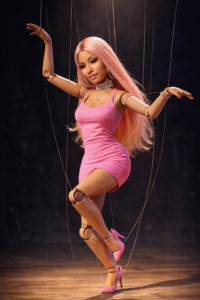 The latest backlash emerged after Minaj appeared at a Turning Point USA event alongside conservative commentator Erika Kirk. According to reporting by the Latin Times, the appearance prompted online users to revisit a 2018 Instagram post in which Minaj described arriving in the United States as a child without legal immigration status. The resurfaced post, originally shared amid public outrage over family separations at the U.S.–Mexico border, expressed empathy for migrant children affected by enforcement policies.
In that 2018 message, Minaj wrote that she came to the United States at the age of five and described the emotional trauma she associated with the idea of children being separated from their parents. “I came to this country as an illegal immigrant @ 5 years old. I can’t imagine the horror of being in a strange place & having my parents stripped away from me at the age of 5,” she wrote at the time, adding that the situation was “so scary” and calling on policymakers to  “please stop this,” according to excerpts cited by the Daily Mail. The post circulated widely during a period when images of migrant children held in detention facilities dominated news coverage.
In contrast, Minaj’s more recent engagement with political content has drawn criticism from fans and commentators who view her positions as inconsistent with those earlier statements. Online reactions highlighted by the Daily Mail included comments suggesting she had distanced herself from her own past experiences, with some accusing her of abandoning earlier views in favor of political alignment with former President Donald Trump and associated policy positions.
The criticism intensified after Minaj publicly responded positively to online posts promoting the SAVE Act, proposed legislation aimed at preventing undocumented immigrants from voting in U.S. elections. While supporters of the bill argue it addresses election security concerns, critics view it as part of a broader effort to tighten immigration enforcement and restrict immigrant participation in civic life. Social media users cited by the Daily Mail pointed to what they described as a contradiction between Minaj’s previous advocacy against family separation and her recent engagement with content perceived as supportive of stricter immigration measures.
Minaj has also addressed her own immigration history directly in recent years. During a TikTok Live broadcast in 2024, she spoke about being born in Trinidad and Tobago and later living in the United States. In remarks reported by the Daily Mail, she stated that she had paid “millions of dollars” in taxes and joked about not having received “honorary citizenship many, many, many thousands of years ago.” While framed humorously, the comments reignited discussion about her legal status and long-standing presence in the country.
Beyond immigration policy debates, Minaj has drawn attention for a public dispute with journalist Don Lemon. The exchange began after Lemon livestreamed coverage of a protest at a Minnesota church connected to Immigration and Customs Enforcement activity. In response, Minaj posted a message on X criticizing Lemon in explicit terms. Lemon later responded by questioning Minaj’s understanding of journalism and referred to her as “ignorant” during a subsequent podcast appearance, according to the Daily Mail. The back-and-forth further amplified public scrutiny of Minaj’s recent political commentary and online conduct.
Minaj’s political positioning has also included public praise for former President Trump. During a United Nations appearance in November, she thanked Trump for his “leadership,” a statement that drew renewed criticism from fans who viewed it as another indication of her alignment with MAGA-associated political messaging. The comment circulated widely across social media platforms and was cited by critics as evidence of a broader ideological shift.
The controversy reflects a larger trend in which celebrities increasingly use social media platforms to communicate directly with audiences about personal histories and political beliefs. For some fans, these disclosures foster a sense of transparency and relatability. For others, they raise questions about consistency, accountability, and the impact of celebrity influence on public discourse. In Minaj’s case, the resurfacing of her earlier immigration-related statements has become a benchmark against which her recent political engagement is being measured.
Observers note that the rapid circulation of archived social media content has made it more difficult for public figures to separate past statements from present positions. Posts made years earlier can be rediscovered and reframed within new political contexts, often intensifying public reaction. This dynamic has been particularly pronounced in politically polarized environments, where online communities actively scrutinize perceived contradictions.
While Minaj has not issued a comprehensive statement reconciling her earlier immigration comments with her recent political engagements, the ongoing debate highlights the challenges celebrities face when navigating public identity in a digital ecosystem that rewards immediacy and visibility. The reaction to her recent activities underscores how personal narratives, once shared publicly, can remain part of the public record and resurface in unexpected ways.
As the discussion continues across national and international media outlets, Minaj’s case illustrates the broader tension between celebrity authenticity, political expression, and public accountability. Whether this episode leads to further clarification from the artist or remains another example of social media-driven controversy, it reinforces the reality that in the current media landscape, personal disclosures and political affiliations are rarely isolated from long-term public scrutiny.