
Fallout From Shutdown

In October 2025, the Trump administration issued mass layoff notices across federal agencies during a partial government shutdown, triggered by administrative over-reach and multiple layers of failed policy directives.

Among the hardest hit was the Department of Housing and Urban Development (HUD), where approximately 442 employees were terminated, distributed across offices such as Public and Indian Housing, Housing Counseling, Housing Operations, Fair Housing & Equal Opportunity, and Community Planning & Development.

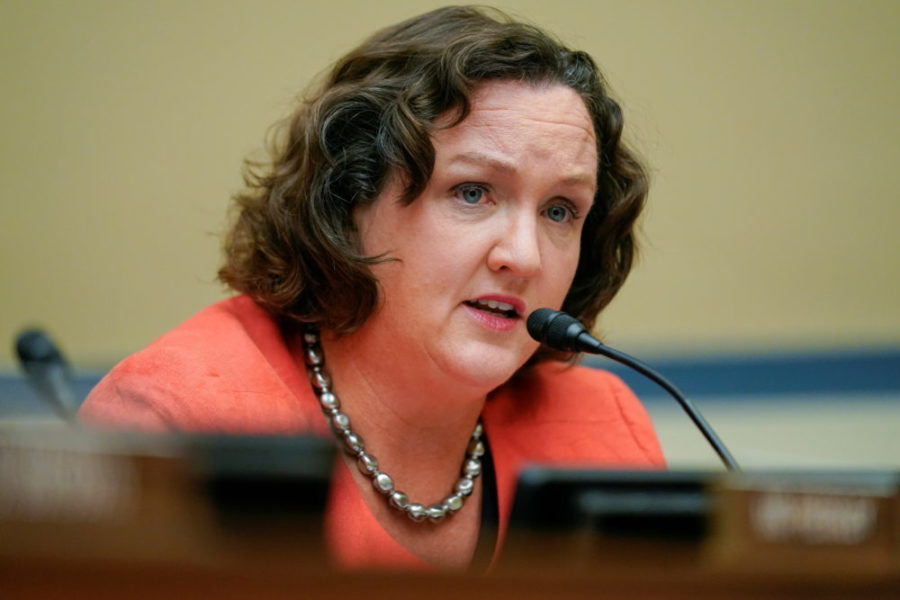
In response, Congresswoman Maxine Waters (D-CA), speaking as the top Democrat on the House Financial Services Committee, condemned the action as “cruel, dangerous, and disgraceful,” accusing the administration of using the shutdown to intentionally weaken HUD’s ability to administer housing programs. (Her full statement framed the firings as part of a broader campaign to “dismantle” HUD.
Ms. Waters’s critique aligned with broader concern that these personnel cuts would disproportionately undermine HUD’s fair housing enforcement. In particular, media outlets and housing advocates flagged that a significant portion of the firings targeted fair housing investigators nationwide — personnel whose work is essential to investigating claims of discrimination based on race, disability, religion, and other protected categories.

This wave of terminations came amid already deep staff reductions at HUD. The agency’s Office of Fair Housing and Equal Opportunity (FHEO), for example, had reportedly lost 45 percent of its workforce since the start of the Trump administration, a reduction Waters and others cited as evidence of a long-standing effort to weaken civil rights enforcement in housing.

Notably, whistleblower accounts surfaced shortly before the mass layoffs. Two HUD civil rights attorneys, Paul Osadebe and Palmer Heenan, alleged the department had engaged in political interference in fair housing enforcement, and that discrimination complaints were being deprioritized. Within days of going public with those complaints, the attorneys were terminated — a move critics described as retaliatory and illegal.

On October 15, a federal judge in San Francisco, U.S. District Judge Susan Illston, granted a temporary restraining order blocking these firings. In her ruling, she characterized the layoffs as “politically motivated,” “arbitrary and capricious,” and likely exceeding executive authority. The judge ordered that no further reduction-in-force (RIF) notices be enforced until further review, and demanded a detailed accounting from the administration about the layoff plans.

The union groups that brought the challenge — including the American Federation of Government Employees (AFGE) and AFSCME — applauded the decision, arguing that federal employees should not be treated as political pawns.

The broader context of the layoffs extends far beyond HUD. The administration had publicly acknowledged that approximately 4,200 federal employees across multiple agencies — including Education, Health and Human Services, Treasury, EPA, Commerce, and Housing — received or were slated to receive RIF notices as part of the shutdown. In some cases, proceedings were already underway before the judge’s halt; in others, agency field offices were shuttered entirely.

On social media and in online forums, federal employees shared copies of layoff notices, expressed shock at being targeted during a pay blackout, and speculated about the motives behind selecting particular offices for cuts. Some federal workers also raised concerns about lack of access to human resources during the shutdown, making it difficult to appeal or even know one’s status.

Critics warn that eliminating staff in fair housing and community development jeopardizes protections for vulnerable families, especially as housing costs and homelessness continue rising. The National Low Income Housing Coalition has long warned that reductions in HUD capacity — especially during a housing crisis — could lead to evictions, stalled affordable housing construction, and weakened civil rights enforcement.

As the legal battle proceeds, Ms. Waters and her Democratic colleagues have pledged to restore HUD’s mission and hold the administration accountable. But for many public servants and people relying on HUD programs, the pause ordered by the judge may only delay further disruptions. The outcome remains uncertain — and the human consequences are already being felt.

Talk show host Whoopi Goldberg has urged members of Congress to refuse their salaries during government shutdowns, arguing on The View that lawmakers should feel the same economic strain as the citizens they represent. Her remarks have reignited a long-standing public debate over congressional pay during shutdowns.

Although Goldberg’s stance struck a chord with many Americans, the U.S. Constitution mandates that congressional salaries continue regardless of funding lapses. Still, some lawmakers have voluntarily requested to have their pay withheld or pledged to donate their salaries in solidarity with furloughed federal workers.

Her comments join a broader chorus of public voices criticizing political gridlock. Late-night hosts such as Jimmy Kimmel, Stephen Colbert, and Seth Meyers have also used humor to condemn the recurring shutdown crises, emphasizing the toll on government employees and the broader economy.

Across social media and talk shows alike, the consensus remains clear: the financial burden of shutdowns falls hardest on everyday workers, not elected officials. Goldberg’s challenge underscores a growing frustration among both celebrities and citizens who believe lawmakers should share in the consequnces of their inaction.


Defend America. VOTE

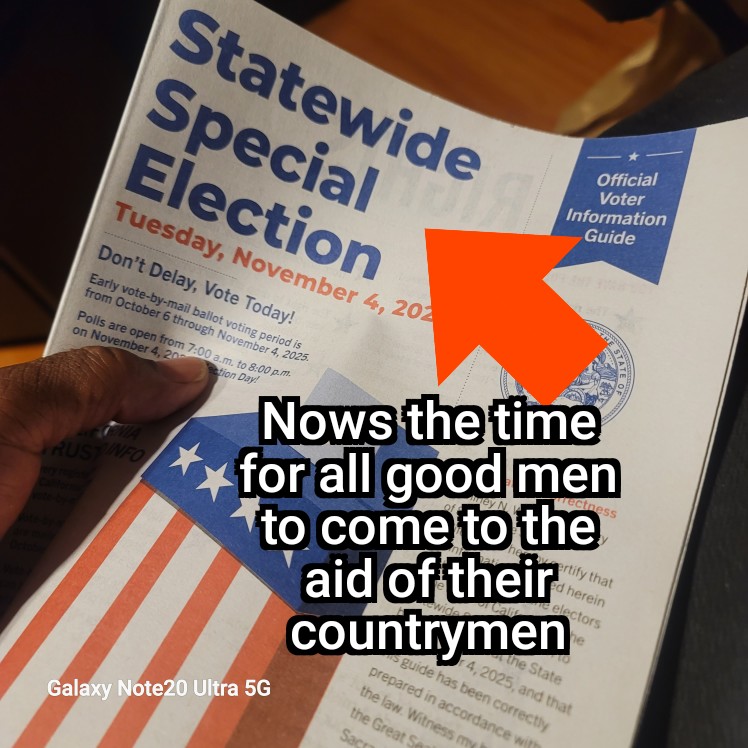
The state of California leads the charge to defend against Donald Trump’s deceptive attempt to rig upcoming battles for congressional seats. VOTE!

The major special election for California in 2025 is the Statewide Special Election on Tuesday, November 4, 2025.

​All registered voters in California will receive a ballot for this election, which includes a vote on Proposition 50.

​Key Dates for the November 4, 2025, Statewide Special Election:

​October 6, 2025: Vote-by-mail ballots begin to be mailed to all registered voters.

​October 20, 2025: Last day to register to vote.

​November 4, 2025: Election Day.

The Authoritarian Abuse of Power

Maxine Waters Condemns Indictment of James Comey, Accuses Trump of Authoritarian Abuse of Power


Washington, D.C.Congresswoman Maxine Waters (CA-43) issued a blistering statement Thursday denouncing the indictment of former FBI Director James Comey by the Department of Justice under President Donald Trump. Waters characterized the action as “payback and retaliation,” warning that it represented an alarming erosion of democratic norms in the United States.

“The indictment of James Comey is not just another headline. This is a five-alarm fire signaling the collapse of American democracy as we know it,” Waters declared. “Donald Trump is dragging the United States down the dark and dangerous path toward dictatorship.”

The Justice Department announced the indictment earlier this week, following Trump’s repeated public demands that Comey be prosecuted. Waters argued that the charges were politically motivated and baseless, describing the process as an example of the administration weaponizing federal power against perceived opponents.

Accusations of Retaliation and Political Targeting:
In her statement, Waters accused Trump of creating and manipulating evidence when existing legal grounds for prosecution were lacking. She claimed that federal prosecutors who resisted bringing charges against Trump’s critics were dismissed from their posts. Waters highlighted Trump’s firing of the U.S. attorney for the Eastern District of Virginia, who had declined to pursue cases against both Comey and New York Attorney General Letitia James.


She also pointed to Trump’s past public clashes with members of Congress and state officials as examples of a broader strategy of political retaliation. “There are no ifs, ands, or buts – let’s call it what it is, Donald Trump is an authoritarian,” Congresswoman Waters said. “He is systematically transforming government into a tool for personal and political revenge on his enemies.”


There Are Broad Concerns Over Executive Power.
Waters expanded her criticism beyond Comey’s indictment, citing a pattern of executive actions she described as unconstitutional. According to her statement, Trump had issued Executive Orders targeting universities with what she called “fabricated violations,” as well as directives aimed at private law firms, restricting the types of cases they could take and compelling them to provide pro bono services in areas favorable to the administration.

She alleged that institutions or firms refusing to comply faced repercussions, including revoked security clearances, canceled federal contracts, and restricted access to government facilities.

In one of her most pointed criticisms, Waters condemned what she described as threats to media freedom. She claimed Trump’s Federal Communications Commission chair pressured Nexstar Media Group to remove late-night host Jimmy Kimmel’s program from its ABC affiliates, allegedly tying compliance to approval of a pending corporate merger.

Silence from Republicans and a Call to Action:
Waters reserved sharp words for congressional Republicans, accusing them of failing to uphold their constitutional responsibilities. “To my surprise, Republicans, the so-called champions of free speech and the party of law and order, have been eerily silent all week as Trump tramples on free speech and breaks the law with impunity,” she said.

She also issued a direct appeal to the private sector, urging corporations not to capitulate to political pressure. “You do not have to cave to his threats. You do not have to be complicit in the silencing of speech, the erosion of law, and the criminalization of dissent,” Waters stated.

Commitment to Resistance
Waters emphasized that Democrats would continue opposing what she described as authoritarian overreach. She encouraged citizens to remain active in public demonstrations and political advocacy. “Democrats will continue fighting to protect American democracy and the rule of law. But we cannot do it alone,” she said. “I continue calling on the American public to keep resisting, keep showing up on the streets, and keep giving them hell.”

The indictment of Comey has sparked intense debate across the political spectrum, with questions mounting over the use of prosecutorial power in cases involving political adversaries. Waters’ statement underscored the concerns of critics who argue that the move sets a dangerous precedent in American governance.

Consensus:
We the people have passed this way before and faced legal Implications of Firing Prosecutors Who Declined Politically Sensitive Cases.

The firing of federal prosecutors has long been a contentious issue in American politics, raising questions about the balance of power between the executive branch and the Department of Justice (DOJ).

The president has constitutional power to appoint and remove U.S. attorneys, who serve at the president’s discretion. While legal, firings tied to political interference in ongoing or potential cases challenge the principle of prosecutorial independence.

Department of Justice norms require the DOJ to traditionally operate with autonomy from the White House. Presidents may set priorities, but specific prosecutions are expected to remain free from political influence. Firings that appear retaliatory risk undermining this independence.

Yet, those norms have faced historical challenges.
The Saturday Night Massacre (1973): President Richard Nixon ordered the dismissal of Watergate special prosecutor Archibald Cox, fueling a constitutional crisis.

In 2006 Several prosecutors were dismissed under President George W. Bush, leading to congressional hearings and the resignation of Attorney General Alberto Gonzales.

      Here we go again. As a private citizen, this resident was never one to shy away from frivolous or oft times vexatious litigation, even when he was spending his daddy’s money. Now, with the virtually unlimited resources of the taxpayer’s money, the threat of lawsuits and endless appellate actions serve to crush any and all citizen attempts to reign in or challenge his consistent stream of executive orders and personal agendas. Without the partnership of a willing congress, we the people stand alone with only the voice of the minority, to act as our sounding board.

So we stand by watching, while his whimpering demands for Comey’s Prosecution become solidified, as he boldly fires his way through the voices of reason. Finally, the indictment was announced, and the Justice Department brought chargesl0IXfznpbAwGUXZO against James Comey.

Bypassing congressional oversight, he pens Executive Orders Against Universities, issuing directives requiring them to pay millions in penalties over alleged violations.

He scribbles his signature on  Executive Orders, Targeting Law Firms that silence their mastery of the law itself. He implemented new rules dictating which cases law firms could take and compelled them to provide pro bono services for administration-backed causes. Firms that refused reportedly lost contracts and security access.

Recent FCC Threats Against Nexstar Media Group effectively turned their business plan sideways. The administration’s FCC chair warned the broadcaster to pull Jimmy Kimmel’s program or risk complications with a pending merger approval. The network had to choose between presidential threats to shut them down, and customer threats to cancel their streaming services. At risk – Trumpian ire, if they keep Kimmel’s show on the schedule until May, when his contract sunsets. Whatever mergers they were planning will be delayed at least through the holidays. By then, Don Quixote will undoubtedly be distracted by other giant windmills.

Dayton Honors 2025 Inductees

Dayton Region Walk of Fame Honors 2025 Inductees: Rob Lowe, Vic Cassano Sr., Original Lakeside, the Levin Family, and Jenell Ross


On Wednesday, September 24, 2025, civic leaders, community members, and proud native Daytonians gathered at Sinclair Community College for one of the city’s most cherished traditions: the Dayton Region Walk of Fame induction ceremony. This year’s class—actor Rob Lowe, restaurateur Vic Cassano Sr., funk pioneers The Original Lakeside, the Levin Family, and business leader Jenell Ross—was celebrated for shaping both Dayton’s cultural DNA and the broader national stage.

Celebrating Dayton’s Legacy

The Walk of Fame, nestled in the historic Wright-Dunbar District, honors figures whose accomplishments elevate Dayton’s global reputation. Since its founding, it has immortalized leaders in science, arts, social justice, and innovation. The 2025 inductees showcased Dayton’s reach across entertainment, music, food, business, and civic leadership.


Local timelines on X (formerly Twitter), Instagram, and Facebook overflowed with hometown pride. Residents posted snapshots of new plaques, clips of Lakeside’s classics, and memories tied to Cassano’s Pizza. One attendee summed up the mood: “Dayton isn’t just the birthplace of aviation—it’s the birthplace of culture. This event proved it again.”


Rob Lowe: From Oakwood to Hollywood

Actor Rob Lowe’s induction drew national attention. Before his rise to Hollywood stardom with The Outsiders, St. Elmo’s Fire, and Parks and Recreation, Lowe attended Oakwood Junior High. Social media lit up with tributes to his Dayton roots. Fans celebrated not just his enduring career, but his philanthropic efforts in youth mentorship and cancer research.


Vic Cassano Sr.: The Pizza King

No name in Dayton cuisine carries more weight than Vic Cassano Sr. In 1953, he and his mother-in-law opened Cassano’s Pizza King, creating what became a Miami Valley staple. Generations recall family gatherings, late-night runs, and thin-crust pies that became part of the city’s identity.


One post captured his cultural impact with humor and honesty: “In 2017, after a gig at Gilly’s, I bought a deluxe at Vic and Mom’s. I planned to share it with the band, but I ended up eating the whole darned thing in my hotel room—it was that good.”


The Original Lakeside: Funk Forever

Dayton is synonymous with funk, and The Original Lakeside carried that banner worldwide. Hits like Fantastic Voyage and It’s All the Way Live cemented their place in music history. Their induction sparked cross-generational excitement: older fans reminisced about prom nights and club shows, while younger audiences rediscovered their sound through viral TikTok videos. A local DJ wrote, “Dayton is funk. Lakeside proved it then, and they prove it now.”


The Levin Family: Civic Stewards

For decades, the Levin Family has played a pivotal role in shaping Dayton’s civic and cultural landscape. Their contributions span philanthropy, real estate development, and advocacy for education and the arts. Their Walk of Fame induction recognized both their historic and ongoing impact. Local nonprofits and community groups praised the honor online, calling the family “quiet champions of progress.”

Jenell Ross: Leadership and Legacy

As president of Bob Ross Auto Group, Jenell Ross has carried forward her family’s business while establishing herself as a philanthropic force. Through her foundation, she has supported breast cancer awareness, health equity, and scholarships for underserved students. Social media tributes included personal testimonies, with one young professional writing: “Because of Jenell Ross’ scholarship, I graduated college. Today’s honor is more than deserved.”


Community Reflections
The ceremony blended live music, storytelling, and heartfelt tributes. Attendees described the event as a “family reunion for Dayton,” where locals reconnected and expatriates followed from afar. LinkedIn and Instagram posts from Dayton natives now living abroad spread the news internationally, underscoring how these stories resonate far beyond the Miami Valley.

The event also sparked conversation about Dayton’s heritage preservation. Some called for livestreaming future inductions, while others suggested expanding educational programming linked to the Walk of Fame.


Honoring the Past, Walking Into the Future
By inducting a Hollywood star, a culinary pioneer, funk innovators, civic leaders, and a philanthropic entrepreneur, Dayton underscored its role as a hub of creativity, resilience, and community spirit.

Past honorees—like Olympic gold medalist Edwin Moses, baseball great Mike Schmidt, and actress Allison Janney—remind the world of Dayton’s deep talent pool. This year’s class adds new dimensions to that legacy.

As one attendee posted: “Dayton doesn’t just honor its past. It walks with it into the future.”

Honoring Hispanic Heritage Month

Maxine Waters Honors Hispanic Heritage Month While Condemning Immigration Raids in Los Angeles


Los Angeles, CA – Hispanic Heritage Month, which runs from September 15 through October 15, is typically a season of celebration across Los Angeles, marked by festivals, cultural showcases, and civic commemorations. This year, however, the observance has been overshadowed by a wave of immigration raids that have prompted condemnation from local leaders, including Congresswoman Maxine Waters (CA-43).


In a statement released from Washington, Waters praised the historic and ongoing contributions of Latinos while sharply criticizing the tactics of U.S. Immigration and Customs Enforcement (ICE) under directives from the Trump administration and U.S. Border Czar Tom Homan. She denounced the raids as warrantless and destabilizing to entire neighborhoods, accusing federal agents of “flooding the zone” in Los Angeles and creating an atmosphere of fear.


“Hispanic Heritage Month is a time we proudly celebrate the culture, history, and invaluable contributions of Hispanics in Los Angeles and across the United States,” Waters stated. “But this year, our celebrations come amid unfair attacks by U.S. Immigration and Customs Enforcement. Donald Trump and his administration … have launched a cruel campaign of warrantless immigration raids, terrorizing immigrant neighborhoods.”


Communities in Fear
Waters emphasized the human toll of the raids, noting that immigrant families now face impossible choices between attending work or school and risking detention. She described the consequences as devastating for working-class households already struggling with high housing and living costs in Los Angeles.


“Families are being forced to choose between going to work and risking deportation or staying home and falling behind on food and rent,” Waters said. “These heartless tactics are ripping apart communities that have called Los Angeles home for decades.”


Her comments reflect broader concerns expressed in community forums, on social media, and by immigrant rights groups across Southern California. Residents have reported increased ICE presence in predominantly Latino neighborhoods, with checkpoints and unannounced door-to-door operations that have sparked fear-driven absences from work, school, and public events.


Celebrations Curtailed
In addition to its cultural impact, the ICE raids have also disrupted Hispanic Heritage Month programming. Local organizers reported that several community events were canceled out of concern that participants could be targeted. In South Los Angeles, a planned street festival featuring mariachi music and food vendors was called off after volunteers expressed unease about large gatherings attracting immigration enforcement attention.

Similarly, an East L.A. art walk celebrating Chicano muralists was postponed, with organizers citing the “tense climate” created by immigration operations. Reports also surfaced of school-based heritage programs seeing sharply reduced attendance, as families worried about increased law enforcement presence near public institutions.


The cancellations highlight the chilling effect of federal enforcement measures on cultural expression, effectively silencing the very communities Hispanic Heritage Month was designed to honor.


Congresswoman Waters’ Call to Action
For Waters, who represents one of the most diverse Hispanic constituencies in the country, the timing of the raids during a nationally recognized month of celebration underscores what she views as the administration’s disregard for Latino communities. She pledged to continue pushing back against immigration policies she describes as “hateful” and inconsistent with American values.


“I condemn these cruel attacks,” she declared. “They dishonor not only our great nation but the very values of equality and justice that Hispanic Heritage Month seeks to uplift. As the representative of one of the most vibrant and diverse Hispanic communities in America, I will continue to fight back, and work to ensure that every community can live with dignity and without fear.”


Ms. Waters, community members echoed Waters’ sentiments, sharing stories of disruption caused by the raids. Posts described empty classrooms in some schools, as parents kept children home, and businesses struggling to staff shifts. Local advocacy groups amplified calls for city officials to provide sanctuary protections and ensure public spaces remain safe for immigrants.

Despite the fear, some cultural events continued, albeit under tightened security and scaled-down formats. In Boyle Heights, organizers of a heritage parade opted to reduce the route and increase community patrols rather than cancel. Smaller neighborhood gatherings were also held, often framed explicitly as acts of resistance and cultural resilience.


Looking Ahead
Congresswoman Waters’ strong stance situates her among several California lawmakers who have criticized federal immigration enforcement strategies. The tension between local leaders and the administration reflects an ongoing national debate over immigration policy, community safety, and cultural recognition.


In Los Angeles, the intersection of Hispanic Heritage Month and federal immigration operations has laid bare the contradictions between celebration and fear. For many, the month has become not only a time of cultural pride but also a reminder of the struggles facing immigrant families.


It has been noted that the legacy of Hispanic contributions to the nation is inseparable from the ongoing fight for dignity and security. This year, that legacy was honored not only through parades and performances but also through resilience in the face of disruption.


Charles Jackson
Thought provoker


#YesOnProp50

D4VD

So, I was curious about how this kid who goes by the name D4vd, rose to the top of the charts and was out there doing international tours, almost like magic. Sadly he has been implicated in the apparent murder of a young girl, so his tour has been canceled and his label (interscope) has canceled all publicity until things clear up.

A quick Google search revealed that D4vd, real name is David Anthony Burke.

I met a guy named Kenny Burke at the Lakeview Palladium, in Dayton Ohio, back when we were just getting started in the music game ourselves. So I climbed deeper into the Rabbit Hole, and yep, D4vd is the grandson of singer Keni Burke. Keni was a member of the child group “The 5 Stairsteps” (Ooh Child)

A deeper dive revealed that on September 17, 2025, Los Angeles authorities confirmed that the body of 15-year-old Celeste Rivas Hernandez had been discovered in the front trunk of a Tesla registered in D4vd’s name. Bad news. The young girl’s parents report that the young girl had been in a relationship with a guy named David, but she had been reported missing for over a year. D4vd turned twenty in March of this year, so the age disparities will require some further examination but his hit record “Romantic Homicide” is likely to complicate the investigation.

My heart goes out to the family of this poor young girl, and I’m also going to keep Keni and his family in prayer as they navigate this terrible bump in the road.


ADVERTISEMENT

#YesOnProp50

Trump Seeks Supreme Court Approval

Trump Administration Seeks Supreme Court Approval to Remove Fed Governor Lisa Cook

Artist Rendering

Washington, D.C. — The Trump administration has asked the Supreme Court to allow the immediate removal of Federal Reserve Governor Lisa Cook, escalating a constitutional clash over presidential authority. As of September 18, 2025, the Court has not yet scheduled a ruling.


The administration argues that the president’s decision to remove an official “for cause” cannot be reviewed by the courts. The Justice Department’s filing cites allegations of mortgage fraud, though recently disclosed documents indicate that Cook has “done nothing wrong.” Her defenders say the case is a politically motivated effort to weaken the Federal Reserve’s independence.


Legal experts warn that if the Court sides with the administration, it could expand presidential power in ways that undermine checks and balances, especially for independent agencies designed to resist partisan pressure.


The dispute has sparked a wave of commentary online. Critics on social media warn of “a direct threat to the Fed’s independence” and describe the move as “a power grab disguised as accountability.” Supporters of Trump counter that the president must retain authority to remove officials accused of misconduct without judicial interference.


Some lawmakers fear that if the Supreme Court rejects the administration’s request, Trump could pressure House Republicans to pursue impeachment of the Chief Justice—a step that would push the crisis into uncharted constitutional territory.

Cook, appointed in 2022 and the first Black woman to serve on the Federal Reserve Board, has drawn praise for her professionalism and independent judgment. Her allies argue those qualities make her a target for political removal.


For now, the case sits before a Supreme Court already under scrutiny for its role in refereeing disputes between the White House and independent institutions. A decision to hear or reject the administration’s request will shape not only Cook’s future, but also the balance of power between the presidency, the courts, and the agencies that underpin U.S. governance.


Maxine Waters Addresses Housing Priorities

Congresswoman Maxine Waters Calls for Bold Housing Action, Highlights Impact on California Communities


Washington, D.C. — California’s housing crisis took center stage this week as Congresswoman Maxine Waters (D-CA), Ranking Member of the House Financial Services Committee, addressed members of the Public Housing Authorities Directors Association (PHADA) during their Annual Legislative Forum. PHADA represents 1,900 housing agencies nationwide, including dozens across California that provide lifelines to families struggling with rising rents, homelessness, and limited affordable housing options.


For Waters, who represents South Los Angeles and Inglewood, the connection between national housing policy and local realities is deeply personal. California is home to the nation’s largest homeless population and some of the steepest housing costs, making the state a key focal point in the national debate.


In her remarks, Waters pointed to staggering national statistics: rents up nearly 47 percent since 2019, home prices surging by 57 percent, and more than 770,000 people experiencing homelessness on any given night. In California, those numbers are even more dire. More than 180,000 people are unhoused statewide—about a quarter of the national total—with Los Angeles County alone accounting for over 75,000.


“These numbers aren’t abstract,” Waters told the forum. “In California, our housing authorities are grappling with record homelessness, overcrowded shelters, and families waiting years for housing vouchers that simply aren’t available.”


California’s public housing authorities play a central role in addressing these challenges. Agencies in Los Angeles, San Diego, San Francisco, Sacramento, and smaller cities across the state manage over 300,000 affordable housing units and administer tens of thousands of housing choice vouchers. Yet even as demand grows, resources remain limited. Waitlists for housing assistance in many California cities have been closed for years, with tens of thousands of families still waiting.

Waters sharply criticized the Trump administration’s housing rollbacks, saying cuts to fair housing enforcement and HUD staff made the job of California housing authorities harder. For agencies already overwhelmed by rising housing costs, those cuts translated into fewer resources to combat discrimination, slower response times for maintenance, and greater challenges in expanding affordable housing stock.


She then highlighted her legislative priorities and underscored their significance for California communities:


Housing Crisis Response Act: By funding construction and preservation of deeply affordable housing, the act could provide a direct boost to California, where shortages are most severe. In Los Angeles alone, more than 500,000 additional affordable units are needed to meet demand.


Ending Homelessness Act: Waters emphasized how the measure could support California’s growing network of housing authorities and nonprofits that provide wraparound services to people living on the streets.


Downpayment Toward Equity Act: With California’s homeownership rate lagging behind the national average—particularly for Black and Latino families—Waters said the act could help first-generation buyers access homeownership in one of the nation’s most expensive housing markets.


Strengthening Housing Supply Act: Waters noted this would allow California communities to use Community Development Block Grants to expand housing options and keep rents affordable, particularly in rapidly gentrifying neighborhoods.


California housing leaders in attendance and online echoed Waters’ points. Representatives from Los Angeles and San Diego shared that rising construction costs, stagnant federal support, and surging demand have left agencies scrambling to keep up. On social media, advocates praised Waters for centering California in her remarks, noting that state-level solutions depend heavily on sustained federal investment.


“Congresswoman Waters has always been a champion for communities like ours,” one California housing authority official wrote. “Her push for federal action is exactly what we need to address the scale of the crisis we see every day.”


Waters closed her speech by reaffirming her commitment to ensuring that California’s public housing authorities—and the families they serve—remain at the heart of national housing solutions. “California’s challenges are America’s challenges,” she said. “When we make progress in Los Angeles, San Diego, and Sacramento, we show the nation what’s possible.”


For PHADA’s California members, Waters’ message was both a recognition of the outsized challenges they face and a call to action for federal policymakers to match the urgency felt in communities across the state.

STORY: Charles Jackson

Waters Applauds Court Ruling

Court Blocks Trump’s Attempt to Remove Fed Governor Lisa Cook: 

Waters Applauds Court Ruling


A federal court has issued a preliminary injunction blocking former President Donald Trump’s effort to remove Federal Reserve Governor Lisa Cook, drawing swift praise from top Democrats, including Ranking Member Maxine Waters (D-CA). The ruling marks a significant moment in the ongoing struggle over the independence of the nation’s central bank and the limits of presidential power.


In her statement, Congresswoman Waters hailed the court’s decision as “a victory for our democracy, the rule of law, and the independence of the Federal Reserve.” She emphasized that the ruling made clear that Trump’s attempt to oust Cook failed to meet the legal standard of “for cause” removal and violated her constitutional due process rights.


“This decision sends a strong message,” Waters declared. “Donald Trump is wrong—he is not above the law. His radical attempt to remove Federal Reserve Board Governor Lisa Cook was not only unlawful but also a dangerous effort to politicize the Federal Reserve, threatening our economy, retirement security, and stability of global markets.”


The Case Against Cook

The Trump administration had alleged that Governor Cook committed malfeasance related to her real estate holdings, specifically a condominium in Atlanta. Trump’s allies claimed Cook misrepresented the property as a primary residence on certain forms. However, reporting from Reuters and court filings undercut those claims.


Documents reviewed by reporters showed that in her most recent loan estimate from May 2021, Ms. Cook described the Atlanta condo as a “vacation home.” On a federal security clearance form, she listed it as a “second home.” Fulton County tax records confirmed she had never claimed a homestead exemption on the property, the typical designation for a primary residence.

These facts appeared to undermine the administration’s assertion of misconduct and lent weight to the court’s view that the attempt at removal lacked credible grounds.


Political and Economic Stakes

The independence of the Federal Reserve has long been considered sacrosanct, meant to shield monetary policy decisions from short-term political pressures. Trump’s move to remove Cook—a respected economist and the first Black woman to serve as a Fed governor—ignited alarm across financial, political, and academic circles.


Economists warned that political interference of this scale could destabilize U.S. financial markets and weaken confidence in American institutions abroad. On social media, finance professionals and commentators highlighted the potential dangers: “If the Fed becomes an arm of whoever sits in the White House, inflation, interest rates, and the dollar itself become political footballs,” one analyst posted on X (formerly Twitter).


Many users echoed Waters’ warning that weaponizing central banking could lead to higher inflation and risks for everyday Americans’ savings. “Trump is trying to turn the Fed into a campaign tool. That’s not just illegal, it’s reckless,” wrote another commenter.


International media outlets also covered the story, with European and Asian financial papers noting parallels to instances in other countries where central bank independence was eroded, often leading to investor flight and economic turmoil.


A Fight Far From Over

Though the ruling allows Cook to remain in her position for now, the legal battle is far from over. Waters cautioned that Trump is likely to push the case all the way to the Supreme Court in what she described as “an ongoing and desperate effort to seize control of every level of the financial system.”


For Democrats, the case is about more than one official—it represents a broader fight to protect the institutional safeguards that underpin the American economy. For Trump and his allies, it is another front in their campaign to reshape federal power.

As of now, Lisa Cook continues her service on the Federal Reserve Board, carrying out her role in helping guide U.S. monetary policy. But with appeals looming and political stakes high, the battle over her tenure underscores just how fragile the boundaries between politics and the nation’s most important economic institutions have become.


The Road Is Long, With Many A Winding Turn.

~The Hollies


Story: Charles Jackson