
Modder’s Pop-up Jamaican Style Pizzas
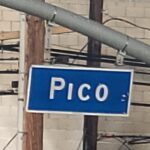 On a recent day at the busy corner of Pico Boulevard and La Brea Avenue in Los Angeles, a spontaneous yet carefully organized community gathering unfolded that reflected the evolving food, art, and cultural landscape of Mid-City. At 4972 W. Pico Blvd., a well-known Black-owned New York–style pizzeria became the setting for a pop-up collaboration that drew neighbors, creatives, and longtime supporters into a shared public moment centered on food, local enterprise, and cultural expression.
The event was anchored by a partnership between Nehemiah Anderson, also known as Westside Five, and the shop’s proprietor, Esteban “Esco” Gutierrez. Together, they introduced a limited pop-up menu under the banner of Modder’s Kitchen, blending traditional New York pizza with Jamaican-inspired flavors. Two specialty offerings defined the collaboration: jerk chicken pizza and oxtail pizza. These items combined the familiar format of oversized New York slices with seasoning profiles more commonly associated with Caribbean cooking, creating a fusion that resonated with attendees without departing from the pizzeria’s core identity.
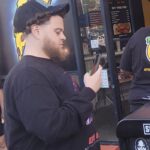
 The location itself is already a recognized neighborhood fixture. Founded by Harlem native Esteban Gutierrez, the pizzeria has built its reputation on authentic New York–style pizza, emphasizing thin, crispy crusts and generously sized slices. Gutierrez brings more than 20 years of experience rooted in his father’s New York pizzeria, and that lineage is central to the shop’s appeal. For many patrons—particularly former East Coast residents—the taste and presentation closely match what they remember from New York City. This consistency has helped the business earn a loyal following in Mid-City Los Angeles.
Beyond pizza, the shop offers a broad menu that includes wings, salads, customizable calzones, and desserts such as Nutella knots, which are frequently cited by customers as a standout item. Vegan options are a notable part of the menu, with clearly labeled plant-based slices such as vegan Margherita, Veggie, and Pesto Cheese. These pizzas use vegan cheese sourced from local providers like Vromage, reinforcing the business’s emphasis on local partnerships and inclusive dining options.
The Pico and La Brea location is known not only for its food but also for its atmosphere. The interior features New York–inspired decor, including a Knicks-themed logo and design elements that reference subway cars in some areas. While there is limited indoor and outdoor seating, the shop is widely regarded as a takeout-friendly spot where customers often interact directly with Gutierrez himself. His visible presence and engagement with patrons are frequently mentioned in local and social media posts as part of what makes the establishment feel personal and community oriented.
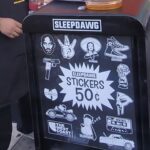
That sense of community was amplified during the pop-up event. Alongside the food collaboration, the gathering featured on-the-spot apparel printing by Taylor’s Tees, producing shirts and caps for attendees in real time. Sleep Dawg’s classic artistic designs were also present, adding a visual and cultural layer to the event. Together, these elements transformed the corner of Pico and La Brea into more than a food stop; it became a temporary outdoor showcase for local creativity and small business collaboration.
According to posts and images shared on social media, the turnout included a broad cross-section of the neighborhood, with people stopping by for slices, conversation, and merchandise. The event unfolded without formal staging or ticketing, reinforcing its open, accessible nature. Music, casual conversation, and foot traffic contributed to an atmosphere that resembled a block-level celebration rather than a conventional promotional event.
 In 2025, the business continues to operate as a Black-, Latino-, and woman-owned enterprise, with Gutierrez partnered with entrepreneur Aryn Drake-Lee. The shop is open daily from 11:00 a.m. to 11:00 p.m. and offers dine-in, takeout, and catering services. Popular menu items include Margherita and pepperoni slices, typically priced around six dollars, as well as specialty offerings like white clam pizza finished with fresh lemon. Orders can be placed in person or through online platforms such as Slice and the shop’s official website.
Events like the Modder’s Kitchen pop-up reflect how the pizzeria positions itself beyond a standard food business. By hosting local collaborations and welcoming artists, designers, and chefs into the space, the shop reinforces its role as a neighborhood hub. Social media reactions to the Pico and La Brea gathering highlighted appreciation for both the food and the sense of collective presence, with particular attention given to the jerk chicken and oxtail pizzas as well as the opportunity to support multiple local brands at once.
At its core, the gathering demonstrated how a single corner in Mid-City Los Angeles can serve as a meeting point for culinary tradition, cultural fusion, and community engagement. Without speculation or exaggeration, the event reflected what the pizzeria has consistently aimed to provide: authentic food, open doors, and a space where local partnerships are not an exception but part of the everyday rhythm of the neighborhood.
BTW. In the spirit of Stevie Wonder’s Bus Full of Toys, the brothers placed a cap on the spirit of Christmas. These young entrepreneurs stepped up their game, one more leg up, sponsoring a walk-up toy giveaway, dubbed “Table Full of Toys.” These young fellas thought of every little thing. Keep up the good work.


 The Fair Competition for Small Business Act seeks to close this enforcement gap by amending the Clayton Act to explicitly authorize state attorneys general to bring civil actions for monetary damages when violations of the Robinson-Patman Act occur. This change would place Robinson-Patman enforcement on similar footing with other federal antitrust laws, giving states the ability not only to stop unlawful practices but also to recover damages on behalf of affected businesses.
 Public reaction reflected in local, national, and industry-focused social media discussions has highlighted several recurring themes. Small business owners and advocacy groups have shared firsthand accounts of struggling to compete with larger rivals due to unequal pricing and contractual terms. Community organizations have emphasized the connection between independent retailers and neighborhood stability, noting that store closures can exacerbate food access challenges and economic decline, particularly in underserved areas. At the same time, policy analysts and legal commentators have pointed to recent regulatory actions and court filings as signs of renewed attention to antitrust enforcement more broadly, framing the legislation as part of a larger shift in competition policy.
 marketplace. They argue that meaningful competition depends not only on innovation and efficiency but also on rules that prevent dominant firms from using their size to exclude smaller rivals. By equipping state enforcers with stronger tools, the Fair Competition for Small Business Act aims to rebalance competitive conditions without imposing new regulatory frameworks.
 1man1vote:
 Over the course of a packed two-day schedule, Congresswoman Maxine Waters engaged with thousands of residents across Los Angeles County’s 43rd District, participating in seven major community events centered on public health, small business development, food security, veterans’ support, LGBTQ+ history, and youth-focused service initiatives. Across social media platforms, attendees documented an active weekend marked by large turnouts, community partnerships, and—in several cases—high levels of volunteer engagement.
 than 1,000 participants. As Co-Chair of the Congressional Task Force on Alzheimer’s Disease, she addressed the crowd with an emphasis on federal investment and caregiver support. She noted her longstanding collaboration with national Alzheimer’s organizations and highlighted the substantial growth in federal research funding achieved over the past decade.
 Basement’s newest South Bay location and its accompanying SnowFest celebration. The event drew families, outdoor recreation groups, and local officials.
 of LGBTQ+ civil rights leader Morris Kight’s ashes atop the Chapel of the Gower Mausoleum. Kight, a pioneering activist whose influence shaped both Los Angeles and the national movement, was commemorated by advocates, historians, and community partners.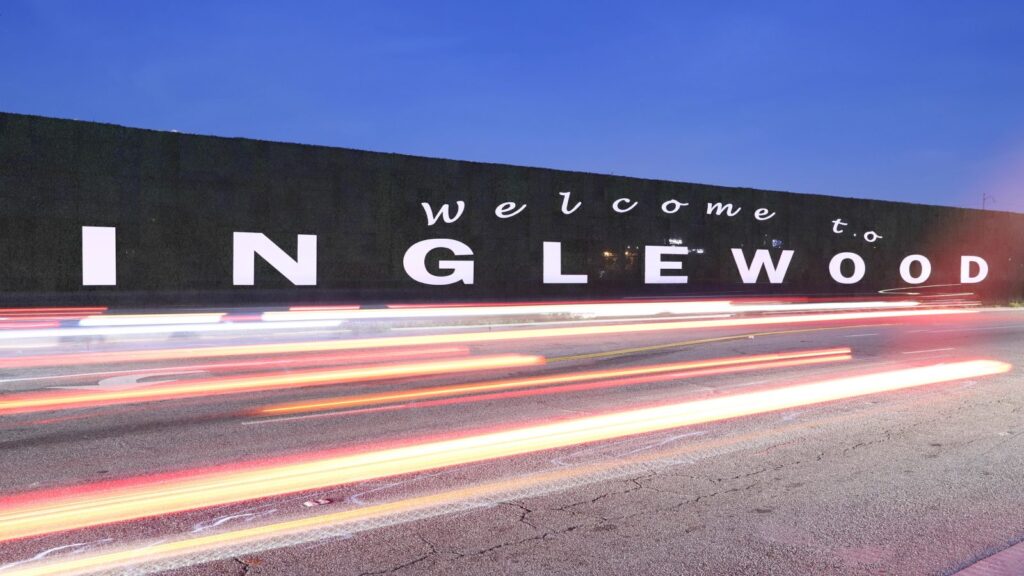
 From Jesse Owens Park, the Congresswoman moved to Hawthorne VFW Post 2075 to assist with its annual Thanksgiving dinner for veterans. Established in 1943, the post is one of the oldest in the South Bay and continues to serve as a center of support, connection, and service.
 different dimension of community need. Her schedule ranged from health advocacy to LGBTQ+ historical recognition, and from family assistance efforts to fitness-based community gatherings.
 The City of Inglewood is entering a new phase of waste management as Republic Services continues implementing organic recycling requirements mandated under California Senate Bill 1383. The statewide law, designed to reduce short-lived climate pollutants, directs all jurisdictions to remove organic materials from landfills to help decrease methane emissions. Methane produced from decomposing food and yard waste has long been recognized as a significant contributor to greenhouse gas levels, prompting California to adopt some of the nation’s most aggressive organics diversion goals.
 Inglewood residents, these materials now belong in the green organics cart, which was rolled out citywide
  SB 1383 also contains a major food recovery provision aimed at reducing statewide food insecurity. The law requires the recovery of a share of edible food that would otherwise be discarded and supports redistribution networks that serve residents in need. This element of the law has received positive attention online from organizations involved in food assistance programs, who see the mandate as a promising complement to environmental objectives.
 had been reported missing in April 2024 from Lake Elsinore, California. The medical examiner described the remains as severely decomposed, and determined the death appeared to have occurred some time before the car was impounded. Authorities are investigating the case as a homicide, though no official charges have been announced.



 Waters’ statement pointed constituents to concrete, actionable resources in Los Angeles County and in the cities that fall within California’s 43rd Congressional District — including Inglewood, Hawthorne, Gardena, Lawndale, Compton and Torrance — where municipal and nonprofit networks are expanding emergency assistance while the federal picture remains unsettled. Her office listed phone and web contacts for food help and programs that serve seniors, families and young children.
 v- Wade, the ACA has been on the resident’s seek and destroy list every since President Obama “clowned” Donald Trump was at the 2011 White House Correspondents’ Dinner, where he heavily mocked trumplethinskin over the “birther” conspiracy theory.
 As the federal government shutdown drags into its fifth week, the Supreme Court’s decision late Friday to temporarily block a lower court order requiring full Supplemental Nutrition Assistance Program (SNAP) payments has left millions of low-income Americans uncertain about where their next meal will come from. The ruling, issued by Justice Ketanji Brown Jackson, pauses full benefit disbursements while an appeals court considers the Trump administration’s request to limit payouts to available contingency funds.
 authorization. However, critics argue that the government’s reluctance to use discretionary reserves reflects misplaced priorities. The website