
 Why the United States Remains an Outlier on Universal Health Care
Roughly 70 percent of the world’s nations provide some form of universal health coverage to their citizens, according to data compiled by the World Health Organization and the World Bank. These systems vary widely in structure — ranging from single-payer models like Canada’s to regulated multi-payer systems like Germany’s — but they share a core principle: access to essential medical services is treated as a public good rather than a market luxury.
The United States stands apart0 mfroml most other high-income nations by not guaranteeing universal health coverage at the national level. While programs such as Medicare, Medicaid, the Children’s Health Insurance Program (CHIP), and Affordable Care Act marketplaces have expanded access, coverage remains fragmented and conditional. As of recent estimates, tens of millions of Americans remain uninsured or underinsured, often delaying care because of cost concerns.
What makes the U.S. case particularly unusual is not only the absence of universal coverage, but the cultural and political framing that often accompanies it. Unlike many peer nations that treat public healthcare as foundational infrastructure — similar to roads, public schools, or emergency services — healthcare in the U.S. is frequently debated through the lens of individual responsibility, market competition, and ideological resistance to government involvement.
This resistance has deep historical roots. Employer-based insurance expanded during World War II due to wage controls, entrenching private insurance as the dominant access pathway. Subsequent reform efforts, from President Truman’s proposals in the 1940s to the Affordable Care Act in 2010, faced strong opposition from insurance industry groups, political coalitions, and segments of the electorate wary of government expansion.
Ironically, despite rejecting universal coverage, the United States spends more on healthcare per capita than any other country in the world. Yet this spending does not consistently translate into superior health outcomes. Metrics such as life expectancy, maternal mortality, and preventable hospitalizations often lag behind those of nations with universal systems. Administrative complexity, profit-driven pricing structures, and fragmented billing systems contribute to inefficiencies that inflate costs without proportional public benefit.
 Public opinion also reflects contradiction. Polling consistently shows that large majorities of Americans support protections for pre-existing conditions, Medicare for seniors, and expanded public health programs. However, support drops when proposals are framed as “government-run” or labeled with politically charged terminology, illustrating how messaging shapes perception more than policy substance.
Ultimately, the U.S. healthcare debate is not simply about economics or logistics — it is about national priorities. Countries that implement universal coverage make a collective decision to pool risk and guarantee baseline care for all residents. The United States, by contrast, continues to operate within a hybrid model that blends public programs with private profit, leaving coverage uneven and access dependent on income, employment, and geography.
As global health systems evolve and demographic pressures increase, the American outlier status becomes harder to justify. Whether the country chooses reform through expansion of public options or structural overhaul, the fundamental question remains unchanged: should healthcare function primarily as a marketplace commodity, or as a shared public necessity?

Thought provoker
 Under California Vehicle Code sections 23123 and 23123.5 (often referred to as the “Hands-Free” or “No-Touch” laws), the price of a ticket is:
 within 36 months adds one point to your driving record, which can increase your insurance rates.
 injustice. Supporting wrongdoing made you complicit in it.
 shows that the impact rarely stops with the original targets. It expands. So as we move forward, it is important to consider not only what is happening, but who we choose to stand with, and what our support — or lack of resistance — ultimately represents.
 The latest backlash emerged after Minaj appeared at a Turning Point USA event alongside conservative commentator Erika Kirk. According to reporting by the Latin Times, the appearance prompted online users to revisit a 2018 Instagram post in which Minaj described arriving in the United States as a child without legal immigration status. The resurfaced post, originally shared amid public outrage over family separations at the U.S.–Mexico border, expressed empathy for migrant children affected by enforcement policies.
 “please stop this,” according to excerpts cited by the Daily Mail. The post circulated widely during a period when images of migrant children held in detention facilities dominated news coverage.
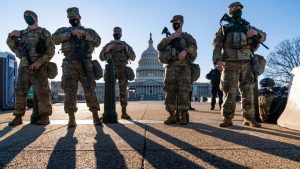 On January 3, 2026, the United States conducted a large-scale military operation in Venezuela that resulted in the capture of Venezuelan President Nicolás Maduro and his wife, Cilia Flores, and their transfer to the United States to face criminal charges. President Donald Trump publicly announced the success of the operation, which involved coordinated strikes in and around Caracas and culminated in Maduro’s removal from power. U.S. officials characterized the mission as necessary to enforce federal indictments against Maduro related to narcotics trafficking and terrorism-linked allegations. Maduro and Flores were subsequently arraigned in a federal courthouse in Manhattan, entering not guilty pleas to the charges they face.
 “Just last month, Congress repealed two separate authorizations of military force in Iraq, but Donald Trump once again chose to unilaterally attack, and ignore Congress’ Constitutional role. It is Congress that authorizes such force, and Trump’s abuse of power demands a serious and immediate response from Congressional members of both parties. Donald Trump has now gone so far as to publicly boast about his detention of Nicolás Maduro and his wife and to suggest that he can unilaterally determine who governs Venezuela or even claim authority to run the country himself. That is not strength. It is reckless, delusional, and extremely dangerous.”
 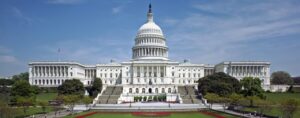 International reactions have mirrored this polarization. Many governments, especially in Latin America, Africa, and Asia, condemned the intervention as a violation of international law and of Venezuela’s sovereignty. Observers highlighted that capturing a sitting head of state through military force sets a contentious precedent and could undermine longstanding principles of non-intervention enshrined in the United Nations Charter. A U.N. emergency session underscored these concerns, with representatives from major world powers sharply divided over the legality and implications of the U.S. action.
 leaders loyal to Maduro’s government have challenged the U.S. narrative of his capture and legitimacy, resulting in competing assertions of authority within the country. This persistent ambiguity has fueled ongoing international concern about the risk of further conflict and humanitarian consequences for Venezuelan civilians.
 Traffic Laws Taking Effect in January 2026 Reflect a Broader National Push for Accountability
 Nikki Minaj had to know that she would never truly be welcomed under the MEGA tent, and that her evolution would end in disaster. How could she expect to go from peddling “Ho” to pimping “Holy”.
 stepped in it, trying to broaden the base by inviting a bunch of hip hopping social media ner-do-wells to join a pretentious cult. Nobody likes or trusts a benidict arnold, or a turn coat snitch. That is what Nikki represents to her liberal fan base, and it’s what she represents to far right stalwarts. In today’s identity politics, nthanothing is worse than identity “code switching.”
 Baby y’all chicks got to stay in ‘yo lane, and leave the manipulative, underhanded shenanigans to the true sharks, snakes, and charlatans on both sides.
 On a recent day at the busy corner of Pico Boulevard and La Brea Avenue in Los Angeles, a spontaneous yet carefully organized community gathering unfolded that reflected the evolving food, art, and cultural landscape of Mid-City. At 4972 W. Pico Blvd., a well-known Black-owned New York–style pizzeria became the setting for a pop-up collaboration that drew neighbors, creatives, and longtime supporters into a shared public moment centered on food, local enterprise, and cultural expression.
 The location itself is already a recognized neighborhood fixture. Founded by Harlem native Esteban Gutierrez, the pizzeria has built its reputation on authentic New York–style pizza, emphasizing thin, crispy crusts and generously sized slices. Gutierrez brings more than 20 years of experience rooted in his father’s New York pizzeria, and that lineage is central to the shop’s appeal. For many patrons—particularly former East Coast residents—the taste and presentation closely match what they remember from New York City. This consistency has helped the business earn a loyal following in Mid-City Los Angeles.
 Nutella knots, which are frequently cited by customers as a standout item. Vegan options are a notable part of the menu, with clearly labeled plant-based slices such as vegan Margherita, Veggie, and Pesto Cheese. These pizzas use vegan cheese sourced from local providers like Vromage, reinforcing the business’s emphasis on local partnerships and inclusive dining options.
 In 2025, the business continues to operate as a Black-, Latino-, and woman-owned enterprise, with Gutierrez partnered with entrepreneur Aryn Drake-Lee. The shop is open daily from 11:00 a.m. to 11:00 p.m. and offers dine-in, takeout, and catering services. Popular menu items include Margherita and pepperoni slices, typically priced around six dollars, as well as specialty offerings like white clam pizza finished with fresh lemon. Orders can be placed in person or through online platforms such as Slice and the shop’s official website.
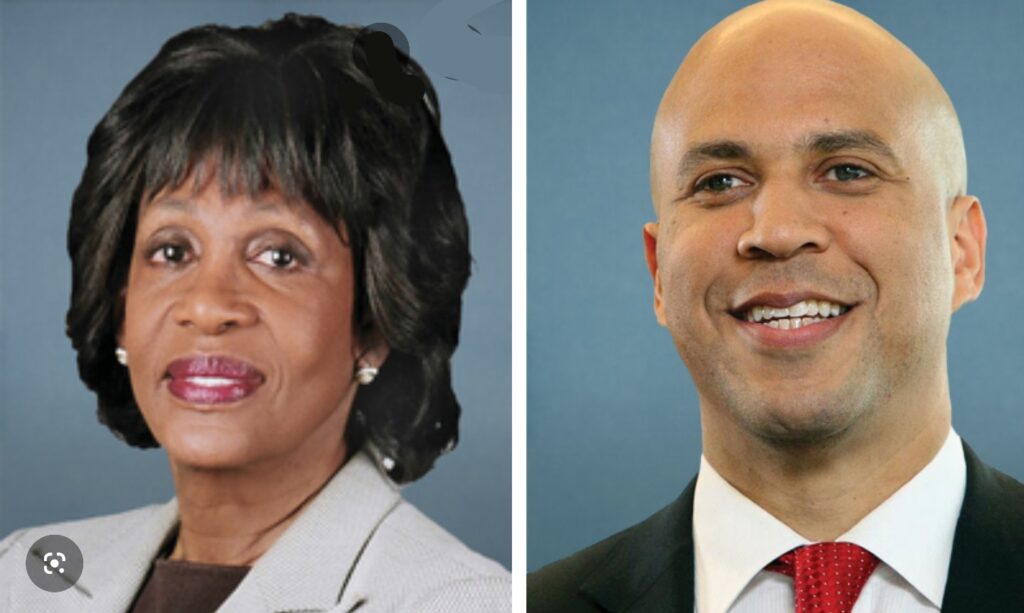
 The Fair Competition for Small Business Act seeks to close this enforcement gap by amending the Clayton Act to explicitly authorize state attorneys general to bring civil actions for monetary damages when violations of the Robinson-Patman Act occur. This change would place Robinson-Patman enforcement on similar footing with other federal antitrust laws, giving states the ability not only to stop unlawful practices but also to recover damages on behalf of affected businesses.
 Public reaction reflected in local, national, and industry-focused social media discussions has highlighted several recurring themes. Small business owners and advocacy groups have shared firsthand accounts of struggling to compete with larger rivals due to unequal pricing and contractual terms. Community organizations have emphasized the connection between independent retailers and neighborhood stability, noting that store closures can exacerbate food access challenges and economic decline, particularly in underserved areas. At the same time, policy analysts and legal commentators have pointed to recent regulatory actions and court filings as signs of renewed attention to antitrust enforcement more broadly, framing the legislation as part of a larger shift in competition policy.
 marketplace. They argue that meaningful competition depends not only on innovation and efficiency but also on rules that prevent dominant firms from using their size to exclude smaller rivals. By equipping state enforcers with stronger tools, the Fair Competition for Small Business Act aims to rebalance competitive conditions without imposing new regulatory frameworks.
 1man1vote: