
Politics Over Participation

  Why the United States Remains an Outlier on Universal Health Care


Roughly 70 percent of the world’s nations provide some form of universal health coverage to their citizens, according to data compiled by the World Health Organization and the World Bank. These systems vary widely in structure — ranging from single-payer models like Canada’s to regulated multi-payer systems like Germany’s — but they share a core principle: access to essential medical services is treated as a public good rather than a market luxury.


The United States stands apart0 mfroml most other high-income nations by not guaranteeing universal health coverage at the national level. While programs such as Medicare, Medicaid, the Children’s Health Insurance Program (CHIP), and Affordable Care Act marketplaces have expanded access, coverage remains fragmented and conditional. As of recent estimates, tens of millions of Americans remain uninsured or underinsured, often delaying care because of cost concerns.


What makes the U.S. case particularly unusual is not only the absence of universal coverage, but the cultural and political framing that often accompanies it. Unlike many peer nations that treat public healthcare as foundational infrastructure — similar to roads, public schools, or emergency services — healthcare in the U.S. is frequently debated through the lens of individual responsibility, market competition, and ideological resistance to government involvement.


This resistance has deep historical roots. Employer-based insurance expanded during World War II due to wage controls, entrenching private insurance as the dominant access pathway. Subsequent reform efforts, from President Truman’s proposals in the 1940s to the Affordable Care Act in 2010, faced strong opposition from insurance industry groups, political coalitions, and segments of the electorate wary of government expansion.


Ironically, despite rejecting universal coverage, the United States spends more on healthcare per capita than any other country in the world. Yet this spending does not consistently translate into superior health outcomes. Metrics such as life expectancy, maternal mortality, and preventable hospitalizations often lag behind those of nations with universal systems. Administrative complexity, profit-driven pricing structures, and fragmented billing systems contribute to inefficiencies that inflate costs without proportional public benefit.


Public opinion also reflects contradiction. Polling consistently shows that large majorities of Americans support protections for pre-existing conditions, Medicare for seniors, and expanded public health programs. However, support drops when proposals are framed as “government-run” or labeled with politically charged terminology, illustrating how messaging shapes perception more than policy substance.


Ultimately, the U.S. healthcare debate is not simply about economics or logistics — it is about national priorities. Countries that implement universal coverage make a collective decision to pool risk and guarantee baseline care for all residents. The United States, by contrast, continues to operate within a hybrid model that blends public programs with private profit, leaving coverage uneven and access dependent on income, employment, and geography.

 

As global health systems evolve and demographic pressures increase, the American outlier status becomes harder to justify. Whether the country chooses reform through expansion of public options or structural overhaul, the fundamental question remains unchanged: should healthcare function primarily as a marketplace commodity, or as a shared public necessity?


Charles Jackson
Thought provoker
FINAL WORD: Without a doubt, every human being needs some form of medical guidance and care, while the conservative party of the United States is proud of the pain that they inflict. 

New Rules Jan. 27

   Under California Vehicle Code sections 23123 and 23123.5 (often referred to as the “Hands-Free” or “No-Touch” laws), the price of a ticket is:

​First Offense: $162 minimum total (based on a $20 base fine plus mandatory court fees and assessments).

​Subsequent Offenses: $272 minimum total (based on a $50 base fine).

​Key Penalties & Rules

​License Points: A second violation within 36 months adds one point to your driving record, which can increase your insurance rates.

​No Touching: As of 2025, the law is strictly “no-touch.” You cannot hold or touch your phone for any reason—even at red lights—unless it is mounted and requires only a single swipe or tap to operate.

​Minors: Drivers under 18 are prohibited from using any electronic device, even in hands-free mode.


You Is What You Eat

Years ago, I worked with a young man from the Arab world. I never asked which country he was from, but he once explained something that stayed with me. He said that in his country, if a government commits harm against its own people or others, and citizens openly support that government’s actions, then those citizens share responsibility. In his view, there was no meaningful separation between “civilian” and “state actor” when civilians actively endorsed injustice. Supporting wrongdoing made you complicit in it.
I think about that conversation often, especially now. Because what we are seeing today should concern everyone. This current administration is taking actions against people who do not fit the stereotypes many expect. These are not only people of color. They are not only immigrants or foreigners. In many cases, they are ordinary citizens — people who look like you, live like you, and work like you — but who simply do not agree or fall in line politically.
That is why awareness matters. Silence matters. Support matters. When harmful policies are normalized or excused, history shows that the impact rarely stops with the original targets. It expands. So as we move forward, it is important to consider not only what is happening, but who we choose to stand with, and what our support — or lack of resistance — ultimately represents.

Believe what you want to believe but. You Is What You Eat.


Story: Charles Jackson

Shut Up and Dance

Public Authenticity, Political Alignment, and Backlash: Nicki Minaj at the Center of a Social Media Firestorm

The ongoing debate over celebrity “authenticity” in the digital age has resurfaced with renewed intensity following controversy surrounding rapper Nicki Minaj. Critics across social media platforms have questioned why public figures increasingly share personal histories and political opinions in highly visible forums, particularly when those disclosures later conflict with subsequent public positions. Minaj’s recent political alignment and resurfaced comments about her immigration background have become a focal point in this broader cultural discussion.

The latest backlash emerged after Minaj appeared at a Turning Point USA event alongside conservative commentator Erika Kirk. According to reporting by the Latin Times, the appearance prompted online users to revisit a 2018 Instagram post in which Minaj described arriving in the United States as a child without legal immigration status. The resurfaced post, originally shared amid public outrage over family separations at the U.S.–Mexico border, expressed empathy for migrant children affected by enforcement policies.

In that 2018 message, Minaj wrote that she came to the United States at the age of five and described the emotional trauma she associated with the idea of children being separated from their parents. “I came to this country as an illegal immigrant @ 5 years old. I can’t imagine the horror of being in a strange place & having my parents stripped away from me at the age of 5,” she wrote at the time, adding that the situation was “so scary” and calling on policymakers to “please stop this,” according to excerpts cited by the Daily Mail. The post circulated widely during a period when images of migrant children held in detention facilities dominated news coverage.

In contrast, Minaj’s more recent engagement with political content has drawn criticism from fans and commentators who view her positions as inconsistent with those earlier statements. Online reactions highlighted by the Daily Mail included comments suggesting she had distanced herself from her own past experiences, with some accusing her of abandoning earlier views in favor of political alignment with former President Donald Trump and associated policy positions.

The criticism intensified after Minaj publicly responded positively to online posts promoting the SAVE Act, proposed legislation aimed at preventing undocumented immigrants from voting in U.S. elections. While supporters of the bill argue it addresses election security concerns, critics view it as part of a broader effort to tighten immigration enforcement and restrict immigrant participation in civic life. Social media users cited by the Daily Mail pointed to what they described as a contradiction between Minaj’s previous advocacy against family separation and her recent engagement with content perceived as supportive of stricter immigration measures.

Minaj has also addressed her own immigration history directly in recent years. During a TikTok Live broadcast in 2024, she spoke about being born in Trinidad and Tobago and later living in the United States. In remarks reported by the Daily Mail, she stated that she had paid “millions of dollars” in taxes and joked about not having received “honorary citizenship many, many, many thousands of years ago.” While framed humorously, the comments reignited discussion about her legal status and long-standing presence in the country.

Beyond immigration policy debates, Minaj has drawn attention for a public dispute with journalist Don Lemon. The exchange began after Lemon livestreamed coverage of a protest at a Minnesota church connected to Immigration and Customs Enforcement activity. In response, Minaj posted a message on X criticizing Lemon in explicit terms. Lemon later responded by questioning Minaj’s understanding of journalism and referred to her as “ignorant” during a subsequent podcast appearance, according to the Daily Mail. The back-and-forth further amplified public scrutiny of Minaj’s recent political commentary and online conduct.

Minaj’s political positioning has also included public praise for former President Trump. During a United Nations appearance in November, she thanked Trump for his “leadership,” a statement that drew renewed criticism from fans who viewed it as another indication of her alignment with MAGA-associated political messaging. The comment circulated widely across social media platforms and was cited by critics as evidence of a broader ideological shift.

The controversy reflects a larger trend in which celebrities increasingly use social media platforms to communicate directly with audiences about personal histories and political beliefs. For some fans, these disclosures foster a sense of transparency and relatability. For others, they raise questions about consistency, accountability, and the impact of celebrity influence on public discourse. In Minaj’s case, the resurfacing of her earlier immigration-related statements has become a benchmark against which her recent political engagement is being measured.

Observers note that the rapid circulation of archived social media content has made it more difficult for public figures to separate past statements from present positions. Posts made years earlier can be rediscovered and reframed within new political contexts, often intensifying public reaction. This dynamic has been particularly pronounced in politically polarized environments, where online communities actively scrutinize perceived contradictions.

While Minaj has not issued a comprehensive statement reconciling her earlier immigration comments with her recent political engagements, the ongoing debate highlights the challenges celebrities face when navigating public identity in a digital ecosystem that rewards immediacy and visibility. The reaction to her recent activities underscores how personal narratives, once shared publicly, can remain part of the public record and resurface in unexpected ways.

As the discussion continues across national and international media outlets, Minaj’s case illustrates the broader tension between celebrity authenticity, political expression, and public accountability. Whether this episode leads to further clarification from the artist or remains another example of social media-driven controversy, it reinforces the reality that in the current media landscape, personal disclosures and political affiliations are rarely isolated from long-term public scrutiny.


Venezuela: Domestic and International Backlash

U.S. Military Strike in Venezuela and Maduro’s Detention Sparks Domestic and International Backlash

On January 3, 2026, the United States conducted a large-scale military operation in Venezuela that resulted in the capture of Venezuelan President Nicolás Maduro and his wife, Cilia Flores, and their transfer to the United States to face criminal charges. President Donald Trump publicly announced the success of the operation, which involved coordinated strikes in and around Caracas and culminated in Maduro’s removal from power. U.S. officials characterized the mission as necessary to enforce federal indictments against Maduro related to narcotics trafficking and terrorism-linked allegations. Maduro and Flores were subsequently arraigned in a federal courthouse in Manhattan, entering not guilty pleas to the charges they face.

The operation has provoked a profound political crisis in Washington, across the Western Hemisphere, and within social media networks. The Trump administration did not notify Congress in advance of the military action, citing concerns that prior notice could jeopardize the mission. This decision has intensified an ongoing debate over executive war powers and congressional authority under the U.S. Constitution and the 1973 War Powers Resolution. According to multiple sources, lawmakers from both parties have expressed significant concern about the unilateral nature of the strike.

Democratic leaders, including long-serving California Representative Maxine Waters, have strongly condemned the strike as an unlawful use of military force without congressional authorization. Waters and other critics likened the operation to previous controversial U.S. interventions and argued that bypassing Congress undermines constitutional checks and balances. Discussions of possible legislative or impeachment responses have gained traction among congressional Democrats, reflecting profound unease within the party over executive overreach.

According to Congresswoman Waters,

“Just last month, Congress repealed two separate authorizations of military force in Iraq, but Donald Trump once again chose to unilaterally attack, and ignore Congress’ Constitutional role.  It is Congress that authorizes such force, and Trump’s abuse of power demands a serious and immediate response from Congressional members of both parties. Donald Trump has now gone so far as to publicly boast about his detention of Nicolás Maduro and his wife and to suggest that he can unilaterally determine who governs Venezuela or even claim authority to run the country himself. That is not strength. It is reckless, delusional, and extremely dangerous.” 

“During Donald Trump’s first term, I called for his impeachment under then Speaker Nancy Pelosi. He was impeached twice, yet escaped accountability due to a lack of Republican support. Today, many Democrats have understandably questioned whether impeachment is possible again under the current political reality. I am reconsidering that view. Even if Republicans refuse to act, Democrats cannot remain silent or passive in the face of actions this extreme from this Administration.” 

Several Republican lawmakers have also voiced reservations, though fewer in number. Some expressed discomfort with the lack of prior consultation, even as others hailed the operation as decisive action against a regime accused of human rights abuses and criminal conduct. A bipartisan war powers resolution intended to restrict further military action in Venezuela was brought before the Senate but was ultimately blocked, underscoring the narrow and contentious nature of congressional responses.

International reactions have mirrored this polarization. Many governments, especially in Latin America, Africa, and Asia, condemned the intervention as a violation of international law and of Venezuela’s sovereignty. Observers highlighted that capturing a sitting head of state through military force sets a contentious precedent and could undermine longstanding principles of non-intervention enshrined in the United Nations Charter. A U.N. emergency session underscored these concerns, with representatives from major world powers sharply divided over the legality and implications of the U.S. action.

Public discourse on social media has amplified these debates. Posts widely circulated on platforms such as Reddit described conflicting narratives about the operation’s motives, legality, and aftermath. Some users reiterated the official U.S. government position that Maduro’s capture was a lawful enforcement action tied to criminal indictments, while others emphasized that independent verification of details has been limited and contested by Venezuelan officials. There is also content reflecting concerns about a broader expansion of U.S. military interventions in the region, including speculation about additional strikes if foreign governments fail to cooperate.

Domestically, the operation has sharpened the longstanding debate over presidential war powers. Legal analysis indicates that while presidents have broad authority as commander in chief, longstanding legal frameworks—such as the War Powers Resolution—require consultation or reporting to Congress within specified time frames when hostilities occur. The absence of prior notification in this case has drawn pointed criticism from lawmakers who argue that the constitutional balance of power has been sidelined.

The Venezuelan political landscape remains unstable in the operation’s aftermath. Venezuelan leaders loyal to Maduro’s government have challenged the U.S. narrative of his capture and legitimacy, resulting in competing assertions of authority within the country. This persistent ambiguity has fueled ongoing international concern about the risk of further conflict and humanitarian consequences for Venezuelan civilians.

In summary, the January 3 military operation and Maduro’s detention mark a critical juncture in U.S. foreign policy, intensifying domestic constitutional debates and triggering widespread international criticism. The long-term legal, diplomatic, and geopolitical ramifications of this unprecedented intervention in Venezuela are likely to unfold over the coming months.


Story: Charles Jackson

New Rules 2026

Traffic Laws Taking Effect in January 2026 Reflect a Broader National Push for Accountability
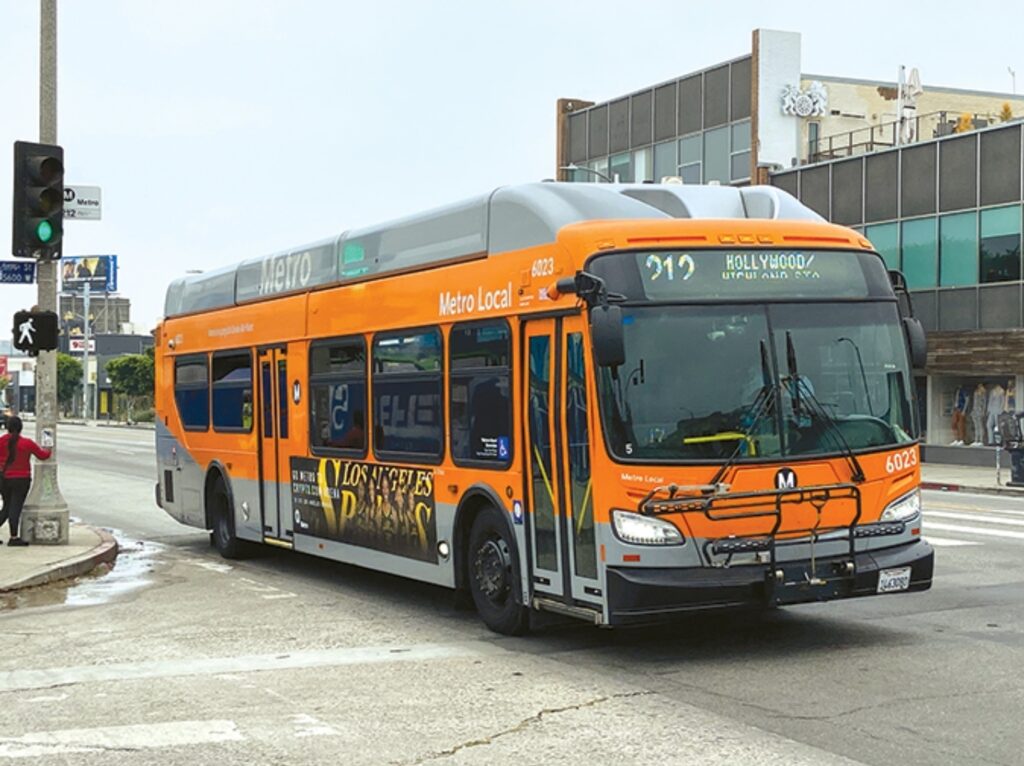
As 2026 begins, drivers across the United States are facing a sweeping set of new traffic regulations that signal a coordinated shift toward stricter enforcement, expanded use of monitoring technology, and tougher penalties for high-risk behavior. While traffic laws remain primarily state-governed, the scale and similarity of changes taking effect this January point to a nationwide recalibration of road safety policy.

One of the most consequential changes is Louisiana’s “touch” law, which becomes fully enforceable on January 1 following a public education grace period. Unlike earlier hands-free statutes that focused on texting or phone calls, the new rule prohibits drivers from physically touching a mobile device while operating a vehicle. Limited exceptions apply only when vehicles are safely parked or when contacting emergency services. Penalties escalate quickly, starting at $100 for a first offense and rising to $300 for repeat violations, with possible license suspension in aggravated cases. Crowdsourced discussions on regional social platforms have highlighted confusion during the grace period, but state officials have emphasized that enforcement will be consistent once the law is active.

Red-light enforcement is also expanding through automated systems. In Maryland, red-light cameras at nine intersections completed a warning-only phase in December, with fines beginning January 5. Violations now trigger $75 citations mailed directly to registered vehicle owners. California municipalities are moving in a similar direction, with local governments authorized to deploy red-light cameras that capture detailed images of vehicles and drivers. Online community forums have raised privacy concerns, while traffic safety advocates continue to share collision data supporting camera deployment at high-risk intersections.

License plate misuse has emerged as another major enforcement target. In California, a new statute effective January 1 explicitly bans license plate “flippers,” tinted covers, and other devices designed to obscure or manipulate plate visibility. While such devices were technically restricted under earlier laws, enforcement gaps allowed widespread retail and online sales. Under the updated rules, drivers using prohibited equipment face $250 fines, while manufacturers and sellers can be penalized up to $1,000 per item. Social media videos showing toll evasion tactics and altered plates have played a notable role in drawing public attention to the issue.

California has also enacted new penalties targeting high-tech tools associated with vehicle theft. Possession of key-programming devices and signal extenders with intent to commit burglary now carries potential fines of up to $1,000 and possible jail time. Automotive professionals and locksmiths have used industry forums to emphasize the importance of carrying documentation to demonstrate legitimate use.

Additional California measures include expanded “slow down and move over” requirements that now apply to any stationary vehicle using hazard lights or safety equipment, authorization of work-zone speed enforcement pilots using radar and laser systems, and locally adjustable school-zone speed limits. These updates have been widely discussed in community safety groups, particularly in areas experiencing frequent work-zone collisions.

Beyond California and Louisiana, other states are tightening regulations tied to emerging risk trends. Colorado lawmakers are advancing legislation targeting street racing events increasingly organized through social media platforms. Proposed penalties include vehicle immobilization, daily storage fees, and expanded use of livestream footage as evidence. Viral videos of large racing gatherings have been repeatedly cited by residents and local officials as justification for tougher laws.

Driver education requirements are also evolving. Connecticut now requires cameras to remain on during online driver education courses, and new teen permit holders must complete specialized safety training focused on roadside and highway work zones. In Oklahoma, aggravated DUI offenses were elevated to felony status in November, while North Carolina implemented late-2025 changes reinforcing enforcement of high-risk driving behaviors.

Taken together, these measures reflect a broader national shift away from leniency and toward proactive enforcement supported by technology, data, and digital evidence. As January 2026 unfolds, drivers are encountering a new regulatory environment that places greater emphasis on accountability, compliance, and the prevention of behaviors that have increasingly been amplified through online platforms. The message from lawmakers and transportation agencies is clear: routine habits that once drew warnings are now far more likely to result in significant penalties.


METRO NEW RULES

La Brea Avenue Bus Priority Lanes.


La Brea Avenue Bus Priority Lanes.


La Brea Avenue Bus Priority Lanes.

Los Angeles Community Weighs In as Metro Advances La Brea Avenue Bus Priority Lanes.

Los Angeles

As the Los Angeles County Metropolitan Transportation Authority (Metro) moves forward with expanding bus priority lanes along La Brea Avenue, planners and residents are preparing to engage in public hearings this week. The project, intended to improve regional transit service, has prompted debate over traffic impacts for drivers and commuters who use the corridor daily.

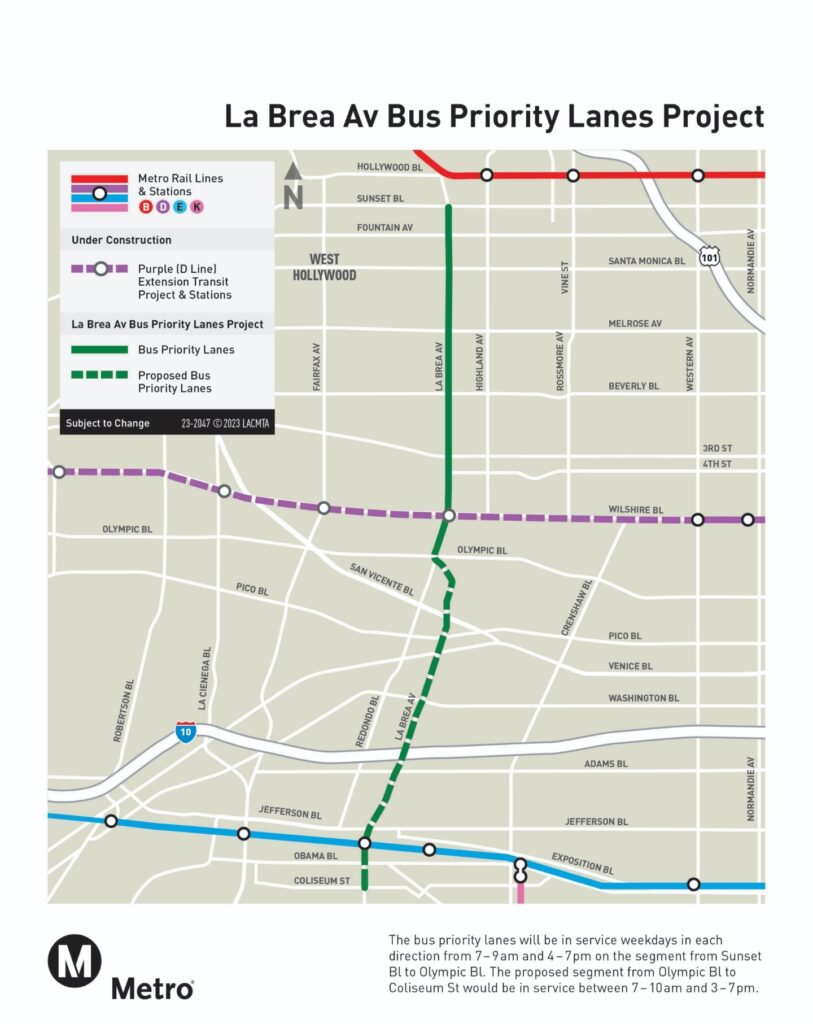
The La Brea Avenue Bus Priority Lanes Project currently operates peak-hour bus-only lanes between Sunset Boulevard and Olympic Boulevard. These curbside lanes are active on weekdays from 7 a.m. to 9 a.m. and 4 p.m. to 7 p.m., when buses are granted exclusive use to improve transit travel times and reliability. Parking and general traffic are restricted in these lanes during designated hours, although vehicles may enter to make legal right turns.

LA Metro

Metro has scheduled two stakeholder engagement sessions as part of outreach on the southern extension of the bus priority lanes — a virtual meeting on Wednesday, January 7, 2026, and an in-person listening session on Saturday, January 10, 2026. These events offer community members opportunities to pose questions and convey support or concerns directly to project staff.

According to Metro’s publicly posted project information, the objective is to “improve bus speed, frequency and reliability” on one of the region’s most heavily used corridors. Buses running on Metro Line 212 presently serve nearly 9,000 riders daily along La Brea Avenue, Metro reports, carrying commuters between neighborhoods and key transit connections.

LA Metro

Metro officials have highlighted the broader goals of the project in statements accompanying the current configuration of the lanes. Metro CEO Stephanie Wiggins emphasized the agency’s commitment to reliable transit service for riders who depend on buses for daily travel: “Angelenos deserve a Metro system that can get them where they need to go reliably, quickly and safely.” She noted that improvements like the bus priority lanes help advance those goals, particularly through congested urban corridors.


LA Metro

L.A. County Supervisor and Metro Board Member Lindsey P. Horvath pointed to the project’s role in enhancing connections to job centers and ongoing regional transit expansions, such as the forthcoming D (Purple) Line. “These priority lanes will drastically improve service and increase access for our residents who rely on safe, efficient transportation to move throughout the region,” Horvath said in an official Metro press release.


Mass Transit Magazine

Community responses to the initiative, as reflected in local media and social channels, are mixed. Some residents have expressed concern that repurposing existing travel lanes during peak periods effectively removes roadway capacity for general traffic, potentially leading to longer car commute times. Others point to similar implementations — such as bus lanes on Wilshire Boulevard — where dedicated lanes have aimed to improve bus reliability without adding roadway space.


Beverly Press & Park Labrea News

Metro and local partners have also taken steps toward enforcement and compliance. Beginning in late 2024, camera-equipped buses on corridors including La Brea received warnings for vehicles blocking bus lanes during peak hours, with citations scheduled to follow as part of an enforcement pilot program between Metro and the City of Los Angeles. Metro Board Chair Janice Hahn underscored the importance of such measures, stating that “buses carry hundreds of thousands of people every single day” and enforcement is vital to keeping transit moving.


MyNewsLA.com

Supporters of the extension argue that bus priority lanes are a cost-efficient solution to traffic congestion and a means of moving more people without widening streets or increasing infrastructure spend. Metro’s outreach materials emphasize that the lanes do not require widening existing roadways and are part of its NextGen Bus Network strategy to enhance service reliability across Los Angeles County.


LA Metro

Critics of the plan — particularly among motorists and daily commuters — counter that reducing roadway space for private vehicles during peak hours could worsen congestion, especially on routes that commuters rely on for east-west travel across Hollywood and Mid-City. This view has surfaced in community social forums and underscores ongoing tension between transit improvements and car traffic in dense urban corridors.

With listening sessions scheduled this week, Metro officials have indicated they are gathering community input to refine plans for the southern extension toward Coliseum Street, which would expand priority bus lanes further into South Los Angeles. Residents and commuters are encouraged to participate in the scheduled meetings to ensure their perspectives are included in the public record ahead of final design decisions.


Having driven the 212 LaBrea line, both as a commuter, and a bus operator, there are pros and cons enough to go around for everybody considered. As a commuter, that curbside lane comes in awfully handy during the peak hours that are up for grabs during the same hours that bus riders depend on to get them over the hill either going or coming.


Admittedly, as a commuter before I retired, I regularly weaved in and out of what is now the contested curb lane along the 212 La Brea bus line. That was before Metro implemented its camera-driven enforcement system. Since the launch of automated ticketing in February 2025, targeting vehicles illegally parked on La Brea, the dynamic has changed significantly. What was once an informal practice now carries a steep penalty, with violations costing drivers upward of $200.


Play Ball

Story: Charles Jackson