
The Lemon Experience

By Charles Jackson

My car is a 2020 Hyundai Santa Fe with the 2.4-liter GDI engine — the standard engine in the lower trims, the SE, SEL, and regular Limited. GDI stands for Gasoline Direct Injection: instead of mixing fuel with air before it enters the cylinder, the injectors spray fuel straight into the cylinder at very high pressure. It’s efficient on paper. In my driveway, it has been something else.
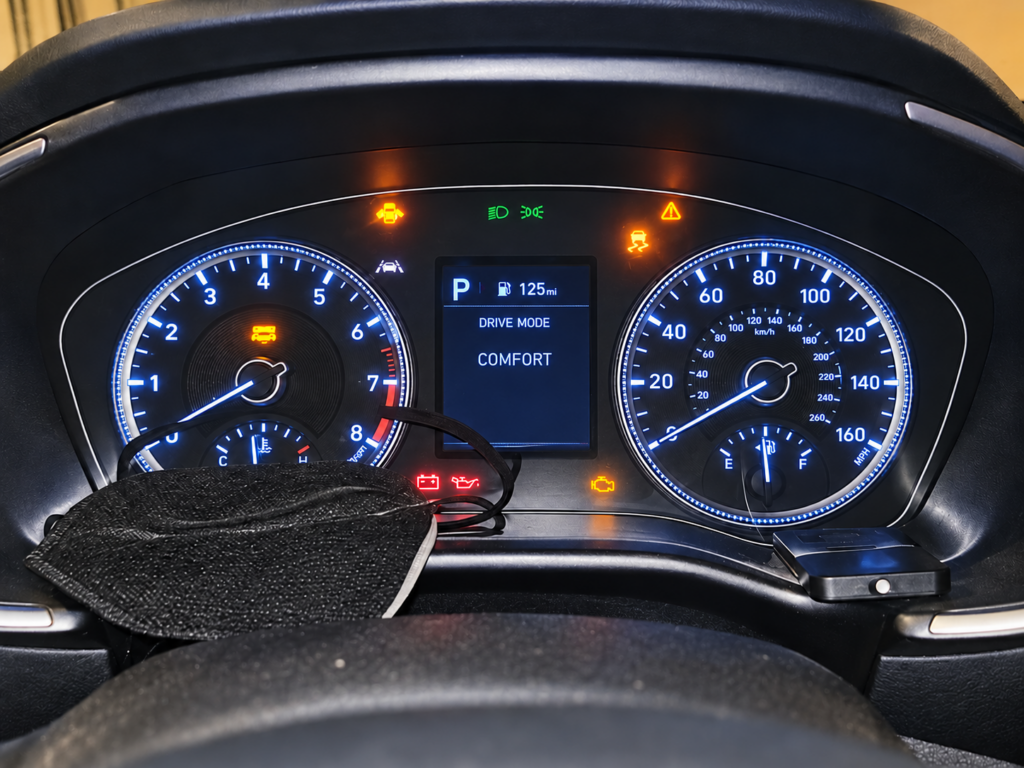
The engine also has Hyundai’s Idle Stop & Go system. Hold the brake at a light and the engine shuts off completely; lift your foot and it restarts. A few months back I started turning that system off by hand every trip — and my check engine light, a regular visitor before, hasn’t come on in about a month. I can’t prove the connection, but here’s a likely piece of it: this engine’s valve timing runs on oil pressure, and my car doesn’t hold onto its oil.
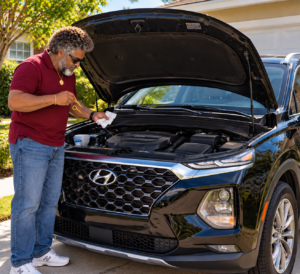
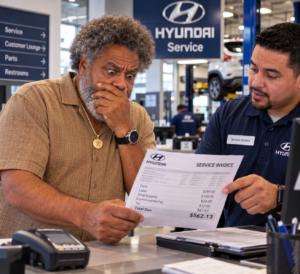
That’s the real problem. I have to add oil every 7 to 10 days, depending on how much I’m driving. At roughly 44 miles a day on my school runs, that’s a top-up every 300 to 450 miles. Hyundai’s own yardstick says burning more than about a quart per 1,000 miles is excessive. By that measure, my engine is burning oil at two to three times the rate Hyundai itself calls too much.
I’m not an isolated case, either. The 2020 Santa Fe is named in a Hyundai/Kia oil-consumption class action covering 2015–2021 Santa Fes, and the federal safety database is full of owners describing the same story: oil dropping below the low mark every few hundred miles, then stalling, low oil pressure, metal shavings in the pan, and engines failing outright from worn bearings. Oil starvation is what turns my problem into a dead engine, so I keep feeding it oil I shouldn’t have to buy.

Then there’s the other side of this — the waiting game. While my car sat in the shop, I was in rental cars, and it wasn’t accumulating miles because it wasn’t being driven at all. Meanwhile, the legal clocks kept ticking. California’s lemon law deadlines are measured in time, not in how the car was treated, and the recent AB 1755 changes shortened the window further: a claim now has to be filed within a year after the warranty expires, and no later than six years after the car was delivered. Every month spent “waiting on repairs” is a month off the owner’s clock. Whether it’s anybody’s plan or not, delay works in the manufacturer’s favor and against the person still making payments on a car that burns oil.
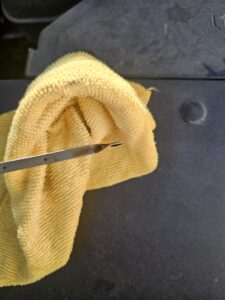
So here’s where I stand: still driving it, still topping it off, ISG off, and now keeping a written log — date, odometer, and how much oil went in, every time, receipts saved. “It burns a lot of oil” is an opinion. A quarts-per-mile figure is evidence. If you’re driving one of these engines and feeding it oil between changes, I’d suggest you start the same log. The clock is running either way.

Biting The Hands That Feed On You

Biting The Hands That Feed On You

Inglewood’s Battle of the Billboards: What Does It All Mean?

By Charles Jackson INGLEWOOD, Calif. 

— If political signs could talk, Inglewood would be arguing with itself.

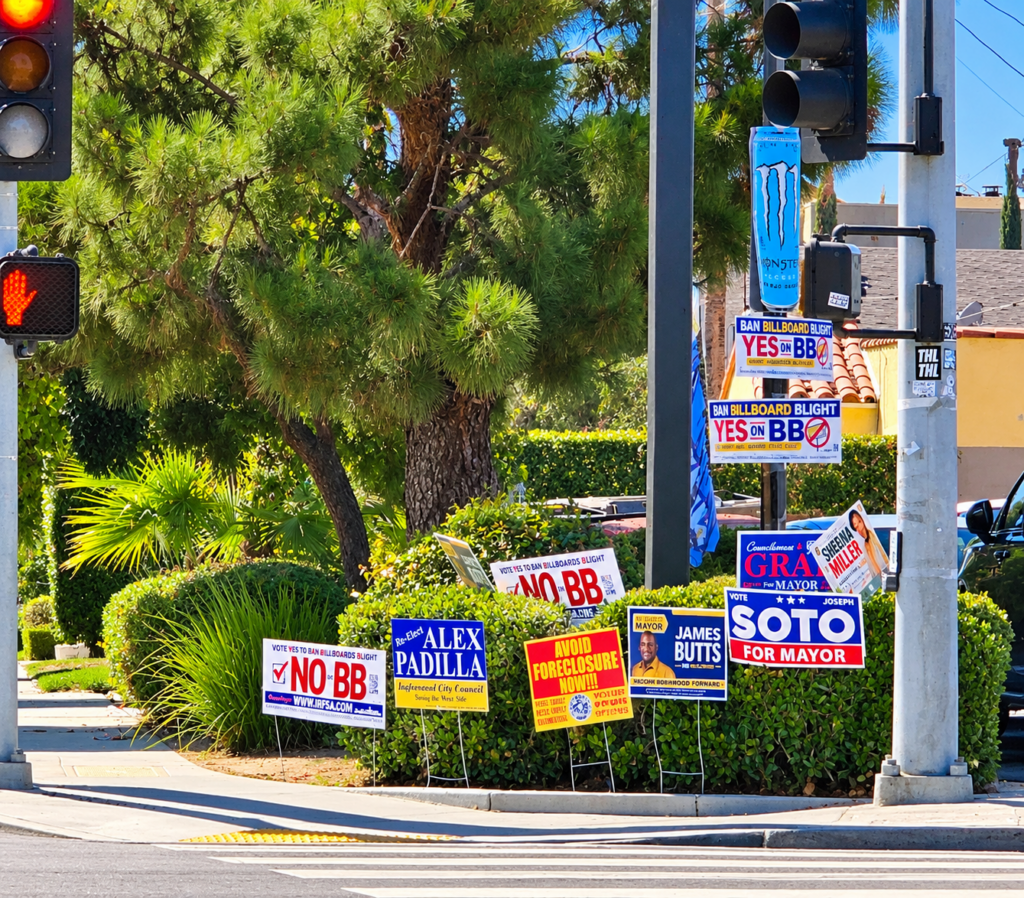
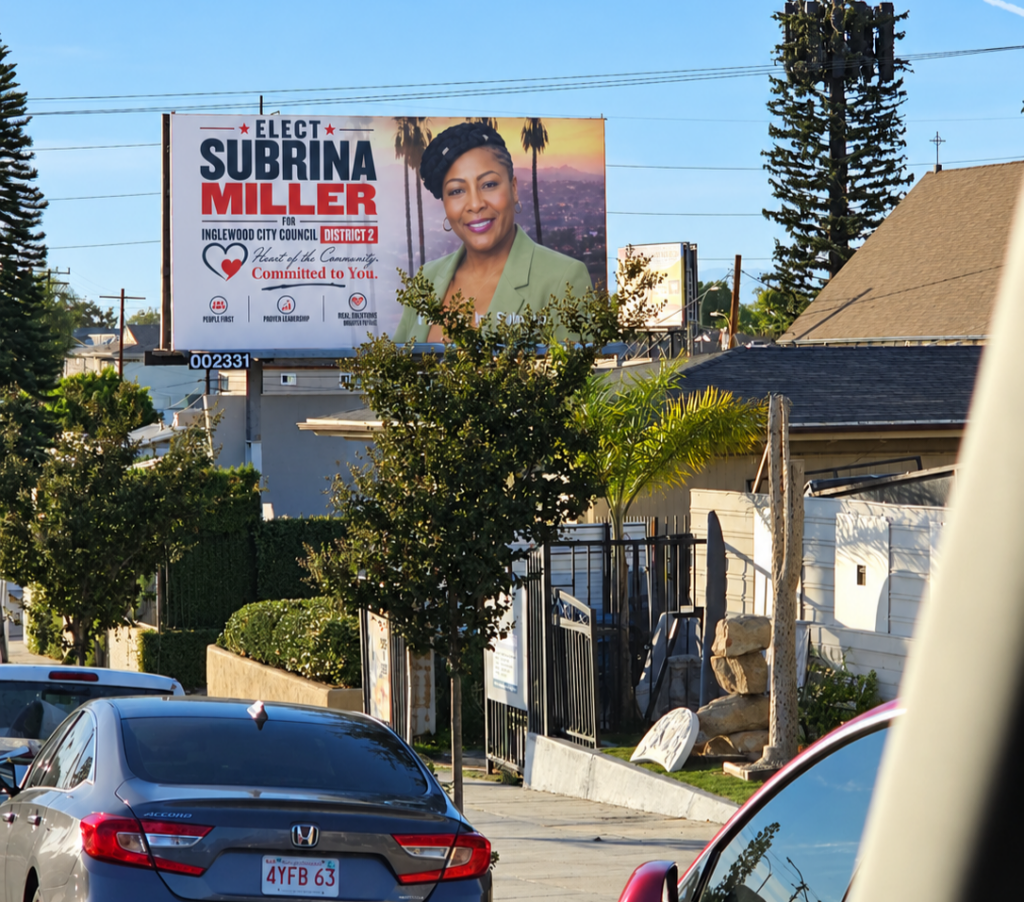
Drive around town and there they are: YES on BB. NO on BB. Signs warning about billboard blight. Signs warning about billionaires. Signs supporting candidates, opposing candidates and, in one of the better ironies of election season, signs complaining about signs.

Turn on the radio, television or social media and the argument follows you home.

At some point, voters might reasonably ask a simple question: What exactly are we fighting about?

Measure BB, on Inglewood’s Nov. 3 ballot, is officially called the “Ordinance to Eliminate Advertising on Public Right-of-Way.” It would eliminate the city’s authority to permit most commercial advertising on public streets, sidewalks and certain other public property.

That sounds straightforward.

The campaign surrounding it is anything but.

Supporters of BB argue that Inglewood has become saturated with digital advertising and that public streets and sidewalks shouldn’t become an expanding commercial advertising network.

Opponents argue that those advertisements generate millions of dollars for the city and that eliminating them would punch a sizable hole in city revenue.

Both are arguments worth hearing.

But then comes the part voters should pay particular attention to: Who is paying to make those arguments?

The Yes on BB campaign is backed by interests connected to Inglewood’s major sports and entertainment venues. The opposition campaign has received substantial backing from WOW Media, the billboard company with an advertising agreement with the city. Campaign finance reporting has shown millions of dollars flowing into the competing campaigns.

So this isn’t simply Mrs. Johnson down the street complaining that a digital billboard is shining through her bedroom window.

There are some serious financial interests at the table.

And everybody, naturally, says they are protecting Inglewood.

Imagine that.

City estimates cited in news reports indicate billboard agreements have produced millions of dollars annually for Inglewood, with officials estimating Measure BB could eliminate roughly $6 million to $8 million in current annual revenue.

That’s real money.

But residents who dislike the proliferation of digital advertising have a point, too. The question isn’t merely whether advertising produces revenue. It’s also how much advertising residents want occupying public space and whether the financial benefit justifies it.

Then things get even more interesting.

Some of the stadium interests supporting restrictions on public-right-of-way advertising have advertising displays of their own on private venue property. Opponents have seized upon that distinction, arguing that BB restricts one category of advertising while leaving another largely untouched.

Now we’re getting somewhere.

The argument isn’t simply billboards versus no billboards.

It’s also about whose billboards, where they’re located, who controls them and who collects the money.

And if that weren’t enough, Measure AT adds another layer to the political stew. That measure concerns admissions-tax revenue from major Inglewood venues, including SoFi Stadium and Intuit Dome. WOW Media has participated financially in the campaign surrounding that measure as well.

So the billboard company has interests in a fight involving stadium revenue, while stadium interests have interests in a fight involving billboard revenue.

Everybody got that?

Neither did I the first time around.

That’s precisely why voters should be cautious about allowing campaign slogans to substitute for reading the measures themselves.

A resident can dislike giant digital billboards without automatically accepting everything stadium interests say.

A resident can appreciate the millions of dollars those billboards bring into city coffers without automatically accepting everything the billboard industry says.

And residents can support Inglewood’s economic development while still asking whether City Hall, corporations and private developers are making arrangements that adequately benefit the people who actually live here.

Those ideas can coexist.

Unfortunately, campaign season doesn’t leave much room on a lawn sign for nuance.

Instead, voters get blight, bailout, billionaires, revenue and fair share — preferably printed in letters large enough to read while waiting for the light to change.

The messaging has become so loud that the underlying question is getting harder to hear.

So perhaps the most useful thing Inglewood voters can do between now and Nov. 3 is something considerably less exciting than planting another sign.

Read Measure BB. Read the arguments supporting it. Read the opposition. Read the financial disclosures. And whenever somebody spends a small fortune telling you which side is supposedly protecting you, take another minute and find out who’s paying them.

Because after all the billboards, commercials, mailers and yard signs disappear, Inglewood residents will still be here.

And we’re the ones who have to live with what the fine print actually says.