The Authoritarian Abuse of Power

Maxine Waters Condemns Indictment of James Comey, Accuses Trump of Authoritarian Abuse of Power


Washington, D.C.Congresswoman Maxine Waters (CA-43) issued a blistering statement Thursday denouncing the indictment of former FBI Director James Comey by the Department of Justice under President Donald Trump. Waters characterized the action as “payback and retaliation,” warning that it represented an alarming erosion of democratic norms in the United States.

“The indictment of James Comey is not just another headline. This is a five-alarm fire signaling the collapse of American democracy as we know it,” Waters declared. “Donald Trump is dragging the United States down the dark and dangerous path toward dictatorship.”

The Justice Department announced the indictment earlier this week, following Trump’s repeated public demands that Comey be prosecuted. Waters argued that the charges were politically motivated and baseless, describing the process as an example of the administration weaponizing federal power against perceived opponents.

Accusations of Retaliation and Political Targeting:
In her statement, Waters accused Trump of creating and manipulating evidence when existing legal grounds for prosecution were lacking. She claimed that federal prosecutors who resisted bringing charges against Trump’s critics were dismissed from their posts. Waters highlighted Trump’s firing of the U.S. attorney for the Eastern District of Virginia, who had declined to pursue cases against both Comey and New York Attorney General Letitia James.


She also pointed to Trump’s past public clashes with members of Congress and state officials as examples of a broader strategy of political retaliation. “There are no ifs, ands, or buts – let’s call it what it is, Donald Trump is an authoritarian,” Congresswoman Waters said. “He is systematically transforming government into a tool for personal and political revenge on his enemies.”


There Are Broad Concerns Over Executive Power.
Waters expanded her criticism beyond Comey’s indictment, citing a pattern of executive actions she described as unconstitutional. According to her statement, Trump had issued Executive Orders targeting universities with what she called “fabricated violations,” as well as directives aimed at private law firms, restricting the types of cases they could take and compelling them to provide pro bono services in areas favorable to the administration.

She alleged that institutions or firms refusing to comply faced repercussions, including revoked security clearances, canceled federal contracts, and restricted access to government facilities.

In one of her most pointed criticisms, Waters condemned what she described as threats to media freedom. She claimed Trump’s Federal Communications Commission chair pressured Nexstar Media Group to remove late-night host Jimmy Kimmel’s program from its ABC affiliates, allegedly tying compliance to approval of a pending corporate merger.

Silence from Republicans and a Call to Action:
Waters reserved sharp words for congressional Republicans, accusing them of failing to uphold their constitutional responsibilities. “To my surprise, Republicans, the so-called champions of free speech and the party of law and order, have been eerily silent all week as Trump tramples on free speech and breaks the law with impunity,” she said.

She also issued a direct appeal to the private sector, urging corporations not to capitulate to political pressure. “You do not have to cave to his threats. You do not have to be complicit in the silencing of speech, the erosion of law, and the criminalization of dissent,” Waters stated.

Commitment to Resistance
Waters emphasized that Democrats would continue opposing what she described as authoritarian overreach. She encouraged citizens to remain active in public demonstrations and political advocacy. “Democrats will continue fighting to protect American democracy and the rule of law. But we cannot do it alone,” she said. “I continue calling on the American public to keep resisting, keep showing up on the streets, and keep giving them hell.”

The indictment of Comey has sparked intense debate across the political spectrum, with questions mounting over the use of prosecutorial power in cases involving political adversaries. Waters’ statement underscored the concerns of critics who argue that the move sets a dangerous precedent in American governance.

Consensus:
We the people have passed this way before and faced legal Implications of Firing Prosecutors Who Declined Politically Sensitive Cases.

The firing of federal prosecutors has long been a contentious issue in American politics, raising questions about the balance of power between the executive branch and the Department of Justice (DOJ).

The president has constitutional power to appoint and remove U.S. attorneys, who serve at the president’s discretion. While legal, firings tied to political interference in ongoing or potential cases challenge the principle of prosecutorial independence.

Department of Justice norms require the DOJ to traditionally operate with autonomy from the White House. Presidents may set priorities, but specific prosecutions are expected to remain free from political influence. Firings that appear retaliatory risk undermining this independence.

Yet, those norms have faced historical challenges.
The Saturday Night Massacre (1973): President Richard Nixon ordered the dismissal of Watergate special prosecutor Archibald Cox, fueling a constitutional crisis.

In 2006 Several prosecutors were dismissed under President George W. Bush, leading to congressional hearings and the resignation of Attorney General Alberto Gonzales.

      Here we go again. As a private citizen, this resident was never one to shy away from frivolous or oft times vexatious litigation, even when he was spending his daddy’s money. Now, with the virtually unlimited resources of the taxpayer’s money, the threat of lawsuits and endless appellate actions serve to crush any and all citizen attempts to reign in or challenge his consistent stream of executive orders and personal agendas. Without the partnership of a willing congress, we the people stand alone with only the voice of the minority, to act as our sounding board.

So we stand by watching, while his whimpering demands for Comey’s Prosecution become solidified, as he boldly fires his way through the voices of reason. Finally, the indictment was announced, and the Justice Department brought chargesl0IXfznpbAwGUXZO against James Comey.

Bypassing congressional oversight, he pens Executive Orders Against Universities, issuing directives requiring them to pay millions in penalties over alleged violations.

He scribbles his signature on  Executive Orders, Targeting Law Firms that silence their mastery of the law itself. He implemented new rules dictating which cases law firms could take and compelled them to provide pro bono services for administration-backed causes. Firms that refused reportedly lost contracts and security access.

Recent FCC Threats Against Nexstar Media Group effectively turned their business plan sideways. The administration’s FCC chair warned the broadcaster to pull Jimmy Kimmel’s program or risk complications with a pending merger approval. The network had to choose between presidential threats to shut them down, and customer threats to cancel their streaming services. At risk – Trumpian ire, if they keep Kimmel’s show on the schedule until May, when his contract sunsets. Whatever mergers they were planning will be delayed at least through the holidays. By then, Don Quixote will undoubtedly be distracted by other giant windmills.


Waters Applauds Court Ruling

Court Blocks Trump’s Attempt to Remove Fed Governor Lisa Cook: 

Waters Applauds Court Ruling


A federal court has issued a preliminary injunction blocking former President Donald Trump’s effort to remove Federal Reserve Governor Lisa Cook, drawing swift praise from top Democrats, including Ranking Member Maxine Waters (D-CA). The ruling marks a significant moment in the ongoing struggle over the independence of the nation’s central bank and the limits of presidential power.


In her statement, Congresswoman Waters hailed the court’s decision as “a victory for our democracy, the rule of law, and the independence of the Federal Reserve.” She emphasized that the ruling made clear that Trump’s attempt to oust Cook failed to meet the legal standard of “for cause” removal and violated her constitutional due process rights.


“This decision sends a strong message,” Waters declared. “Donald Trump is wrong—he is not above the law. His radical attempt to remove Federal Reserve Board Governor Lisa Cook was not only unlawful but also a dangerous effort to politicize the Federal Reserve, threatening our economy, retirement security, and stability of global markets.”


The Case Against Cook

The Trump administration had alleged that Governor Cook committed malfeasance related to her real estate holdings, specifically a condominium in Atlanta. Trump’s allies claimed Cook misrepresented the property as a primary residence on certain forms. However, reporting from Reuters and court filings undercut those claims.


Documents reviewed by reporters showed that in her most recent loan estimate from May 2021, Ms. Cook described the Atlanta condo as a “vacation home.” On a federal security clearance form, she listed it as a “second home.” Fulton County tax records confirmed she had never claimed a homestead exemption on the property, the typical designation for a primary residence.

These facts appeared to undermine the administration’s assertion of misconduct and lent weight to the court’s view that the attempt at removal lacked credible grounds.


Political and Economic Stakes

The independence of the Federal Reserve has long been considered sacrosanct, meant to shield monetary policy decisions from short-term political pressures. Trump’s move to remove Cook—a respected economist and the first Black woman to serve as a Fed governor—ignited alarm across financial, political, and academic circles.


Economists warned that political interference of this scale could destabilize U.S. financial markets and weaken confidence in American institutions abroad. On social media, finance professionals and commentators highlighted the potential dangers: “If the Fed becomes an arm of whoever sits in the White House, inflation, interest rates, and the dollar itself become political footballs,” one analyst posted on X (formerly Twitter).


Many users echoed Waters’ warning that weaponizing central banking could lead to higher inflation and risks for everyday Americans’ savings. “Trump is trying to turn the Fed into a campaign tool. That’s not just illegal, it’s reckless,” wrote another commenter.


International media outlets also covered the story, with European and Asian financial papers noting parallels to instances in other countries where central bank independence was eroded, often leading to investor flight and economic turmoil.


A Fight Far From Over

Though the ruling allows Cook to remain in her position for now, the legal battle is far from over. Waters cautioned that Trump is likely to push the case all the way to the Supreme Court in what she described as “an ongoing and desperate effort to seize control of every level of the financial system.”


For Democrats, the case is about more than one official—it represents a broader fight to protect the institutional safeguards that underpin the American economy. For Trump and his allies, it is another front in their campaign to reshape federal power.

As of now, Lisa Cook continues her service on the Federal Reserve Board, carrying out her role in helping guide U.S. monetary policy. But with appeals looming and political stakes high, the battle over her tenure underscores just how fragile the boundaries between politics and the nation’s most important economic institutions have become.


The Road Is Long, With Many A Winding Turn.

~The Hollies


Story: Charles Jackson

The Doctor Was In – too deep

Dr. Phil Accused of Fraud as a $500 Million TV Deal Collapsed.

Less than a year after drawing headlines for his high-profile endorsement of Donald Trump, Dr. Phil McGraw now finds himself at the center of aq lol LP major legal battle. The television personality is facing accusations of fraud and mismanagement tied to the collapse of his new media company, Merit Street Media, in what has become a $500 million courtroom fight.


The dispute came to light this week after The Hollywood Reporter revealed that Trinity Broadcasting Network (TBN), Dr. Phil’s former partner, filed a lawsuit in Texas federal court on August 19. The Christian broadcaster alleges that McGraw misled them in a decade-long, half-billion-dollar deal, promising hundreds of episodes of new programming that never materialized while draining the company of millions.


According to TBN’s filing, McGraw, 74, approached the network in 2022 after ending his long-running partnership with CBS. He allegedly assured executives that relocating production to Texas and cutting union jobs would reduce costs, while also pitching the continued strength of his brand with advertisers. The lawsuit claims McGraw pushed for a $20 million upfront payment through his production company, Peteski, threatening to return to CBS unless his terms were met.


TBN says it ultimately invested more than $100 million into the venture, covering expenses that reached as high as $13 million per month. Despite the outlay, the network claims McGraw underdelivered, producing neither the audience numbers nor the advertising revenue that had been promised. The filing further accuses him of reneging on a $9 million obligation, refusing to hand over the library of past episodes, and later demanding $100 million for 50 percent ownership of those archives.


In a sharply worded statement, McGraw’s representatives rejected the allegations. They insisted that 214 new episodes of Dr. Phil Primetime were produced and aired on Merit Street Media, dismissing TBN’s claim that no new content was delivered as “absolutely false.”


Meanwhile, Merit Street Media, which has since entered bankruptcy, has filed its own lawsuit against TBN. That complaint paints a different picture, accusing the network of sabotaging the enterprise by blocking national distribution opportunities and forcing costly agreements that weakened the company. It also alleges that TBN provided “shoddy production services” while prioritizing its own financial interests.


The dueling lawsuits lay bare a partnership that quickly unraveled amid clashing visions, escalating costs, and questions about control of Dr. Phil’s lucrative archives. TBN’s case accuses McGraw of fraud, breach of contract, and mismanagement, while seeking clarity on who holds rights to his programming library and what obligations remain from the failed deal.


The legal showdown follows a tumultuous year for McGraw, who drew widespread attention in 2024 for a full-throated public endorsement of Donald Trump at a campaign rally. That move sparked both praise and backlash, with critics questioning the TV host’s political leanings.


As the lawsuits proceed, the fate of Dr. Phil’s media empire — once envisioned as a bold new chapter after two decades on CBS — remains uncertain. Requests for further comment from McGraw’s team have not yet been returned.


Doc had a good thing going. He had a solid fan base that respected his body of work. He could have remained bipartisan but somehow he sought a power position, and decided to stick his nose into grown folks business.


Washington Has Fallen

House Recess Sparks Controversy as Trump Seizes Control of D.C. Police


WASHINGTON, D.C.

The House of Representatives abruptly adjourned for its August recess on July 22, 2025, amid a dispute over legislation concerning the public release of the so-called “Epstein files.” With Congress shuttered earlier than scheduled, the current resident,  Donald Trump — who continues to assert sweeping authority over the federal government — moved to invoke a rarely used provision of the District of Columbia Home Rule Act of 1973, seizing control of the Metropolitan Police Department.


The decision has raised alarm across Washington, a city accustomed to demonstrations, visiting dignitaries, and heightened security, but not to routine military presence on neighborhood streets.


One resident described unease at the sight of armed patrols moving through residential areas. “Even in a city like ours, where security is always tight, this is unprecedented,” the resident said. Another longtime D.C. transplant expressed similar concerns, noting heightened anxiety while traveling to a routine doctor’s appointment. Helicopters circling overhead, the resident said, gave the sense of a city under occupation rather than protection.


California Congresswoman Maxine Waters, a senior Democrat, condemned the move in a statement issued from her office.


Immediate Release:

August 14, 2025


ca43.press@mail.house.gov

Congresswoman Maxine Waters Releases Statement on Trump’s Federalization of DC Police

Washington, DC – Congresswoman Maxine Waters (CA-43) released the following statement in response to Donald Trump’s decision to invoke Section 740 of the District of Columbia Home Rule Act of 1973 to seize control of the Metropolitan Police Department of Washington, DC.


Trump is continuing to advance his racist agenda against Black folks. He is now using his executive privilege to federalize the Metropolitan Police Department of Washington, DC, claiming he’s doing this to reduce crime, even though statistics show crime is at a 30-year low. He’s invoking Section 740 of the District of Columbia Home Rule Act of 1973. This emergency authority allows the president to take control of the MPD for up to 30 days during a declared emergency. There IS no emergency! If it’s notabout-face  crime, then what is it about?


Trump clearly hates Black people. It shows in his constant attacks on Diversity, Equity, and Inclusion, his racist assaults on the legacy of John Lewis and his district, and his appalling disparagement of the late Elijah Cummings. He even blamed the devastating Potomac plane crash on “DEI.”


He has repeatedly targeted Black women, including Congresswoman Jasmine Crockett, TheGrio journalist April Ryan, New York State Attorney General Letitia James, Vice President Kamala Harris, and me.


He joined Elon Musk in attacking the South African government, falsely claiming they deny justice to white Afrikaners, rewriting history, and ignoring Black suffering under apartheid. Musk, seeking a battery factory in South Africa, opposes the 30% local participation requirement, which aims to empower historically disadvantaged Black South Africans. Meanwhile, Trump simultaneously deported Latin Americans illegally and allowed 59 white South Africans into the U.S. without visas or legal processing.


 

This “would be” dictator is using confrontational tactics to provoke Blacks, Latinos, and others into a standoff. He is just itching to invoke Martial Law, and yes, even push for civil war. This damaged human being is pushing our country to the edge. Everyone needs to be aware and not fall victim to his lies, provocations, antics, and tactics. He’s just damn crazy!”


The More Things Change

Let us not forget that Television is one part broadcasting, one part advertising and one part programing.

CBS canceled The Smothers Brothers Comedy Hour in 1969, “officially” citing their failure to meet contractual pre-air delivery dates for episodes. (a purely business decision) However, the true reason was the ongoing conflict with the network over the show’s controversial political satire and social commentary, particularly regarding the Vietnam War and civil rights.

So, Which Is It?

So which is it?

Skins

No DEI or all DEI. Demanding that all naval ships, military installations, and now sports teams, be stripped of their DEI designations and be named only after good clean white folk, seems to be either reverse DEI or plain and simple white supremacist racism. Even more concerning and sinister is his new demand that, under threat of executive prerogative to F with their money, all teams should revert back to their (for simplicity sake let”s just call it) “slave names”.

With what is allowed to go for clear eyed vision, it becomes clear that he strives to intentionally, and brutally deliver on Manifest destiny, by forcing native Americans to just live with the indignity of those naming conventions. Once again for his own amusement, under the guise of electoral mandate, he does not shy away from any opportunity to “hurt someone and help no one.”

###


capitulation

[kuh-pich-uh-ley-shun]

noun

the act of capitulating.

1. the document containing the terms of a surrender.


Play Ball


Getting High In America

In the late 1800s, Chinese immigrants in the United States, particularly on the West Coast, were heavily associated with the opium trade and the operation of opium dens. While not all Chinese immigrants were involved in this trade, opium use and sales became a prominent part of some Chinese communities, especially in places like San Francisco’s Chinatown.

Opium dens, often described as hidden and underground spaces, were typically run by Chinese men and became gathering places for smoking opium, These dens, sometimes adorned with red signs with Chinese calligraphy reading “PIPES AND LAMPS ALWAYS CONVENIENT”, served both Chinese and a growing white clientele, initially from the urban underworld and later from more “respectable” circles.

Opium use, initially a habit primarily among Chinese immigrants, became increasingly prevalent among the white population in the US by the 1870s and 1880s. This growing association, fueled by existing xenophobia and racism, contributed to a negative perception of Chinese immigrants, often leading to their criminalization. Discrimination and stereotypes: Anti-Chinese sentiment flourished during this period, stemming from economic competition, cultural differences, and outright discrimination against Chinese immigrants. Chinese laborers, often working for lower wages to support families back home and pay off debts, faced resentment from non-Chinese workers. This, coupled with the association of Chinatowns with gambling, prostitution, and opium use, led to racist campaigns that portrayed Chinese immigrants as corrupting society.

Concerns about Chinese opium smoking were exploited by those who sought to restrict Chinese immigration. This anti-Chinese sentiment eventually culminated in the Chinese Exclusion Act of 1882, which explicitly restricted immigration based on nationality and was not repealed until 1943.

Some Chinese crime organizations, known as Tongs, played a role in the illicit activities within Chinatowns, including the opium trade. Originally formed as benevolent associations to assist Chinese immigrants, some Tongs became involved in criminal enterprises like operating opium and gambling dens.

It’s important to remember that the narrative of Chinese immigrants and opium in the late 1800s is complex and multifaceted, entangled with issues of immigration, discrimination, and the social and economic conditions of the time.

Nearly 2 decades later, the war on drugs plays on. Leadership still tries to blame China, for opium, but the narrative shimmers to and fro, to include Afghan poppy fields, and now Latin American producers, shoppers and street dealers.

Somehow, these politically charged, police actions are oft times built upon a ting of racial animosity, leading to misdirected conclusions that never seek to point a finger at our own users, addicts and junkies, seeking the thrill of the high. Is it the enemy abroad, the enemy within, or the leadership, using both to maintain their power base. We criminalize, deport and incarcerate dealers and those found in possession, rather than develop mental, medical or diversionary programs to stem the desire to use.
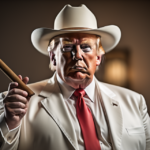
 

Play ball.


Anti-Crypto Corruption Week

Democrats Launch “Anti-Crypto Corruption Week” in Opposition to GOP-Backed Legislation


Washington, D.C., July 15, 2025 — Democrats on the House Financial Services Committee, led by Ranking Member Maxine Waters (D-CA) and Congressman Stephen Lynch (D-MA), have announced a coordinated effort dubbed “Anti-Crypto Corruption Week” in direct response to a trio of Republican-backed crypto bills moving rapidly through Congress. The legislative package, which includes the “CLARITY Act,” the “GENIUS Act,” and a bill opposing the establishment of a central bank digital currency (CBDC), has drawn fierce opposition from Democratic lawmakers who argue that the proposals would strip away key protections for consumers and investors, while opening the financial system to abuse.


The lawmakers argue that these bills could significantly weaken the federal government’s ability to monitor digital assets, provide regulatory oversight, and prevent financial crimes. According to public statements from Waters and Lynch, the proposed laws would not only embolden crypto-based fraud but also normalize what they have described as a series of ethically compromised ventures tied to President Trump and his associates.


“These bills, in their current form, would do nothing to protect the average investor,” said Waters in a press statement. “Instead, they would legitimize an ongoing pattern of abuse and self-enrichment using crypto schemes that have reportedly generated over $1.2 billion in personal profit for the former president and his inner circle.”

Among the key concerns raised by Democrats is the lack of consumer protection language within the bills. Critics have pointed to the failure of the “CLARITY Act” to address issues like investor disclosure, anti-money laundering safeguards, and protections for users of stablecoins — digital tokens that are often marketed as safer alternatives to more volatile cryptocurrencies.


Congressman Lynch emphasized that beyond domestic implications, these bills could also compromise national security and global financial leadership. “The Anti-CBDC Surveillance State Act, for example, could significantly restrict research and development into a U.S. central bank digital currency,” Lynch warned. “Meanwhile, international competitors such as China continue to advance their own digital currency frameworks, potentially giving them an upper hand in global economic affairs.”


The timing of the legislative push by Republicans has also drawn criticism, coming just days after what Democrats have called “one of the largest billionaire tax giveaways in U.S. history.” According to Waters, the crypto bills represent a continuation of a broader effort to deregulate financial markets in a way that benefits a small group of politically connected insiders at the expense of the broader public.


In response, House Democrats are pursuing a multi-pronged strategy during Anti-Crypto Corruption Week. That strategy includes continued public opposition, the introduction of counter-legislation, and the use of procedural tools to stall or block further advancement of the GOP-led crypto package.


Among the Democratic initiatives is the “STOP Trump in Crypto Act,” which would prohibit current and former federal officials, including members of Congress, from personally profiting from crypto-related ventures while in office or immediately thereafter. The bill was introduced ahead of a private fundraising dinner hosted by the former president, which reportedly featured the promotion of a new meme-based cryptocurrency tied to his political brand.


This latest effort builds on a series of actions taken by Committee Democrats throughout the year. In a recent 13-hour markup session, Waters and her colleagues offered over 30 amendments to a Republican-backed stablecoin bill. All were rejected by the majority. The Democrats also staged a walkout of a joint Financial Services-Agriculture Committee hearing, citing the refusal to include provisions addressing executive-level conflicts of interest.


Following that protest, Waters led a separate Democratic-only hearing focused on what she described as a growing pattern of financial misconduct in the crypto industry, specifically tied to individuals closely aligned with the former president. Democrats later used a procedural tactic known as a “Minority Day Hearing” to convene a second round of expert testimony, further highlighting their concerns over the crypto market structure bill.


Behind the scenes, Waters hosted a page-by-page review of the CLARITY Act with subject matter experts in ethics, securities law, and national security. That session, open only to Democratic members of the committee, was intended to underscore what critics see as dangerous loopholes in the bill that could be exploited by public officials or politically connected individuals.


The opposition by Democrats is rooted in a longer-term strategy initiated under Waters’ tenure as committee chair. In 2019, she created the House’s first Task Forces on Financial Technology and Artificial Intelligence. These groups laid the foundation for the Digital Assets Working Group, which has since conducted extensive dialogue with regulators, industry stakeholders, and consumer advocates. Across two Congressional sessions, the task forces held 22 hearings, examining how digital assets could be regulated without compromising consumer protection or national security.


As debate intensifies in the days ahead, Committee Democrats appear poised to continue their efforts to reframe the conversation around digital assets. “The stakes for consumers, investors, and our democracy could not be higher,” said Waters.


House Republicans, however, remain committed to passing the crypto legislation, touting it as a means to promote innovation and reduce regulatory uncertainty for emerging financial technologies.


The legislative fate of the bills remains uncertain as the Democratic-led opposition continues to gain visibility through hearings, public statements, and proposed countermeasures.


Post Note:

The dangers of cryptocurrency include extreme price volatility. The blood curdling, unexpected and unexplainable, dips in cryptocurrency ledgers are what democrats are warning of. Although the allure of equally unexplained recoveries continue to captivate investors. Still it is the lack of regulation, meaning fewer investor protections and greater security risks like hacking and fraud, and the irreversibility of transactions, making it hard to recover lost funds that should inspire more guard rails and government oversight. If you should lose your private key, you will most likely permanently lose your total investment.

As they say on these streets

“Ain’t no hollar back!”


Play Ball.


The Complexity Bill

Committee Democrats Hold Fiery Hearing on Trump’s Crypto Crimes and Republican Market Structure Bill


On June 6 at 9 a.m. in room 2220 of the Rayburn House Office Building, Democrats on the House Financial Services Committee held a Minority Day Hearing to explore former President Donald Trump’s alleged crypto crimes and the implications of the Republican-led Financial Innovation and Technology for the 21st Century Act (commonly known as the “market structure bill”). Despite the Minority Day designation, members of the Republican majority unexpectedly appeared at the session, adding a tense dynamic to the already high-stakes discussion.


The hearing, chaired by Ranking Member Maxine Waters (D-CA), aimed to provide a public forum for discussing the potential harm posed by Trump’s involvement in cryptocurrency-related schemes and the Republican bill’s impact on the digital asset sector. In her opening statement, Waters warned that “Trump’s crypto dealings have not just endangered the stability of financial markets, but they have also jeopardized the security of everyday Americans’ investments.” She emphasized the need for robust oversight and accountability to prevent further damage to the financial system.


Testimony was delivered by a panel of respected experts: Amanda Fischer, Policy Director and COO of Better Markets; Bart Naylor, Financial Policy Advocate/Economist at Public Citizen; Carole House, Senior Fellow at the Atlantic Council’s GeoEconomics Center; Hillary Allen, Professor of Law at American University Washington College of Law; and the Honorable Timothy Massad, Research Fellow and Director of the Digital Assets Policy Project at Harvard Kennedy School and former Chairman of the Commodity Futures Trading Commission.


Each witness delivered sobering assessments of both the crypto activities allegedly linked to Trump and the Republican-backed market structure bill. Amanda Fischer, for instance, described the Republican bill as “a wolf in sheep’s clothing” that would weaken key investor protections and expose consumers to heightened risks in the volatile world of digital assets. Fischer argued that the bill would create “a regulatory race to the bottom,” leaving the door wide open for fraud and manipulation.


Bart Naylor echoed those concerns, telling the committee that the legislation “prioritizes industry profits over public protection.” He criticized the bill’s provision to shift regulatory authority away from the SEC and CFTC, calling it a “power grab by crypto lobbyists that leaves consumers defenseless.”


Carole House provided insight into the national security implications of Trump’s crypto-related activities, explaining how illicit crypto transactions can fuel money laundering and terrorism financing. “We must not allow digital assets to become a safe haven for criminals and corrupt political actors,” she said.


Hillary Allen focused on the legal vulnerabilities created by the Republican bill, arguing that it would “erode the integrity of our financial system by stripping regulators of critical enforcement tools.” She warned that the bill’s broad exemptions could undermine the SEC’s efforts to police fraud and market manipulation.


The Honorable Timothy Massad concluded the witness presentations by drawing on his experience at the CFTC. He told the committee that “the Republican bill would handcuff regulators at a time when clear-eyed, robust oversight is needed more than ever.” Massad urged lawmakers to maintain and strengthen the existing framework for crypto oversight, not dismantle it.


Unexpectedly, the hearing’s Minority Day designation did not deter Republican members from attending and speaking up. Committee Chair Patrick McHenry (R-NC) and other Republican lawmakers used their time to defend the bill and downplay concerns about Trump’s alleged crypto crimes. McHenry argued that the market structure bill was necessary to “unleash American innovation” and position the U.S. as a leader in digital assets.


This sharp clash highlighted the deep divide between the two parties. Democrats, led by Waters, insisted that Trump’s crypto schemes were a stark example of why strong consumer protections and regulatory oversight are essential. Republicans, meanwhile, framed the hearing as a partisan attempt to derail efforts to foster innovation and competitiveness in digital finance.


In her closing remarks, Congresswoman Waters reaffirmed that the Committee’s Democratic members would continue to push for accountability and responsible policymaking. “This fight is not about party lines,” she said, “but about protecting American consumers and our financial system from reckless policies and corrupt schemes.”


The hearing ended after several hours of spirited debate, leaving no doubt that the battle over crypto regulation—and Trump’s alleged crypto misconduct—will remain front and center as Congress wrestles with the future of digital finance.


Continued discovery and exploration will be required, moving forward on this issue. A deeper understanding of the ways and means of crypto finance need be summarized into smaller bits of explanations, so that the public is able to make informed decisions when it comes to investment in crypto, but just as important, the public needs to know how to act as informed watchdogs of the president and those that are using and perhaps abusing these financial tools and assets.


Video:

Congresswoman Waters introduces the Complexity Bill during Minority Day on the Hill, after Rep. Hill shows up to derail the committee’s purpose.


The Commencement

On May 30, 2025, the Maxine Waters Employment Preparation Center celebrated its commencement ceremony with a passionate address from a local congressional leader. As one of the largest adult education centers within the Los Angeles Unified School District, the center has long been a beacon of opportunity for thousands of students seeking to elevate their lives through education and career training.


This year’s class marks a significant milestone, with over 11,000 students enrolled—the highest in the school’s history and the most of any adult school in the district. The ceremony highlighted the profound commitment of the institution to providing inclusive, high-quality education to a diverse student population. From career preparation programs to academic enrichment, the center offers a pathway for students to pursue new ambitions and secure better futures.


Ms Waters, The keynote speaker praised the resilience and determination of the graduating class, encouraging them to carry forward their newfound knowledge and skills. She underscored the vital role of accessible education in strengthening families and communities, emphasizing that each graduate holds the power to inspire positive change.


The center’s mission resonates throughout the Los Angeles community: to prepare adult learners for academic excellence and career success. With an unwavering dedication to educational equity, the center is shaping tomorrow’s leaders, helping students break down barriers and build bridges to brighter opportunities. As the new graduates step forward into their chosen careers or further studies, they carry with them not only the lessons of the classroom but the hope and promise of an institution devoted to lifelong learning and community progress.


Ms. Waters quoted message was clear:

“I am extremely proud of each and every one of the students graduating who had the drive to better their lives and improve their community”, said Congresswoman Waters. “Your graduation is a testament to your strength, your character, and your ability to believe in yourselves and never give up on your dreams. Whatever you do, know that your families, our community, and our entire nation are depending on you. I want you all to go through life with your heads held high, understanding that you can achieve any goal you set for yourselves. I know you are already inspired. You can and you will Achieve the Impossible! Congratulations to the class of 2025!”


And with these storied words of encouragement, Congresswoman Waters set forth and launched a graduating class of hopeful young men and women, whose direction is forever enlightened.