A Nation on the Brink: The “Big Beautiful Bill” and the Rise of American Autocracy
 In what many are calling the most dangerous legislative moment in recent American history, the so-called “Big Beautiful Bill” is now advancing toward a full Senate vote. Championed aggressively by the former president—who has referred to the measure as his “masterpiece”—the bill’s Section 70302 has set off constitutional alarms nationwide. This clause would bar federal courts from enforcing contempt charges, a critical legal mechanism historically used to ensure compliance with subpoenas and uphold the rule of law.
Legal scholars and watchdog organizations have warned that this single clause, buried deep in the legislative jargon, effectively turns the executive branch into a rogue entity, unchecked by either the judiciary or Congress. It’s a development that has echoes not only of banana republics but of authoritarian regimes like Russia, China, and North Korea—nations where power is absolute and the law is merely a tool of the ruler.
The political climate in Washington is already unstable. The former president, recently returned to the national stage after a controversial re-election bid fueled by inflammatory rhetoric and disinformation, has repeatedly demonstrated disdain for constitutional norms. He faces a barrage of lawsuits, investigations, and contempt citations—all of which could be rendered moot if the bill passes in its current form. It’s no wonder his allies, described by critics as “brown-nosing sycophants,” are pushing the bill, also known as the Big Rotten Sonovabill, in Democratic editorials, with such quiet desperation.
To understand the gravity of the situation, one must only examine recent headlines.
In March, a federal judge in D.C. held two administration officials in contempt for ignoring congressional subpoenas related to the mishandling of classified intelligence. One of those officials, who refused to testify before a bipartisan oversight committee, remains unpunished due to the Justice Department’s refusal to prosecute. With Section 70302 in place, there wouldn’t even be a possibility of future contempt enforcement—effectively neutering the court’s authority.
Meanwhile, whistleblowers from within the Justice Department have leaked internal memos describing increasing pressure to “stand down” on enforcement actions tied to administration figures. One memo allegedly ordered federal prosecutors to “consider the political implications” before pursuing legal action. This chilling directive aligns with the wider narrative: a steady dismantling of the separation of powers.
Social media platforms have become battlegrounds. Hashtags like #ContemptClause and #SaveTheConstitution are trending, as citizens, legal experts, and even some former Republican officials raise alarm bells. A viral TikTok video posted by a law student in Michigan broke down Section 70302 in under a minute and ended with a stark message: “This is how democracy dies—not with a bang, but with a loophole.”
Yet, all hope is not lost.
The Senate, currently split 53–47, sits at a precipice. Four GOP senators, quietly dubbed “the marionettes” for their historic  pattern of grappling with the party line, have emerged as the last remaining hope to halt the bill. Comparisons are already being drawn to the late Senator John McCain’s dramatic 2017 thumbs-down vote, which killed the effort to repeal the Affordable Care Act in its final hour. That single act was heralded as a
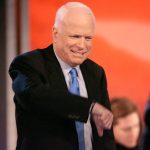 moment of conscience in an otherwise polarized chamber.
The eyes of the nation are now on these four senators. Their names are being whispered in corridors and shouted from protest podiums. Their silence has been deafening, but rumors persist that at least two are “deeply uncomfortable” with the bill’s implications, particularly the nullification of court authority.
Pressure is mounting from civil rights organizations, bar associations, and even retired federal judges. In an unprecedented move, the National Conference of Federal Judges issued a joint statement warning that “the passage of Section 70302 would mark the beginning of an authoritarian slide we may not be able to reverse.”
And what of the president himself?
He has declared victory prematurely, telling supporters at a recent rally, “Once this bill passes, nobody can touch me. Nobody. Not crooked judges, not loser prosecutors, not even the fake news.” The crowd erupted in cheers—but for the millions watching in disbelief, the message was clear: we are witnessing the open dismantling of democratic accountability.
This is not just political theatre. This is a real and present danger to the republic.
If passed, the bill could set a precedent that outlasts even the current administration. Future leaders—regardless of party—could exploit the same legal immunities, turning a temporary power grab into a permanent erosion of checks and balances. The judiciary would be left toothless. Congress would be neutered. And the president—any president—would stand above the law.
In hindsight, the late Senator John McCain already knew that he was dying of cancer, and his courageous vote against the grain would not and could not be primaried or fatally end his political career. But courage may not be uppermind for the four senators, who’s careers will certainly be challenged by a supercharged, vindictive, manchild should they fail to bend to his unyielding narcissistic will.
It’s a sobering reality that has led some to declare, “May we rest in peace,” as if mourning the democracy we once knew.
But perhaps it’s not time to mourn—yet. Perhaps it’s time to rise. There yet remains a vote in the senate, and there yet remains time to appeal to their better angels. History will remember this moment, and the question will be asked: Did we fight, or did we surrender?
Four senators. One vote. And the soul of a nation hanging in the balance. Understand this. If we lose, this moment, we all ultimately lose together, as perhaps only one soul, on earth – and certainly in these United States, will emerge to maintain free will and his will be done.
Play Ball.


 say the case is a politically motivated effort to weaken the Federal Reserve’s independence.
 In her statement, Congresswoman Waters hailed the court’s decision as “a victory for our democracy, the rule of law, and the independence of the Federal Reserve.” She emphasized that the ruling made clear that Trump’s attempt to oust Cook failed to meet the legal standard of “for cause” removal and violated her constitutional due process rights.

 Dr. Phil McGraw now finds himself at the center of aq lol LP major legal battle. The television personality is facing accusations of fraud and mismanagement tied to the collapse of his new media company, Merit Street Media, in what has become a $500 million courtroom fight.
 The House of Representatives abruptly adjourned for its August recess on July 22, 2025, amid a dispute over legislation concerning the public release of the so-called “Epstein files.” With Congress shuttered earlier than scheduled, the current resident, Donald Trump — who continues to assert sweeping authority over the federal government — moved to invoke a rarely used provision of the District of Columbia Home Rule Act of 1973, seizing control of the Metropolitan Police Department.
 across Washington, a city accustomed to demonstrations, visiting dignitaries, and heightened security, but not to routine military presence on neighborhood streets.
 said, gave the sense of a city under occupation rather than protection.
 Immediate Release:
 attacking the South African government, falsely claiming they deny justice to white Afrikaners, rewriting history, and ignoring Black suffering under apartheid. Musk, seeking a battery factory in South Africa, opposes the 30% local participation requirement, which aims to empower historically disadvantaged Black South Africans. Meanwhile, Trump simultaneously deported Latin Americans illegally and allowed 59 white South Africans into the U.S. without visas or legal processing.

 In the late 1800s, Chinese immigrants in the United States, particularly on the West Coast, were heavily associated with the opium trade and the operation of opium dens. While not all Chinese immigrants were involved in this trade, opium use and sales became a prominent part of some Chinese communities, especially in places like San Francisco’s Chinatown.
 resentment from non-Chinese workers. This, coupled with the association of Chinatowns with gambling, prostitution, and opium use, led to racist campaigns that portrayed Chinese immigrants as corrupting society.
 charged, police actions are oft times built upon a ting of racial animosity, leading to misdirected conclusions that never seek to point a finger at our own users, addicts and junkies, seeking the thrill of the high. Is it the enemy abroad, the enemy within, or
  the leadership, using both to maintain their power base. We criminalize, deport and incarcerate dealers and those found in possession, rather than develop mental, medical or diversionary programs to stem the desire to use.
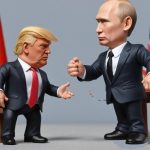 The great negotiator is no match for big balls. During yesterday’s marathon, 2 hour call, Daniel Tramp laid out his cards, and his vision of peace. It turns out that Pootie Tang had his own vision of the way things ought to be.
 Donald Trump has once again injected himself—and of course, his politics—into our Sunday afternoon quiet time, the Super Bowl. The mouth that roars ensures that the biggest game of the year is overshadowed by controversy, and allows him to once again live rent free in our heads, as he did in the 2016 Kapernick season. His recent comments about Patrick Mahomes, in which he wrongly credited Alabama Senator Tommy Tuberville with coaching Mahomes at Texas Tech, are just the latest in a string of political distractions leading up to Sunday’s game. And now, with Trump expected to attend the Super Bowl, Mahomes will be carrying this noise into the game, whether he wants to or not. Trump lied, sending Tuberville into a state of political suicide, if he sets the record straight. Every sporsfan with a modicum of critical sports theory, knows that Tuberville never ever breathed a breath of coaching to Mahomes, from his job, way over in Cincinnati. At best scouts may have pointed Patrick out to him as he exited the Tech campus and the kid was still in high school. Mahomes was actually recruited by Texas Tech after Tuberville was good and gone. The kid flatly denied the senator’s quiet claim that he was recruited by him.