LUV Car Wash Brings Corporate Shine to Inglewood: A Local Favorite Gets a Makeover
By Charles Jackson
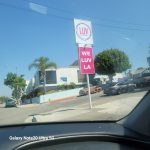 As I often do, I recently made a stop at my go-to carwash at 320 N. La Brea Avenue. For years, it’s been a hidden gem — no frills, no nonsense, and a drying system that left my car gleaming without needing a towel. I could be in and out in five minutes, the lines were not long, and the value was unmatched. So when the manager, Mario, told me that last week was their last under the current ownership, I had to find out what was going on.
It turns out that the Local Favorite Gets a Makeover
— long known to locals as Inglewood Express Car Wash — has been acquired by LUV Car Wash, a rising name in the national car wash industry. The deal, completed on Friday, May 9, 2025, marks LUV’s latest step in its aggressive expansion into the competitive Los Angeles market. The Inglewood site becomes the 77th location for the brand.
Based in Gilbert, Arizona I’m told. LUV Car Wash is a portfolio company of Susquehanna Private Capital, a private equity firm that has backed the chain since 2021. LUV’s leadership includes co-founder and CEO Darren Skarecky and co-founder and Chief Development Officer JT Thomson, two industry veterans who have helped push the chain’s rapid growth by focusing on high-quality, express-style exterior car wash services. According to company statements, the acquisition of Inglewood Express is part of a broader strategy to target high-traffic, high-visibility locations in dense urban markets.
The Inglewood location, just blocks from major redevelopment efforts surrounding SoFi Stadium and the highly favored Intuit Dome, is a prime piece of real estate. Though LUV hasn’t yet released specifics about the remodeling, locals can expect the site to be modernized in the coming weeks. Based on LUV’s national footprint, upgrades will likely include automated pay stations, high-pressure rinse tunnels, advanced water recycling systems, and subscription-based wash club services.
While corporate growth is usually accompanied by promises of efficiency and polish, longtime customers — myself included — may have mixed emotions. Inglewood Express has been a neighborhood standby, known not just for its speed and value, but also for its consistency. You knew what you were getting: no upsells, no wait times, and a car that looked clean without streaks or the need for a wipe-down.
What remains to be seen is whether the remodeled location will live up to the expectations of locals who have come to rely on its simplicity and affordability. I won’t mention specific prices (yet), but trust me — if the new model doesn’t meet the bar set by the old one, I’ll be the first to snitch.
Of course, change in Inglewood is nothing new. The city of Champions has been undergoing a wave of transformation ever since MSG lit up the corner of Prairie and Manchester anew, and the NFL and NBA laid claim to the sports hubs down the street. New development brings opportunity — and rising costs. Small businesses often become casualties or undergo transformations that risk alienating their base. With LUV Car Wash entering the scene, this could go either way.
In their partnership with Susquehanna Private Capital, Skarecky and Thomson have emphasized a founder-focused approach, promising operational autonomy for local managers and a light corporate touch. The hope is that LUV’s leadership will maintain the local spirit of Inglewood Express while enhancing service through technology and consistency. But as with any transition, the proof will be in the pudding and the wash.
For now, the site is expected to undergo renovations, which are already underway, and customers should anticipate changes in layout, services, and potentially pricing. LUV has not announced a reopening date, but given their track record of quick transitions, it likely won’t be long. Meanwhile I found myself down the street, at AutoZone, picking up a chamois so I could manually maintain my shimmer and shine in my driveway for Mother’s Day
In a neighborhood where authenticity is increasingly hard to preserve, the future of the 320 N. La Brea car wash, located on the east side of the street, between El Polo Loco and Walgreens, may serve as a small but telling test case. Can a national chain maintain the trust and loyalty earned by a locally loved business? LUV Car Wash has its work cut out, because we don’t play, when it comes to keeping the ride looking good.
Until then, I’ll be watching, and if the dryers don’t hit like they used to — or if LUV starts hitting us up with vacuum charges, you’ll hear about it here first.
Play Ball.
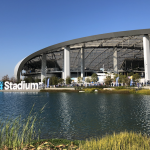 The economic transformation around SoFi Stadium and the now open Intuit Dome in Inglewood has created challenges for local small business owners who feel sidelined by the impacts of gentrification and rising costs. Once viewed as a development that would bring economic opportunities, the new stadiums have instead caused property values, rents, and traffic congestion to soar, adding significant financial pressure on the surrounding community. Many of these effects have been felt by local businesses and long-term residents, primarily from Black and Latino communities, who are now struggling with the unintended consequences of this development boom.
 Beyond Inglewood, similar stories have emerged in other cities that have undergone rapid development of sports infrastructure. Examples include the construction of the Barclays Center in Brooklyn and Nationals Park in Washington, D.C., which also triggered rising rents and displacement concerns. Both examples reflect how sports venue developments often prioritize attracting tourists and higher-income patrons while pushing out long-standing, lower-income communities. These cases reveal a pattern where public resources are often directed to support large-scale developments while low-income residents and local businesses face increasing barriers to remain in place.
 and Intuit Dome, represent a familiar conflict between economic revitalization and displacement. Without robust measures to support local residents and businesses, small enterprises risk being displaced by rising costs, while new developments become exclusive spaces that primarily benefit those with significant financial capital. Advocates argue for policies that create affordable housing, provide direct support for small businesses, and mitigate the negative impacts of traffic and pollution—common consequences of such high-profile projects.

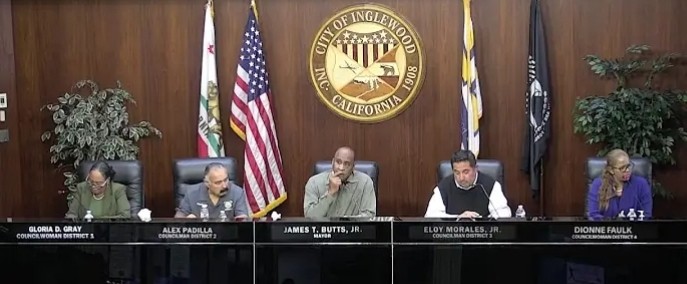
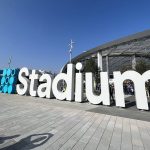 The economic transformation around SoFi Stadium and the soon-to-open Intuit Dome in Inglewood has created challenges for local small business owners who feel sidelined by the impacts of gentrification and rising costs. Once viewed as a development that would bring economic opportunities, the new stadiums have instead caused property values, rents, and traffic congestion to soar, adding significant financial pressure on the surrounding community. Many of these effects have been felt by local businesses and long-term residents, primarily from Black and Latino communities, who are now struggling with the unintended consequences of this development boom.
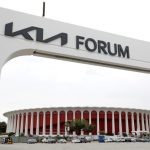 catalyzed displacement among longtime residents and has particularly affected low-income renters. The pressure on local businesses has intensified, especially those without the resources to cope with increased lease costs and the decline in customer traffic due to congested streets and ongoing construction. Many business owners argue that local officials, including Inglewood’s Mayor James Butts, have favored high-value development while