
Congressional Democrats Introduce “Stop TRUMP in Crypto Act” to Counter Alleged Presidential Profiteering
The most poignant statement that Congresswoman Waters hurled, directly addressed these concerns: “I know my Republican colleagues fear Trump, but I urge them to stand with me and my Democratic colleagues to pass this bill and send a clear message that the White House is not a platform for personal profit.”
In a move aimed at curbing financial conflicts of interest at the highest levels of government, Congresswoman Maxine Waters (D-CA), Ranking Member of the House Financial Services Committee, unveiled the “Stop Trading, Retention, and Unfair Market Payoffs in Crypto Act of 2025” — or the “Stop TRUMP in Crypto Act” — on May 22, 2025. This landmark legislation, also known as H.R. 3573, seeks to bar the President, Vice President, Members of Congress, and their immediate families from engaging in a range of activities involving digital assets.

The bill prohibits covered officials from owning a significant stake in any digital asset that would allow them to unilaterally influence it, from serving as officers or directors of digital asset issuers, and from promoting or profiting from digital assets. It also bans trading based on material non-public information, effectively addressing concerns about insider knowledge and manipulation.
The legislation was introduced against a backdrop of controversy surrounding President Trump’s cryptocurrency ventures, including his personal memecoin, $TRUMP, which has been at the center of public scrutiny. Reports indicate that $TRUMP has inflated the former president’s net worth by over $350 million, while investors have reportedly lost billions of dollars. In addition, Melania Trump has launched the $MELANIA memecoin, and the Trump-backed stablecoin, USD1, has drawn attention for its ties to foreign investors and national security implications.
Just hours before the bill’s unveiling, President Trump hosted a private dinner for top $TRUMP coin holders at his luxury golf resort. Attendees reportedly paid millions for a seat at the table, and the event coincided with a significant surge in $TRUMP’s value in the preceding 24 hours. This development, in the eyes of Waters and other Democratic lawmakers, underscores the urgent need for legislative action to prevent public officials from using their offices for personal enrichment.
“Donald Trump is preparing to dine with the top donors of his memecoin who’ve made him, and his family, richer,” said Congresswoman Waters in a statement. “Meanwhile, American families are getting poorer and growing increasingly anxious under his failed leadership.”
Waters’ concerns were echoed by other Democratic colleagues. Congressman Stephen Lynch, Ranking Member of the Subcommittee on Digital Assets, Financial Technology, and Artificial Intelligence, characterized Trump’s actions as “disrespect for the rule of law.” Congresswoman Nydia Velázquez highlighted the potential for foreign influence in Trump’s crypto dealings, while Congressman Brad Sherman warned that selling access to the presidency through digital assets undermines the credibility of the United States on the global stage.
Congressman Al Green added that President Trump’s second term has seen “corruption in this country reach new heights,” and that the bill is vital to ensure no future public official uses digital assets for personal gain. Similar sentiments were voiced by Congressmen Emanuel Cleaver, Bill Foster, and others who cosponsored the legislation.
The bill has also garnered the support of outside groups such as Public Citizen, Accountable.US, and Americans for Financial Reform, who see it as a critical measure to restore public trust and safeguard democratic institutions.
The proposed legislation comes amid a broader debate over the role of digital assets in the U.S. financial system and the need for clear regulations to prevent their misuse. While crypto enthusiasts tout the potential for innovation and new investment opportunities, lawmakers like Waters emphasize that, without oversight, these assets can become tools for self-dealing and corruption.
The “Stop TRUMP in Crypto Act” is now under consideration by the House Financial Services Committee, where Waters and her Democratic colleagues are pushing for bipartisan support. They argue that the bill’s scope — which extends to any President, Vice President, or Member of Congress — ensures it is not a partisan measure, but a necessary safeguard against future abuses of power.
“This bill will stop Trump’s brazen crypto corruption and prevent any President, Vice President, Members of Congress, or their immediate families from exploiting crypto in this way,” Waters said. “Enough is enough. Congress can no longer ignore the biggest scam and abuse of power in American history.”
The push for this legislation reflects growing concern that financial entanglements at the highest levels of government erode democratic norms and expose the country to undue foreign influence. As the bill moves forward, supporters say it is a vital step toward ensuring that the presidency and Congress remain dedicated to public service — not personal profit.
The outcome of this legislative effort remains to be seen. But if passed, the “Stop TRUMP in Crypto Act” would mark a significant turning point in regulating the intersection of digital assets and political power, establishing guardrails to protect the public and uphold the integrity of America’s democratic institutions.
The full text of the bill is available at link below:
https://1man1vote.com/wp/?page_id=787

 “For years, students have been stripped of their basic rights through fine print in enrollment contracts,” Waters said during the announcement. “Predatory for-profit colleges have used these clauses to avoid accountability while continuing to profit off public funds and students’ futures.”
 On June 6 at 9 a.m. in room 2220 of the Rayburn House Office Building, Democrats on the House Financial Services Committee held a Minority Day Hearing to explore former President Donald Trump’s alleged crypto crimes and the implications of the Republican-led Financial Innovation and Technology for the 21st Century Act (commonly known as the “market structure bill”). Despite the Minority Day designation, members of the Republican majority unexpectedly appeared at the session, adding a tense dynamic to the already high-stakes discussion.
 seeking to elevate their lives through education and career training.
 and every one of the students graduating who had the drive to better their lives and improve their community”, said Congresswoman Waters. “Your graduation is a testament to your strength, your character, and your ability to believe in yourselves and never give up on your dreams. Whatever you do, know that your families, our community, and our entire nation are depending on you. I want you all to go through life with your heads held high, understanding that you can achieve any goal you set for yourselves. I know you are already inspired. You can and you will Achieve the Impossible! Congratulations to the class of 2025!”

 As I often do, I recently made a stop at my go-to carwash at 320 N. La Brea Avenue. For years, it’s been a hidden gem — no frills, no nonsense, and a drying system that left my car gleaming without needing a towel. I could be in and out in five minutes, the lines were not long, and the value was unmatched. So when the manager, Mario, told me that last week was their last under the current ownership, I had to find out what was going on.
 In what many are calling the most dangerous legislative moment in recent American history, the so-called “Big Beautiful Bill” is now advancing toward a full Senate vote. Championed aggressively by the former president—who has referred to the measure as his “masterpiece”—the bill’s Section 70302 has set off constitutional alarms nationwide. This clause would bar federal courts from enforcing contempt charges, a critical legal mechanism historically used to ensure compliance with subpoenas and uphold the rule of law.
 pattern of grappling with the party line, have emerged as the last remaining hope to halt the bill. Comparisons are already being drawn to the late Senator John McCain’s dramatic 2017 thumbs-down vote, which killed the effort to repeal the Affordable Care Act in its final hour. That single act was heralded as a
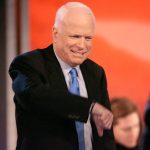 moment of conscience in an otherwise polarized chamber.
 Beyond Trump’s little sneak attack on Ramaphosa, China is a strong supporter of South Africa. Their relationship has deepened significantly over the years, moving beyond just economic ties to encompass strategic, political, and even military cooperation.
 The great negotiator is no match for big balls. During yesterday’s marathon, 2 hour call, Daniel Tramp laid out his cards, and his vision of peace. It turns out that Pootie Tang had his own vision of the way things ought to be.