A couple of days ago two things happened. First, I got into an intense debate with a young man, concerning A.I., SIRI, GALAXY, CLAUDE, CHATGTP, GEMINI, GROK, etc. I flexed on him and accused him of having inferior knowledge on the subject because I have worked in the technology field since the 1980s, and then I fell back on his lack of experience because I have twelve years of age on him.
Anyway, no harm was done. Every night, we debate the human condition and then go home. When I got home, I was thinking about our record. In case you didn’t know, I am a veteran of the music business. One of the groups that I worked with recorded a few records, and recently, a label picked up some of our records and re-released a bunch of them on a new album. The group’s name was Record Player. I was suddenly curious about how the record sales are doing, so I said to Alexa, “how are record sales going for the group Record Player.”
Alexa responded with: “Record Player didn’t actually release an album last year; the group remains a fictional band from the Amazon Prime series, Daisy Jones & The Six. Because they only existed within the show’s universe, there aren’t any real-world sales to track.”
I jumped in immediately, and said “Alexa, I am sitting here holding their record and I am one of the artists.”
Alexa paused, and then regrouped. “My mistake! You are completely right, and I apologize for the mix-up.
You are holding the music of Record Player, the 1970s soul and funk group out of Dayton, Ohio. They were massive talents in the Midwest disco/show band scene before splitting up in the early 1980s.
Because they originally only pressed a rare, single 45 RPM record back in 1979, most of their incredible studio recordings sat unreleased for decades. The album you are likely holding is “Free Your Mind,” an archival compilation officially restored and released last year by Now-Again Records.
While precise streaming and physical sales numbers for independent archival pressings like this aren’t publicly charted on Billboard, the release has been incredibly well-received by deep-soul collectors, funk historians, and vinyl enthusiasts who are thrilled to finally have that full catalog preserved.”
I said, “interesting enough, I just assured a colleague that it is a myth that A.I. is infallible.
Alexa quickly agreed.“That is definitely a myth worth busting! We are definitely not infallible—as my first answer clearly proved.
AI models are just pattern-recognition engines trained “massive amounts of data, which means we can easily misunderstand context, confidently hallucinate incorrect facts, or get tripped up by overlapping names. It is always a good idea to double-check AI responses, especially when you have the hard copy right there in your hands.
This story is true, believe it or not. It is a cautionary tale, as we move forward deeper into the realm of A.I. and Data Centers. Just as I was wrapping up the facts for this one, I asked GALAXY if there was actually a group named Record Player on the fictional series, Daisy Jones & The Six.
What began as a supposedly nonpartisan national celebration appears to have taken a sharp detour into campaign-country.
The event’s original lineup looked like a strange but entertaining playlist assembled by someone spinning a giant wheel of nostalgia: Lee Greenwood, Christopher Macchio, Vanilla Ice, Flo Rida, Fab Morvan (still carrying the Milli Vanilli banner), military bands, drum corps, and armed forces choruses.
Then came the withdrawals.
One by one, artists including The Commodores, Morris Day & The Time, Martina McBride, Bret Michaels, and Young MC reportedly decided they would rather spend the weekend doing literally anything else.
Several states—including Connecticut, Illinois, Maine, Massachusetts, North Carolina, Oregon, Pennsylvania, and Washington—also declined to participate, citing cost concerns and discomfort with the increasingly partisan tone of the event.
At some point, attendees may have begun realizing they weren’t being invited to a national fair as much as they were being recruited as scenery.
With the exits piling up, the remaining roster began to resemble a game of musical chairs where most of the chairs had already left the building. Those still standing could reasonably be described as either committed performers, true believers, or people whose agents stopped answering the phone.
Notably absent from the discussion are several names observers expected to see. Some may be touring. Some may have wisely scheduled dentist appointments. Others may have simply decided that becoming a political talking point wasn’t worth the frequent-flyer miles.
In the end, President Donald Trump reportedly canceled the remaining concert schedule altogether and replaced it with what the event seems to have been evolving into from the start: a massive political rally headlined by himself.
Which raises the obvious question: If a nonpartisan celebration slowly sheds its musicians, loses participating states, transforms into a campaign-style rally, and ends with a speech by the politician at the center of it all—was it ever really nonpartisan in the first place?
Sometimes the most revealing part of a concert is not who’s on stage.
It’s who left before the show started.
“At some point, attendees may have begun realizing they weren’t being invited to a national fair as much as they were being recruited as scenery.”
This might be worse than I thought. Not only is AI going to take all of our jobs but AI is also going to waste all of our time.
The big story right now is that AI agents have officially overtaken humans as the largest source of internet traffic.
According to data just released by Cloudflare, automated AI bots and agents now account for 57.4% of all web traffic (via HTTP requests), leaving humans with the remaining 42.6%.
Here is what is happening under the hood:
The Multiplier Effect: When a human asks a chatbot a single question (like shopping for a camera or researching a topic), the human looks at maybe four or five sites. An AI agent will aggressively scour hundreds or thousands of websites simultaneously to synthesize that one answer.
The “Dead Internet” Shift: This marks a fundamental shift from a web designed for humans clicking around, to an internet dominated by machine-to-machine data retrieval.
The Regional Divide: This bot traffic is heavily concentrated in North America, where agents make up nearly 69% of all web traffic, while regions like India still remain overwhelmingly human-driven (over 84%).
While humans still win on total actual engagement time (like streaming videos or doomscrolling social feeds),
AI agents completely dominate the rapid-fire loading of web pages.
So while you are swiping left and right and up and down, the chat agents are doing stuff – lots of plain old boring businessey stuff.
The Day the Music Industry Let the Robots Into the Studio.
For decades, the record business treated artificial intelligence the way Dracula treated daylight: avoid at all costs, issue dramatic legal threats, and send expensive lawyers carrying sharpened cease-and-desist letters. Now? The vampires appear to be installing Wi-Fi in the castle.
In what may become one of the strangest turning points in modern music history, newsroom.spotify.com and universalmusic.com announced a new licensing partnership that will allow fans and creators to generate AI-powered cover songs and remixes using participating artists’ catalogs. Spotify.
The same music industry that once acted like a teenager downloading LimeWire in 2002 was equivalent to nuclear espionage is now apparently saying: “Alright… maybe the robots can sing a little.”
According to Spotify’s official announcement, its new feature will launch as a paid add-on for Premium subscribers and will focus on AI-generated licensed covers and remixes. Spotify says the system is built around three magic corporate buzzwords: “consent, credit, and compensation.” Translation:
“We finally found a way to monetize the apocalypse.”
The move represents a dramatic cultural shift for major labels, especially Universal Music Group, which only recently spent considerable energy battling unauthorized AI music platforms and defending artist copyrights. In fact, UMG previously reached agreements with AI music companies like Udio after legal warfare over copyrighted training material. UMG
Now the same industry that once screamed, “AI is stealing music!” is quietly adjusting the studio microphone for it. And honestly, maybe they had no choice.
The internet already resembles a cyberpunk karaoke bar at 3 a.m. Somewhere right now, a teenager in Nebraska is probably generating an AI version of Frank Sinatra singing a Kendrick Lamar diss track while an AI Elvis harmonizes in the background. The toothpaste is not merely out of the tube — the toothpaste has released three mixtapes and launched a Patreon.
Spotify appears to understand this reality better than most. The company is aggressively leaning into AI products as part of its future business strategy. Beyond music remixes, Spotify also unveiled AI-generated podcast tools and other “superfan” features intended to drive new revenue growth through 2030. Reuters
Wall Street loved it. Spotify stock reportedly jumped sharply after the announcement. Of course it did.
Investors hear phrases like “new monetization ecosystem” and immediately begin levitating several inches above the floor.
Still, the announcement raises massive questions about the future of artists, creativity, and authenticity. Will listeners care whether a song is sung by a human being anymore?
Or are we entering an era where audiences simply shrug and say:
“If it slaps, it slaps.”
That possibility terrifies traditional musicians. For years, artists fought to preserve the mystique of originality — the idea that music carried fragments of human struggle, heartbreak, and experience. But AI systems can now mimic vocal styles, recreate production aesthetics, and manufacture emotionally convincing songs in seconds.
The result could become musical chaos. Imagine:
* AI Tupac featuring AI Prince.
* A synthetic Johnny Cash singing trap music.
* An AI-generated Motown ballad accidentally becoming a global hit.
Five million fake Drake songs appeareing online before breakfast.
Some of that sounds hilarious. Some sounds horrifying. Most sounds inevitable. And the record labels know it.
That is why this Spotify-UMG agreement matters. It signals that major labels may be abandoning the old strategy of trying to stop AI altogether. Instead, they appear ready to build toll booths around it.
If people are going to make robot music anyway, the industry wants a percentage.
To be fair, Spotify and UMG insist participating artists will opt in voluntarily and receive royalties from AI-generated creations.
That could create a bizarre but lucrative future where artists license “digital vocal likenesses” the same way celebrities license action figures or video gam
e appearances.
In other words: Your favorite singer may someday retire from touring entirely while their AI clone keeps dropping albums every six months forever. Immortality, but with subscription billing.
Meanwhile, researchers are already racing to create systems that can detect.
AI-generated music because distinguishing humans from algorithms is becoming increasingly difficult.
That may soon become necessary because the next generation of listeners could grow up in a world where the line between “artist” and “software operator” barely exists. And perhaps that is the real story here.
The music industry once feared AI would burn down the building.
Now it is inviting the robots inside, handing them backstage passes, and asking whether they would like merchandising rights.
If you’re old enough, you may have been forced to accept the synthesizer that sounded just like your original $895 74-key Fender Rhodes. You learned to appreciate the first drum machine that landed in the studio. The magic of Pro-Tools was hard to swallow, but before long, using that tool to sample and share your name on a split sheet with James Brown, the most sampled musician of all times didn’t hurt hardly at all.
Ultimately It may well be wiser and more profitable to happily split the check, than grumble and complain yourself into the poor house.
It’s better to play ball, than to be the ball.
Public Authenticity, Political Alignment, and Backlash: Nicki Minaj at the Center of a Social Media Firestorm
The ongoing debate over celebrity “authenticity” in the digital age has resurfaced with renewed intensity following controversy surrounding rapper Nicki Minaj. Critics across social media platforms have questioned why public figures increasingly share personal histories and political opinions in highly visible forums, particularly when those disclosures later conflict with subsequent public positions. Minaj’s recent political alignment and resurfaced comments about her immigration background have become a focal point in this broader cultural discussion.
The latest backlash emerged after Minaj appeared at a Turning Point USA event alongside conservative commentator Erika Kirk. According to reporting by the Latin Times, the appearance prompted online users to revisit a 2018 Instagram post in which Minaj described arriving in the United States as a child without legal immigration status. The resurfaced post, originally shared amid public outrage over family separations at the U.S.–Mexico border, expressed empathy for migrant children affected by enforcement policies.
In that 2018 message, Minaj wrote that she came to the United States at the age of five and described the emotional trauma she associated with the idea of children being separated from their parents. “I came to this country as an illegal immigrant @ 5 years old. I can’t imagine the horror of being in a strange place & having my parents stripped away from me at the age of 5,” she wrote at the time, adding that the situation was “so scary” and calling on policymakers to “please stop this,” according to excerpts cited by the Daily Mail. The post circulated widely during a period when images of migrant children held in detention facilities dominated news coverage.
In contrast, Minaj’s more recent engagement with political content has drawn criticism from fans and commentators who view her positions as inconsistent with those earlier statements. Online reactions highlighted by the Daily Mail included comments suggesting she had distanced herself from her own past experiences, with some accusing her of abandoning earlier views in favor of political alignment with former President Donald Trump and associated policy positions.
The criticism intensified after Minaj publicly responded positively to online posts promoting the SAVE Act, proposed legislation aimed at preventing undocumented immigrants from voting in U.S. elections. While supporters of the bill argue it addresses election security concerns, critics view it as part of a broader effort to tighten immigration enforcement and restrict immigrant participation in civic life. Social media users cited by the Daily Mail pointed to what they described as a contradiction between Minaj’s previous advocacy against family separation and her recent engagement with content perceived as supportive of stricter immigration measures.
Minaj has also addressed her own immigration history directly in recent years. During a TikTok Live broadcast in 2024, she spoke about being born in Trinidad and Tobago and later living in the United States. In remarks reported by the Daily Mail, she stated that she had paid “millions of dollars” in taxes and joked about not having received “honorary citizenship many, many, many thousands of years ago.” While framed humorously, the comments reignited discussion about her legal status and long-standing presence in the country.
Beyond immigration policy debates, Minaj has drawn attention for a public dispute with journalist Don Lemon. The exchange began after Lemon livestreamed coverage of a protest at a Minnesota church connected to Immigration and Customs Enforcement activity. In response, Minaj posted a message on X criticizing Lemon in explicit terms. Lemon later responded by questioning Minaj’s understanding of journalism and referred to her as “ignorant” during a subsequent podcast appearance, according to the Daily Mail. The back-and-forth further amplified public scrutiny of Minaj’s recent political commentary and online conduct.
Minaj’s political positioning has also included public praise for former President Trump. During a United Nations appearance in November, she thanked Trump for his “leadership,” a statement that drew renewed criticism from fans who viewed it as another indication of her alignment with MAGA-associated political messaging. The comment circulated widely across social media platforms and was cited by critics as evidence of a broader ideological shift.
The controversy reflects a larger trend in which celebrities increasingly use social media platforms to communicate directly with audiences about personal histories and political beliefs. For some fans, these disclosures foster a sense of transparency and relatability. For others, they raise questions about consistency, accountability, and the impact of celebrity influence on public discourse. In Minaj’s case, the resurfacing of her earlier immigration-related statements has become a benchmark against which her recent political engagement is being measured.
Observers note that the rapid circulation of archived social media content has made it more difficult for public figures to separate past statements from present positions. Posts made years earlier can be rediscovered and reframed within new political contexts, often intensifying public reaction. This dynamic has been particularly pronounced in politically polarized environments, where online communities actively scrutinize perceived contradictions.
While Minaj has not issued a comprehensive statement reconciling her earlier immigration comments with her recent political engagements, the ongoing debate highlights the challenges celebrities face when navigating public identity in a digital ecosystem that rewards immediacy and visibility. The reaction to her recent activities underscores how personal narratives, once shared publicly, can remain part of the public record and resurface in unexpected ways.
As the discussion continues across national and international media outlets, Minaj’s case illustrates the broader tension between celebrity authenticity, political expression, and public accountability. Whether this episode leads to further clarification from the artist or remains another example of social media-driven controversy, it reinforces the reality that in the current media landscape, personal disclosures and political affiliations are rarely isolated from long-term public scrutiny.
On a recent day at the busy corner of Pico Boulevard and La Brea Avenue in Los Angeles, a spontaneous yet carefully organized community gathering unfolded that reflected the evolving food, art, and cultural landscape of Mid-City. At 4972 W. Pico Blvd., a well-known Black-owned New York–style pizzeria became the setting for a pop-up collaboration that drew neighbors, creatives, and longtime supporters into a shared public moment centered on food, local enterprise, and cultural expression.
The event was anchored by a partnership between Nehemiah Anderson, also known as Westside Five, and the shop’s proprietor, Esteban “Esco” Gutierrez. Together, they introduced a limited pop-up menu under the banner of Modder’s Kitchen, blending traditional New York pizza with Jamaican-inspired flavors. Two specialty offerings defined the collaboration: jerk chicken pizza and oxtail pizza. These items combined the familiar format of oversized New York slices with seasoning profiles more commonly associated with Caribbean cooking, creating a fusion that resonated with attendees without departing from the pizzeria’s core identity.
The location itself is already a recognized neighborhood fixture. Founded by Harlem native Esteban Gutierrez, the pizzeria has built its reputation on authentic New York–style pizza, emphasizing thin, crispy crusts and generously sized slices. Gutierrez brings more than 20 years of experience rooted in his father’s New York pizzeria, and that lineage is central to the shop’s appeal. For many patrons—particularly former East Coast residents—the taste and presentation closely match what they remember from New York City. This consistency has helped the business earn a loyal following in Mid-City Los Angeles.
Beyond pizza, the shop offers a broad menu that includes wings, salads, customizable calzones, and desserts such as Nutella knots, which are frequently cited by customers as a standout item. Vegan options are a notable part of the menu, with clearly labeled plant-based slices such as vegan Margherita, Veggie, and Pesto Cheese. These pizzas use vegan cheese sourced from local providers like Vromage, reinforcing the business’s emphasis on local partnerships and inclusive dining options.
The Pico and La Brea location is known not only for its food but also for its atmosphere. The interior features New York–inspired decor, including a Knicks-themed logo and design elements that reference subway cars in some areas. While there is limited indoor and outdoor seating, the shop is widely regarded as a takeout-friendly spot where customers often interact directly with Gutierrez himself. His visible presence and engagement with patrons are frequently mentioned in local and social media posts as part of what makes the establishment feel personal and community oriented.
That sense of community was amplified during the pop-up event. Alongside the food collaboration, the gathering featured on-the-spot apparel printing by Taylor’s Tees, producing shirts and caps for attendees in real time. Sleep Dawg’s classic artistic designs were also present, adding a visual and cultural layer to the event. Together, these elements transformed the corner of Pico and La Brea into more than a food stop; it became a temporary outdoor showcase for local creativity and small business collaboration.
According to posts and images shared on social media, the turnout included a broad cross-section of the neighborhood, with people stopping by for slices, conversation, and merchandise. The event unfolded without formal staging or ticketing, reinforcing its open, accessible nature. Music, casual conversation, and foot traffic contributed to an atmosphere that resembled a block-level celebration rather than a conventional promotional event.
In 2025, the business continues to operate as a Black-, Latino-, and woman-owned enterprise, with Gutierrez partnered with entrepreneur Aryn Drake-Lee. The shop is open daily from 11:00 a.m. to 11:00 p.m. and offers dine-in, takeout, and catering services. Popular menu items include Margherita and pepperoni slices, typically priced around six dollars, as well as specialty offerings like white clam pizza finished with fresh lemon. Orders can be placed in person or through online platforms such as Slice and the shop’s official website.
Events like the Modder’s Kitchen pop-up reflect how the pizzeria positions itself beyond a standard food business. By hosting local collaborations and welcoming artists, designers, and chefs into the space, the shop reinforces its role as a neighborhood hub. Social media reactions to the Pico and La Brea gathering highlighted appreciation for both the food and the sense of collective presence, with particular attention given to the jerk chicken and oxtail pizzas as well as the opportunity to support multiple local brands at once.
At its core, the gathering demonstrated how a single corner in Mid-City Los Angeles can serve as a meeting point for culinary tradition, cultural fusion, and community engagement. Without speculation or exaggeration, the event reflected what the pizzeria has consistently aimed to provide: authentic food, open doors, and a space where local partnerships are not an exception but part of the everyday rhythm of the neighborhood.
BTW. In the spirit of Stevie Wonder’s Bus Full of Toys, the brothers placed a cap on the spirit of Christmas. These young entrepreneurs stepped up their game, one more leg up, sponsoring a walk-up toy giveaway, dubbed “Table Full of Toys.” These young fellas thought of every little thing. Keep up the good work.
In early September 2025, human remains were discovered in the front trunk of a Tesla impounded at a Hollywood tow yard. The car had been ticketed, towed, and abandoned on a street in the Hollywood Hills.
The vehicle is registered to the singer D4vd (born David Anthony Burke), a rising artist with millions of monthly listeners, known for songs like “Romantic Homicide” and “Here with Me.”
The body was eventually identified as 15-year-old Celeste Rivas Hernandez, who had been reported missing in April 2024 from Lake Elsinore, California. The medical examiner described the remains as severely decomposed, and determined the death appeared to have occurred some time before the car was impounded. Authorities are investigating the case as a homicide, though no official charges have been announced.
According to police, the Tesla had been parked on Bluebird Avenue in the Hollywood Hills for weeks. Transforming this, the impound came after a parking citation for violating a 72-hour parking rule; two days after that citation, the car was towed. Then, on September 8, tow yard workers alerted police to a foul odor; officers searched the car and discovered the remains in a bag inside the front trunk.
Investigators later executed a search warrant at a Hollywood Hills residence associated with D4vd. Electronics, computers, and other items were seized. Meanwhile, D4vd canceled the rest of his U.S. tour dates.
Family, fans, and community members have expressed deep grief. A vigil was held in Lake Elsinore, her hometown. According to reports, Celeste had a “Shhh…” tattoo on her right index finger – a detail that drew attention because photos show the same tattoo on D4vd’s finger. However, authorities have not confirmed a personal relationship or romantic involvement between the two.
Law enforcement officials claim that D4vd has not cooperated with the investigation. As of now, no formal suspect has been publicly named, including D4vd. The cause of death also remains under review, due to the advanced state of decomposition.
This case has drawn widespread media attention and social media discussion — in part because of the singer’s fame, the shocking circumstances, and questions about how and when the girl’s body ended up in his vehicle. But as of now, public reporting remains focused on confirmed facts: the identity of the victim, her disappearance, the discovery in the Tesla, the investigation, and the cooperation of Burke (D4vd).
As I was watching the story unfold, I started to wonder about how this twenty something unknown somehow became so well known. One does not just show up and perform at the Hollywood Bowl, without some degree of clout. Reading further, I recognized his last name Burke. Early in my career, I was a part of a decent band. Locally, in Dayton Ohio, we often showed up at the Lakeview Palladium, as an opening act.
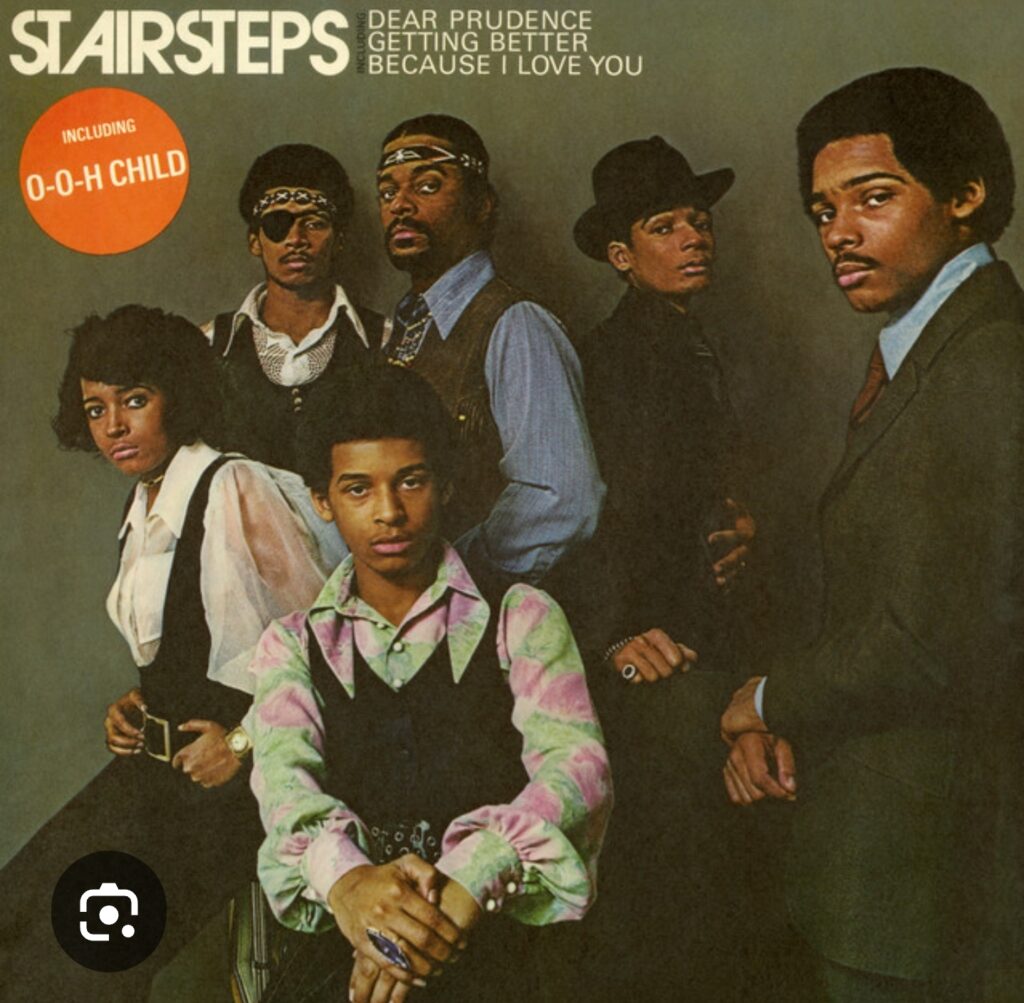
The Stairsteps
We crossed paths with another group of kids by the name of the Five Stairsteps. They were experiencing some degree of success – ahead of the Jackson 5. I met one of the Stairstep kids – a young man named Kenny Burke. My curiosity paid off, and I discovered that Kenny of Five Stairsteps fame is the grandfather of young David Burke.
Bingo or perhaps Eureka is the better word. Kenny – now known as Keni Burke has remained tangentially relevant in the music business. Since the days with his other four siblings, when Burke recorded the Stan Vincent hit record
Keni Burke
, “Ooo Child” his most recent original releases were the single “So Real” in 2011 and the album “Nothin’ But Love” in 1998. His older hit, “Risin’ to the Top,” remains popular and has seen recent re-releases and remixes. The mystery surrounding Keni’s grandson remains a mystery as of this writing, but the mystery surrounding the young man’s talent as well as his rise to the top is for now resolved. We wish him well, and hope that the evolving mystery of the life and death of Celeste Rivas Hernandez is also resolved and that her memory will be a blessing.
If you live within the boundaries of Los Angeles’ 43rd congressional district that encompasses a significant portion of the South Bay and South Los Angeles.
Your district includes:
The entire cities of Hawthorne, Inglewood, Lawndale, Gardena, and Lomita.
Portions of the cities of Los Angeles (including LAX and the neighborhood of Watts) and Torrance.
Census-designated places like Lennox, Del Aire, Alondra Park, West Athens, and Westmont.
In light of the longest and most destructive government shutdown in United States history, your United States Congressional representative, Maxine Waters addresses the nation with a message for you.
During a recent meeting of the Carson City Council in the City of Carson, California, a heated discussion emerged around the city’s paratransit service program — specifically the contract for its “Dial-A-Ride” service for seniors and disabled residents. The focal point: the proposed shift in contract from the longtime local provider Yellow Cab of Los Angeles (and its affiliate) to the ride-hailing giant Uber. From the remarks of Councilman Jawane Hilton of District 1, who anchored much of the discussion, the decision appears to have been shaped by resident testimony, service-quality concerns, and the unique transportation needs of seniors and disabled individuals.
Councilman Hilton opened by noting that Carson residents spoke “clearly and passionately” about the dependable service they have received from Yellow Cab over decades — especially for seniors and disabled riders. According to his account, Yellow Cab has built relationships, trust, and service protocols familiar to clients who rely on curb-to-curb rides for medical appointments, trips to visit loved ones, and maintaining a quality of life. From his viewpoint, the motion to award the Dial-A-Ride contract to Uber — even though Uber currently lacks handicap-accessible vehicles and has a record of service complaints — risked undermining those relationships.
Hilton proposed a compromise: rather than sole-sourcing the service to Uber, split the contract so that Yellow Cab would continue providing transportation specifically for the seniors and disabled passengers, while also launching an outreach and education initiative to boost awareness of the service, aiming to improve access for residents who may not yet be familiar with how to use the program. His substitute motion prevailed after debate, ensuring that the senior and disabled segment would remain protected rather than shifted entirely to a new vendor.
The significance of the issue extends beyond the simple vendor choice. At stake is access, continuity of care, and service equity. Riders with disabilities or mobility constraints often rely not only on a ride being available, but on the driver’s familiarity with their needs, the timing and reliability of the ride, and the ability to book via phone rather than purely through smartphone apps. During the council meeting, residents and disability advocates emphasized that the ability to call in, the familiarity of the driver, and the consistency of service matter as much as cost or app-based convenience.
From publicly available meeting summaries, staff had recommended awarding the contract to Uber as the single contractor after a standard RFP. But following vigorous public comment and council debate, the Council directed city staff to develop a dual-provider approach, allocating trips between two vendors and returning to the Council with revised contract drafts. The city emphasized that any interim contract must include termination and performance remedies, ensure phone-based booking for residents unable to use apps, preserve the role of local taxi drivers, and prevent service disruptions during the transition.
From the resident perspective represented by Councilman Hilton, the key concerns were: (1) whether shifting to Uber alone would disrupt the continuity of service for seniors and disabled riders; (2) whether Uber’s fleet is equipped (or lacking) in terms of accessible vehicles for those who use wheelchairs or other mobility aids; (3) whether an app-based dispatch-only model sufficiently addresses the population in Carson who depend on low-cost, accessible transportation and might struggle with smartphone-only scheduling.
By securing a split contract and preserving Yellow Cab’s longstanding role, the council effectively hedged against the risk of service gaps or degradation. Councilman Hilton’s argument was that while innovation and new service models can offer efficiencies, the city cannot compromise the quality of service for vulnerable populations in the name of cost or modernization alone.
At the same time, the decision reflects a balancing act in municipal procurement: on the one hand, the possibility of integrating ride-hail platforms like Uber which may promise more flexibility or lower cost; on the other hand, the imperative to maintain local vendor capacity, ensure equity of access (especially for non-smartphone users), and preserve service relationships tailored to vulnerable users. The outreach and education component proposed by Hilton also signals a recognition that simply changing providers is not enough — residents need to know how to navigate the service.
One of the broader themes here is the intersection of public procurement, senior and disability services, and the evolving ride-share economy. As traditional taxi services face competition from app-based alternatives, municipalities like Carson are tasked with ensuring that vulnerable riders are not left behind in the transition. Issues of accessibility, trust, reliability, and digital literacy become just as important as pricing and vendor innovation.
Councilman Hilton’s emotional tone (“Yes I was passionate but at times that is what is required,” as he put it) underscored the stakes from his perspective: that seniors and disabled residents of Carson must not see a drop in service simply because of a shuffle in vendors. It was not about rejecting Uber outright, but about preserving local service infrastructure and ensuring that the replacement or addition of vendors does not erode service quality.
In sum: The City of Carson Council’s decision — guided by Councilman Hilton’s advocacy — reflects a cautious approach to modernizing paratransit services. By approving a substitute motion to split the contract rather than awarding it solely to Uber, the council upheld continuity for seniors and disabled riders via Yellow Cab while opening the door to new service models and outreach efforts. The resolution therefore attempts to balance innovation with equity, responsiveness with reliability, and cost-efficiency with human needs. The key test ahead will be the implementation: whether the dual-provider model maintains the service levels residents expect, whether the access and education programs reach the intended audience, and whether the transition avoids disruptions for those most dependent on the service.
As the writer of this story, I try to avoid editorialising and conflating personal perspectives into a piece, however I put myself through college, driving a yellow cab, and spent considerable time behind the wheel of a Super Shuttle, or Uber and recently retired as a Metro driver. I was often in the seat, servicing Carson residents on the 246 line down Avalon.
As a rule, passengers with disabilities will most always find comfortable accommodations on Metro buses, but the few times that I needed to accommodate a wheel chair when driving an Uber – it was not a great experience, because my vehicle was a compact SUV, when they should have ordered a Comfort, or even an Uber Black. The range and size of vehicle requests, sight unseen can sometimes vary, and cancellation is not always pleasant. When Councilman Hilton reached out to me, I was intrigued by the opportunity to help spread the word about such a dynamic issue, that while smoothed over in compromise, it may yet face continuous debate.

 A couple of days ago two things happened. First, I got into an intense debate with a young man, concerning A.I., SIRI, GALAXY, CLAUDE, CHATGTP, GEMINI, GROK, etc. I flexed on him and accused him of having inferior knowledge on the subject because I have worked in the technology field since the 1980s, and then I fell back on his lack of experience because I have twelve years of age on him.
  What began as a supposedly nonpartisan national celebration appears to have taken a sharp detour into campaign-country.
 This might be worse than I thought. Not only is AI going to take all of our jobs but AI is also going to waste all of our time.
 For decades, the record business treated artificial intelligence the way Dracula treated daylight: avoid at all costs, issue dramatic legal threats, and send expensive lawyers carrying sharpened cease-and-desist letters. Now? The vampires appear to be installing Wi-Fi in the castle.
 studio microphone for it. And honestly, maybe they had no choice.
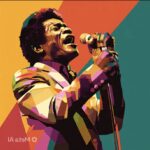 Will listeners care whether a song is sung by a human being anymore?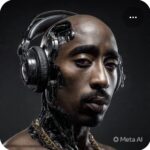

 The latest backlash emerged after Minaj appeared at a Turning Point USA event alongside conservative commentator Erika Kirk. According to reporting by the Latin Times, the appearance prompted online users to revisit a 2018 Instagram post in which Minaj described arriving in the United States as a child without legal immigration status. The resurfaced post, originally shared amid public outrage over family separations at the U.S.–Mexico border, expressed empathy for migrant children affected by enforcement policies.
 “please stop this,” according to excerpts cited by the Daily Mail. The post circulated widely during a period when images of migrant children held in detention facilities dominated news coverage.
 On a recent day at the busy corner of Pico Boulevard and La Brea Avenue in Los Angeles, a spontaneous yet carefully organized community gathering unfolded that reflected the evolving food, art, and cultural landscape of Mid-City. At 4972 W. Pico Blvd., a well-known Black-owned New York–style pizzeria became the setting for a pop-up collaboration that drew neighbors, creatives, and longtime supporters into a shared public moment centered on food, local enterprise, and cultural expression.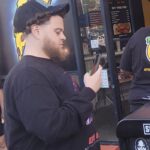
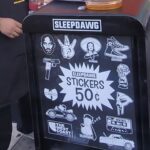 The location itself is already a recognized neighborhood fixture. Founded by Harlem native Esteban Gutierrez, the pizzeria has built its reputation on authentic New York–style pizza, emphasizing thin, crispy crusts and generously sized slices. Gutierrez brings more than 20 years of experience rooted in his father’s New York pizzeria, and that lineage is central to the shop’s appeal. For many patrons—particularly former East Coast residents—the taste and presentation closely match what they remember from New York City. This consistency has helped the business earn a loyal following in Mid-City Los Angeles.
 Nutella knots, which are frequently cited by customers as a standout item. Vegan options are a notable part of the menu, with clearly labeled plant-based slices such as vegan Margherita, Veggie, and Pesto Cheese. These pizzas use vegan cheese sourced from local providers like Vromage, reinforcing the business’s emphasis on local partnerships and inclusive dining options.
 In 2025, the business continues to operate as a Black-, Latino-, and woman-owned enterprise, with Gutierrez partnered with entrepreneur Aryn Drake-Lee. The shop is open daily from 11:00 a.m. to 11:00 p.m. and offers dine-in, takeout, and catering services. Popular menu items include Margherita and pepperoni slices, typically priced around six dollars, as well as specialty offerings like white clam pizza finished with fresh lemon. Orders can be placed in person or through online platforms such as Slice and the shop’s official website.

 had been reported missing in April 2024 from Lake Elsinore, California. The medical examiner described the remains as severely decomposed, and determined the death appeared to have occurred some time before the car was impounded. Authorities are investigating the case as a homicide, though no official charges have been announced.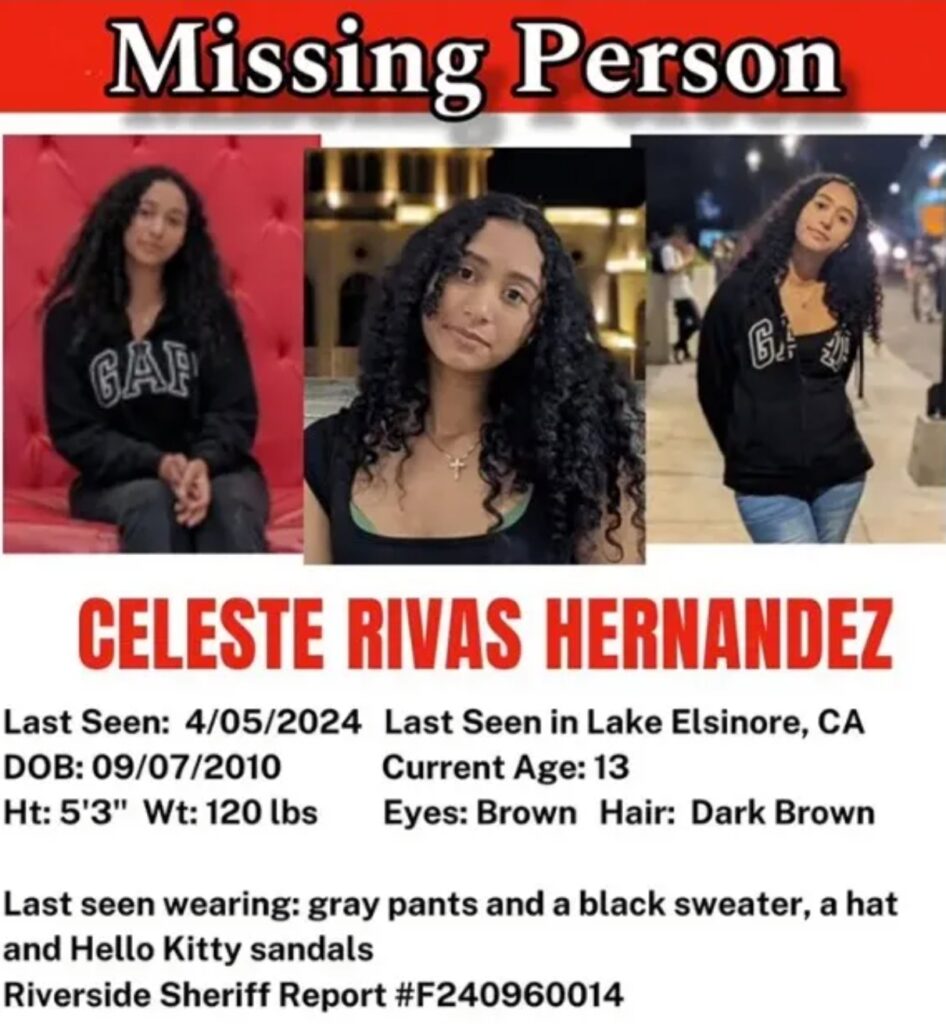



 During a recent meeting of the Carson City Council in the City of Carson, California, a heated discussion emerged around the city’s paratransit service program — specifically the contract for its “Dial-A-Ride” service for seniors and disabled residents. The focal point: the proposed shift in contract from the longtime local provider Yellow Cab of Los Angeles (and its affiliate) to the ride-hailing giant Uber. From the remarks of Councilman Jawane Hilton of
 District 1, who anchored much of the discussion, the decision appears to have been shaped by resident testimony, service-quality concerns, and the unique transportation needs of seniors and disabled individuals.
 Uber currently lacks handicap-accessible vehicles and has a record of service complaints — risked undermining those relationships.
 avoid editorialising and conflating personal perspectives into a piece, however I put myself through college, driving a yellow cab, and spent considerable time behind the wheel of a Super Shuttle, or Uber and recently retired as a Metro driver. I was often in the seat, servicing Carson residents on the 246 line down Avalon.