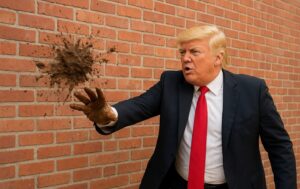
What began as a supposedly nonpartisan national celebration appears to have taken a sharp detour into campaign-country.
The event’s original lineup looked like a strange but entertaining playlist assembled by someone spinning a giant wheel of nostalgia: Lee Greenwood, Christopher Macchio, Vanilla Ice, Flo Rida, Fab Morvan (still carrying the Milli Vanilli banner), military bands, drum corps, and armed forces choruses.
Then came the withdrawals.
One by one, artists including The Commodores, Morris Day & The Time, Martina McBride, Bret Michaels, and Young MC reportedly decided they would rather spend the weekend doing literally anything else.
Several states—including Connecticut, Illinois, Maine, Massachusetts, North Carolina, Oregon, Pennsylvania, and Washington—also declined to participate, citing cost concerns and discomfort with the increasingly partisan tone of the event.
At some point, attendees may have begun realizing they weren’t being invited to a national fair as much as they were being recruited as scenery.
With the exits piling up, the remaining roster began to resemble a game of musical chairs where most of the chairs had already left the building. Those still standing could reasonably be described as either committed performers, true believers, or people whose agents stopped answering the phone.
Notably absent from the discussion are several names observers expected to see. Some may be touring. Some may have wisely scheduled dentist appointments. Others may have simply decided that becoming a political talking point wasn’t worth the frequent-flyer miles.
In the end, President Donald Trump reportedly canceled the remaining concert schedule altogether and replaced it with what the event seems to have been evolving into from the start: a massive political rally headlined by himself.
Which raises the obvious question: If a nonpartisan celebration slowly sheds its musicians, loses participating states, transforms into a campaign-style rally, and ends with a speech by the politician at the center of it all—was it ever really nonpartisan in the first place?
Sometimes the most revealing part of a concert is not who’s on stage.
It’s who left before the show started.
“At some point, attendees may have begun realizing they weren’t being invited to a national fair as much as they were being recruited as scenery.”
During his first term, Trump successfully lobbied FIFA and secured the winning joint “United Bid” for the U.S., Canada, and Mexico to host the 2026 World Cup.The FIFA World Cup 2026 is officially underway in the United States, Canada, and Mexico. Major city centers across the U.S. are hosting, and “watch parties” are circling the venues and perhaps portions of the world.
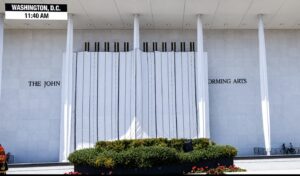
The image below is a different, yet important localized, but growing trend focusing on a “watch party” in Washington DC. This watch party stands at the scene of the Kennedy Center treasure. The tarp conceals the removal of Trump’s name from this national tresure, as dictated by the court.
More importantly, this removal of the illegal stain of what some people considered to be graffiti, marks the first step in the removal of the legacy that he has spent the last 18 months attempting to build.
Forbes/Reuters:
Oil Prices Hit $100 Again—Trump Touts Cost Hike Benefits
Trump touts oil price gains, saying ‘we make a lot of money,’ angering lawmakers
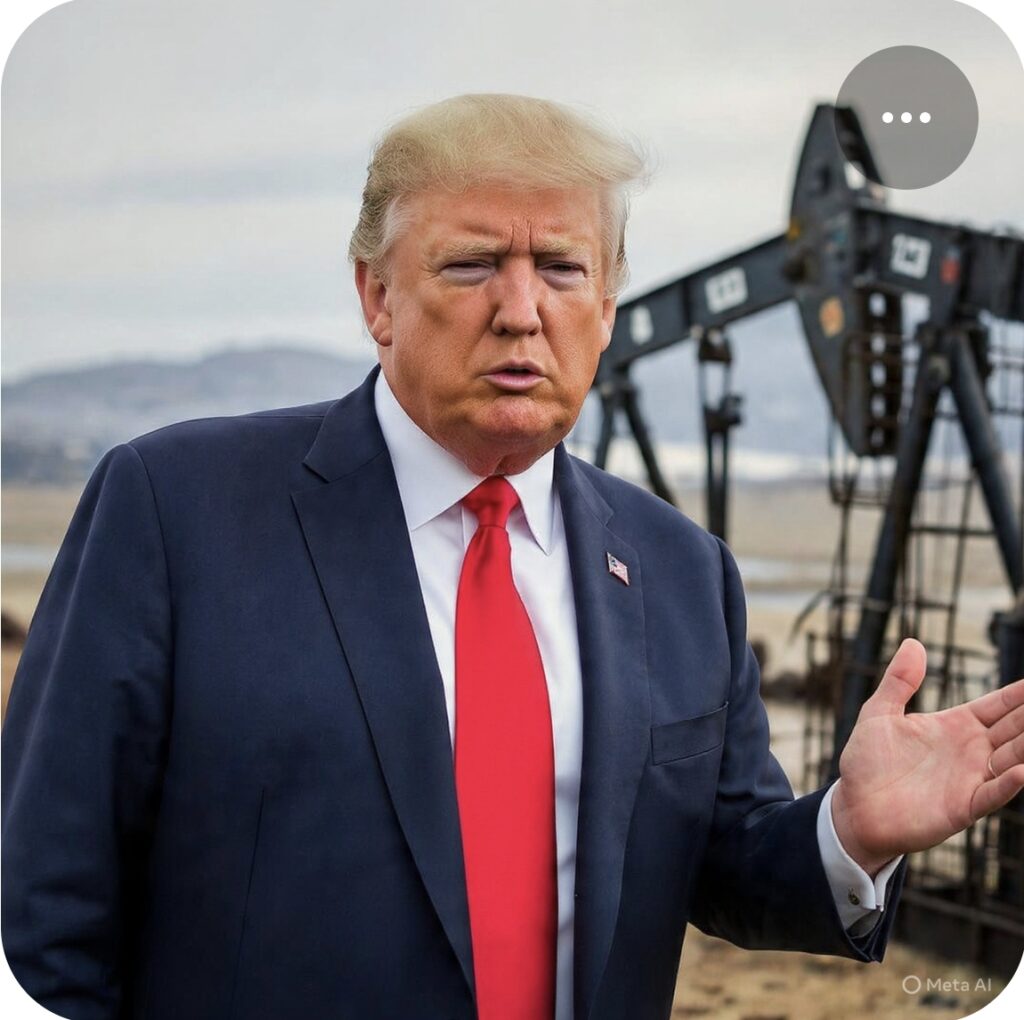
Oil Wealth and Public Benefit: The United States vs. the United Arab Emirates On March 12, 2026, Donald Trump wrote on Truth Social that “the United States is the largest oil producer in the world, by far, so when oil prices go up, ‘we’ make a lot of money.” The statement came as gasoline prices in the United States climbed above roughly $3.60 per gallon following the escalation of the war involving Iran and disruptions to global oil shipping routes.
Forbes
Trump framed rising oil prices as manageable, even suggesting earlier in the week that higher prices were a “very small price to pay” if the conflict eliminated Iran’s nuclear threat.
Yahoo
However, the economic structure of oil wealth in the United States differs sharply from the system used in the United Arab Emirates. A comparison between the two reveals that while both countries produce large amounts of oil, the way oil revenue reaches ordinary citizens is fundamentally different.
Oil Production vs. Public Benefit in the United States
The United States is currently the world’s largest oil producer, generating millions of barrels of crude oil per day through a combination of conventional drilling and shale production.
FactCheck.org
Yet the financial gains from oil production primarily flow through private industry rather than directly to citizens.
Most U.S. oil production is carried out by private corporations. Revenue from oil sales is distributed to shareholders, corporate executives, and investors, while governments receive tax revenue and royalties. Those funds then enter general federal and state budgets rather than being distributed directly to individuals.
Economists frequently note that because oil is traded on a global market, American consumers still pay global prices even if the country produces large amounts of oil domestically. If companies can sell oil at higher prices abroad, they will do so, leaving U.S. consumers exposed to the same market forces affecting other countries.
PBS
As a result, rising oil prices generally mean higher costs for American households—especially for gasoline, transportation, and goods whose production relies heavily on petroleum.
The United States does provide some indirect public benefit from energy production through tax revenues, infrastructure spending, and employment in the energy sector. But there is no national program that distributes oil revenue directly to citizens. In practice, higher oil prices tend to benefit energy companies and investors more directly than ordinary consumers.
The UAE Model:
Oil Revenue as Public Welfare
In contrast, the system used in the United Arab Emirates distributes oil wealth to citizens through a government-funded welfare structure.
Although the federation includes several emirates such as Dubai and Abu Dhabi, roughly 96 percent of the UAE’s oil reserves are located in Abu Dhabi. Oil revenue from these resources forms a major pillar of the country’s public
finances.
Rather than distributing cash payments directly, the UAE government channels oil wealth into extensive social benefits for Emirati citizens. These include:
Free or heavily subsidized healthcare
Government-funded education through university
Subsidized utilities
Land grants and interest-free loans for housing
High employment in the public sector
No personal income tax
About 90 percent of working Emirati citizens are employed in government jobs, reflecting the state’s central role in distributing economic benefits.
Dubai itself now relies less on oil and more on tourism, finance, and trade, yet Emirati citizens there still benefit from the broader national system funded in large part by oil revenue.
Two Different Economic Models
The contrast between the United States and the UAE illustrates two very different approaches to natural resource wealth.
In the United States, oil production operates largely through a market-driven private sector model. Oil companies produce and sell energy on global markets, and profits flow primarily to investors and corporations. Government receives tax revenue but does not distribute oil income directly to the population.
In the UAE, oil production is tied closely to state-managed wealth distribution. The government uses oil revenue to fund social programs, infrastructure, and employment that directly benefit citizens.
As a result, when oil prices rise globally, Americans generally experience higher fuel and consumer costs, while in the UAE the financial gains from oil exports more directly support the welfare system that benefits citizens.
Conclusion
The United States and the United Arab Emirates are both major oil producers, yet their citizens experience the results of that production very differently.
Statements suggesting that higher oil prices mean “we make a lot of money” reflect the macroeconomic reality that the United States produces large amounts of oil. But the distribution of that wealth depends on how the industry is structured. In the American system, oil revenue primarily strengthens corporate profits and government tax receipts, while consumers continue to pay global energy prices. In the UAE’s model, oil income is used more directly to finance public benefits for citizens.
The difference highlights how the management of natural resources—not just the amount produced—determines whether national oil wealth translates into tangible benefits for the public.
While citizens of the UAE are beloved members of the nation’s largesse, sharing in the wealth and bounty of the country, including free health care and higher education,citizens of the United States are scorned and often put upon, should they fall upon the mercy of the state.
When Donald trump smiles, boasts and posts about the bountiful position that the “excursions” of war are raining down – he ain’t talking to or about you, peasant.
“He” moves forward with his “MY WAY OR THE HIGHWAY, AMERICA” threat. In the middle of a war, he threatens to do nothing for the next nine months, forcing the Constitution to bend to his will, changing voting laws in the middle of the stream, ahead of existing law, hoping to end the established practice of mail-in voting, amidst any other changes that he can institute as a means of complicating the upcoming midterm elections. That “he is certain”, will spell the end of his reign of terror.
For more than seven decades, U.S. policy in the Middle East has oscillated between direct intervention, strategic patronage, and coercive containment. Iran sits at the center of that arc. The bilateral relationship can be understood as two sharply distinct phases: a Cold War security partnership anchored in monarchical rule, and a post-revolutionary rivalry defined by ideological hostility, sanctions, and proxy competition.
I. Strategic Alignment Under the Shah (1953–1979)
The modern U.S.–Iran relationship was fundamentally shaped by the 1953 coup that removed Prime Minister Mohammad Mossadegh and consolidated authority under Mohammad Reza Pahlavi. Orchestrated with American and British intelligence support, the operation secured Western access to Iranian oil and repositioned Tehran firmly within the anti-Soviet bloc during the Cold War.
From the administrations of Dwight D. Eisenhower through Richard Nixon, Iran was elevated as a regional security pillar. Washington transferred advanced weaponry, intelligence cooperation, and civilian nuclear assistance through programs such as “Atoms for Peace.” In exchange, Tehran guaranteed oil stability and served as a counterweight to Soviet penetration in the Persian Gulf.
By the late 1970s, however, the Shah’s centralized rule, aggressive modernization campaigns, and the repression carried out by SAVAK generated broad domestic opposition. Under Jimmy Carter, U.S. messaging on human rights created diplomatic ambiguity at a moment of escalating unrest. The 1979 Islamic Revolution dismantled the monarchy and replaced it with a theocratic republic led by Ruhollah Khomeini, permanently altering the bilateral equation.
II. Revolutionary Rupture and Enduring Hostility (1979–Present)
The seizure of the U.S. Embassy in Tehran in 1979 and the ensuing hostage crisis severed diplomatic ties—a rupture that has never been formally repaired. Throughout the 1980s, the United States tilted toward Iraq during the Iran–Iraq War, deepening mutual distrust. Maritime confrontations during the “Tanker War” further militarized the Gulf.
In the decades that followed, tensions centered on two primary axes: Iran’s support for regional armed movements and its nuclear program. Washington designated Tehran a state sponsor of terrorism, while Tehran framed U.S. military presence in the region as encirclement. This dynamic hardened during successive administrations on both sides.
A significant, though temporary, de-escalation occurred in 2015 with the Joint Comprehensive Plan of Action (JCPOA), negotiated under President Barack Obama and Iranian President Hassan Rouhani. The agreement constrained Iran’s uranium enrichment in exchange for phased sanctions relief. However, in 2018 President Donald Trump withdrew the United States from the accord and reinstated sweeping economic sanctions under a “maximum pressure” framework. Tehran gradually reduced compliance with nuclear limitations in response.
III. Current Strategic Posture (2025–2026)
the relationship remains adversarial and structurally unstable. U.S. policy continues to rely heavily on financial sanctions, export controls, and diplomatic isolation aimed at curbing Iran’s nuclear expansion and regional projection. Iranian authorities have incrementally limited international inspection access while expanding enrichment capacity and maintaining influence through aligned actors across the Levant and Gulf.
The standoff is characterized less by direct warfare than by calibrated brinkmanship: cyber operations, proxy engagements, maritime seizures, and intermittent strikes attributed to shadow actors. Neither side has demonstrated sustained political willingness to restore full diplomatic normalization.
IV. Structural Drivers of Friction
Three enduring factors explain the durability of conflict:
Ideological Divergence – The Islamic Republic’s foundational narrative centers on resistance to Western dominance, while U.S. policy emphasizes nonproliferation and regional security guarantees.
Security Architecture – The United States maintains defense partnerships with Gulf states and Israel; Iran views this network as containment.
Sovereignty and Power Consolidation – Historically, states that expand economically or militarily prioritize autonomy. Even absent revolutionary ideology, a stronger Iran would likely seek independent regional influence rather than subordinate alignment.
Conclusion
The U.S.–Iran relationship is not cyclical in a simple sense; it reflects a structural shift from patron-client alignment to systemic rivalry. The pre-1979 partnership was built on shared strategic necessity during bipolar superpower competition. The post-1979 era is defined by mistrust embedded in institutional memory, domestic politics, and regional competition.
Absent a fundamental redefinition of threat perception on both sides, the relationship is likely to remain a managed confrontation—periodically volatile, occasionally negotiable, but strategically adversarial.
And I submit the peace will never hold in an international Society because in order for peace to hold there will always be a triad. A parent, a child and an impatiently, suffering subordinate. That whimpering, hermit crab faction will
ultimately boil over and spoil the peace.
What of…
Camp David Accords (1978): A historic basis for the 1979 Egypt–Israel Peace Treaty.
Oslo Accords (1993/1995): A set of agreements between Israel and the PLO aimed at achieving a peace treaty based on UN resolutions.
Wadi Araba Agreement (1994): The formal peace treaty signed between Israel and Jordan.
Abraham Accords (2020): A series of normalization agreements between Israel and several Arab nations, including the UAE, Bahrain, and Morocco.
Based on the rampage of recent naming conventions, when the smoke clears, history books will surely bear the name; “the big beautiful, Donald J Trump Peace Forge.”
Why the United States Remains an Outlier on Universal Health Care
Roughly 70 percent of the world’s nations provide some form of universal health coverage to their citizens, according to data compiled by the World Health Organization and the World Bank. These systems vary widely in structure — ranging from single-payer models like Canada’s to regulated multi-payer systems like Germany’s — but they share a core principle: access to essential medical services is treated as a public good rather than a market luxury.
The United States stands apart0 mfroml most other high-income nations by not guaranteeing universal health coverage at the national level. While programs such as Medicare, Medicaid, the Children’s Health Insurance Program (CHIP), and Affordable Care Act marketplaces have expanded access, coverage remains fragmented and conditional. As of recent estimates, tens of millions of Americans remain uninsured or underinsured, often delaying care because of cost concerns.
What makes the U.S. case particularly unusual is not only the absence of universal coverage, but the cultural and political framing that often accompanies it. Unlike many peer nations that treat public healthcare as foundational infrastructure — similar to roads, public schools, or emergency services — healthcare in the U.S. is frequently debated through the lens of individual responsibility, market competition, and ideological resistance to government involvement.
This resistance has deep historical roots. Employer-based insurance expanded during World War II due to wage controls, entrenching private insurance as the dominant access pathway. Subsequent reform efforts, from President Truman’s proposals in the 1940s to the Affordable Care Act in 2010, faced strong opposition from insurance industry groups, political coalitions, and segments of the electorate wary of government expansion.
Ironically, despite rejecting universal coverage, the United States spends more on healthcare per capita than any other country in the world. Yet this spending does not consistently translate into superior health outcomes. Metrics such as life expectancy, maternal mortality, and preventable hospitalizations often lag behind those of nations with universal systems. Administrative complexity, profit-driven pricing structures, and fragmented billing systems contribute to inefficiencies that inflate costs without proportional public benefit.
Public opinion also reflects contradiction. Polling consistently shows that large majorities of Americans support protections for pre-existing conditions, Medicare for seniors, and expanded public health programs. However, support drops when proposals are framed as “government-run” or labeled with politically charged terminology, illustrating how messaging shapes perception more than policy substance.
Ultimately, the U.S. healthcare debate is not simply about economics or logistics — it is about national priorities. Countries that implement universal coverage make a collective decision to pool risk and guarantee baseline care for all residents. The United States, by contrast, continues to operate within a hybrid model that blends public programs with private profit, leaving coverage uneven and access dependent on income, employment, and geography.
As global health systems evolve and demographic pressures increase, the American outlier status becomes harder to justify. Whether the country chooses reform through expansion of public options or structural overhaul, the fundamental question remains unchanged: should healthcare function primarily as a marketplace commodity, or as a shared public necessity?
Charles Jackson Thought provoker
FINAL WORD: Without a doubt, every human being needs some form of medical guidance and care, while the conservative party of the United States is proud of the pain that they inflict.
Nikki Minaj had to know that she would never truly be welcomed under the MEGA tent, and that her evolution would end in disaster. How could she expect to go from peddling “Ho” to pimping “Holy”.
Turning Point itself is in the midst of turning on itself, in what’s being called a civil war, with hoards of MEGA mooches scratching and clawing for control of that Charlie Kirk brand, money, and Christian/political messaging. Poor Erika Kirk has already stepped in it, trying to broaden the base by inviting a bunch of hip hopping social media ner-do-wells to join a pretentious cult. Nobody likes or trusts a benidict arnold, or a turn coat snitch. That is what Nikki represents to her liberal fan base, and it’s what she represents to far right stalwarts. In today’s identity politics, nthanothing is worse than identity “code switching.”
Nikki was hoping to get a pardon for her criminal boyfriend, and has now messed up her own money, as the fan base that she was trying to bring to market has kicked her to the curb, and MAGA does not trust Erika’s introduction of those people into their fold and will surely not accept their inclusion. Baby y’all chicks got to stay in ‘yo lane, and leave the manipulative, underhanded shenanigans to the true sharks, snakes, and charlatans on both sides.
The Democratic senators who voted to advance the funding bill, handing the MAGA Republicans an opportunity to end ACA were Dick Durbin (IL), John Fetterman (PA), Maggie Hassan (NH), Tim Kaine (VA), Catherine Cortez Masto (NV), Jacky Rosen (NV), and Jeanne Shaheen (NH). Independent Senator Angus King (ME), who caucuses with the Democrats, also voted in favor.
The Senate has advanced the funding bill (by procedural vote) but it has not yet passed Congress or been signed into law. It still needs a final vote in the Senate and then must be approved by the House of Representatives.
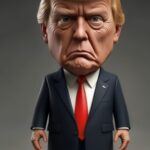
President Barack Obama signed the Affordable Care Act into law on March 23, 2010, and next to Roe –v- Wade, the ACA has been on the resident’s seek and destroy list every since President Obama “clowned” Donald Trump was at the 2011 White House Correspondents’ Dinner, where he heavily mocked trumplethinskin over the “birther” conspiracy theory.
Catherine Cortez Masto, Jacky Rosen, Maggie Hassan, Tim Kaine, and Angus King (I)—are up for re-election in 2026, and could face formidable primary challenges. Dick Durbin and Jeanne Shaheen are retiring and not seeking re-election in 2026. Unless John Fetterman switches to the MAGA party, he will not face his primary challenge until 2028.
Thank you all for your service, albeit a service to which no snitch will be rewarded.
On the seventeenth day of the government shutdown, Maxine Waters introduced the Head Start Shutdown Protection Act of 2025 (H.R. 5790) in the House of Representatives. The proposed legislation seeks to shield the nation’s early-childhood education programs from disruption when federal funding lapses.
The bill addresses a pressing concern: without federal allocations during a shutdown, local providers of the Head Start program face an immediate loss of access to critical support—placing children, families and staff in jeopardy. According to Waters’s office, these setbacks “grow worse over time.”
Under the act, state and local governments—as well as school districts—would be reimbursed for funds they expend to maintain Head Start or Early Head Start operations during a shutdown. The mechanism requires entities to front the cost and seek federal reimbursement after funding is restored.
Congresswoman Waters, a former assistant teacher and volunteer coordinator for the Head Start program in Watts, starting in 1966, emphasized the human dimension. She noted that vulnerable children, their families, and the dedicated teachers and staff who serve them should not suffer because of a funding impasse beyond their control. The intent, she said, is to ensure that grant-recipients remain open and can continue to serve.
While the bill responds to a specific shutdown scenario, its implications reach further: it underscores how early-childhood education programs operate at the intersection of federal, state and local systems—and how a lapse in one link can ripple across the system. For example, even temporary disruptions in Head Start programs can affect developmental milestones, parent-education supports, nutrition services and readiness for kindergarten.
Social-media and crowd-sourced reports from local programs during the shutdown underscore the urgency: some Head Start centers report mounting unpaid bills, staff uncertainty, and concern about continuity of service. These snapshots mirror what Waters’s office described—programs losing access to funding and facing mounting challenges as the shutdown extends.
From a policy-perspective, the bill raises questions about the role of federal contingency mechanisms in essential services. If local entities bear the upfront cost of continuity, states and districts with fewer resources may be disadvantaged—raising equity concerns. And while reimbursement after the fact provides relief, it does not necessarily mitigate the risk of short-term service interruption or cash-flow stress.
Legislatively, securing co-sponsors and passage in the current political environment will be challenging. The bill’s fate depends on the broader shutdown resolution, appropriations discussions and negotiations over federal priorities. However, its introduction signals a push to protect early-education infrastructure from future funding volatility.
The Head Start Shutdown Protection Act of 2025 positions itself as a safeguard for one of the nation’s most vulnerable populations—young children and families reliant on federally-supported early learning programs. With the shutdown now well into its fourth week, the legislation highlights how early-childhood education can become collateral damage in budget impasses—and offers one pathway to shielding these services from the effects of federal gridlock.
The Head Start Shutdown Protection Act is also cosponsored by: Representatives Gabe Amo (RI-01), Yassamin Ansari (AZ-03), Joyce Beatty (OH-03), Wesley Bell (MO-01), Sanford D. Bishop, Jr. (GA-02), Nikki Budzinski (IL-13), Andre’ Carson (IN-07), Emanuel Cleaver, II (MO-05), Angie Craig (MN-02), Jasmine Crockett (TX-30), Danny K. Davis (IL-07), Debbie Dingell (MI-06), Dwight Evans (PA-03), Cleo Fields (LA-06), Shomari Figures (AL-02), John Garamendi (CA-08), Jesús “Chuy” García (IL-04), Sylvia R. Garcia (TX-29), Dan Goldman (NY-10), Vicente Gonzalez (TX-34), Steven Horsford (NV-04), Glenn Ivey (MD-04), Jonathan Jackson (IL-01), Hank Johnson (GA-04), Greg Landsman (OH-01), Summer Lee (PA-12), April McClain Delaney (MD-06), LaMonica McIver (NJ-10), Seth Moulton (MA-06), Kevin Mullin (CA-15), Joe Neguse (CO-02), Eleanor Holmes Norton (DC-00), Jimmy Panetta (CA-19), Emily Randall (WA-06), Jan Schakowsky (IL-09), Terri Sewell (AL-07), Bennie G. Thompson (MS-02), Dina Titus (NV-01), Rashida Tlaib (MI-12), Ritchie Torres (NY-15), Juan Vargas (CA-52), Nydia M. Velázquez (NY-07), and Frederica S. Wilson (FL-24).

 What began as a supposedly nonpartisan national celebration appears to have taken a sharp detour into campaign-country.
 During his first term, Trump successfully lobbied FIFA and secured the winning joint “United Bid” for the U.S., Canada, and Mexico to host the 2026 World Cup.The FIFA World Cup 2026 is officially underway in the United States, Canada, and Mexico. Major city centers across the U.S. are hosting, and “watch parties” are circling the venues and perhaps portions of the world.
 On March 12, 2026, Donald Trump wrote on Truth Social that “the United States is the largest oil producer in the world, by far, so when oil prices go up, ‘we’ make a lot of money.” The statement came as gasoline prices in the United States climbed above roughly $3.60 per gallon following the escalation of the war involving Iran and disruptions to global oil shipping routes.
 Oil Production vs. Public Benefit in the United States
 Economists frequently note that because oil is traded on a global market, American consumers still pay global prices even if the country produces large amounts of oil domestically. If companies can sell oil at higher prices abroad, they will do so, leaving U.S. consumers exposed to the same market forces affecting other countries.
 the country’s public
 In the American system, oil revenue primarily strengthens corporate profits and government tax receipts, while consumers continue to pay global energy prices. In the UAE’s model, oil income is used more directly to finance public benefits for citizens.
 “He” moves forward with his “MY WAY OR THE HIGHWAY, AMERICA” threat. In the middle of a war, he threatens to do nothing for the next nine months, forcing the Constitution to bend to his will, changing voting laws in the middle of the stream, ahead of existing law, hoping to end the established practice of mail-in voting, amidst any other changes that he can institute as a means of complicating the upcoming midterm elections. That “he is certain”, will spell the end of his reign of terror.
 For more than seven decades, U.S. policy in the Middle East has oscillated between direct intervention, strategic patronage, and coercive containment. Iran sits at the center of that arc. The bilateral relationship can be understood as two sharply distinct phases: a Cold War security partnership anchored in monarchical rule, and a post-revolutionary rivalry defined by ideological hostility, sanctions, and proxy competition.
 the relationship remains adversarial and structurally unstable. U.S. policy continues to rely heavily on financial sanctions, export controls, and diplomatic isolation aimed at curbing Iran’s nuclear expansion and regional projection. Iranian authorities have incrementally limited international inspection access while expanding enrichment capacity and maintaining influence through aligned actors across the Levant and Gulf.
 Why the United States Remains an Outlier on Universal Health Care
 Children’s Health Insurance Program (CHIP), and Affordable Care Act marketplaces have expanded access, coverage remains fragmented and conditional. As of recent estimates, tens of millions of Americans remain uninsured or underinsured, often delaying care because of cost concerns.
 infrastructure — similar to roads, public schools, or emergency services — healthcare in the U.S. is frequently debated through the lens of individual responsibility, market competition, and ideological resistance to government involvement.
 universal coverage, the United States spends more on healthcare per capita than any other country in the world. Yet this spending does not consistently translate into superior health outcomes. Metrics such as life expectancy, maternal mortality, and preventable hospitalizations often lag behind those of nations with universal systems. Administrative complexity, profit-driven pricing structures, and fragmented billing systems contribute to inefficiencies that inflate costs without proportional public benefit.
 Public opinion also reflects contradiction. Polling consistently shows that large majorities of Americans support protections for pre-existing conditions, Medicare for seniors, and expanded public health programs. However, support drops when proposals are framed as “government-run” or labeled with politically charged terminology, illustrating how messaging shapes perception more than policy substance.
 risk and guarantee baseline care for all residents. The United States, by contrast, continues to operate within a hybrid model that blends public programs with private profit, leaving coverage uneven and access dependent on income, employment, and geography.
 Nikki Minaj had to know that she would never truly be welcomed under the MEGA tent, and that her evolution would end in disaster. How could she expect to go from peddling “Ho” to pimping “Holy”.
 stepped in it, trying to broaden the base by inviting a bunch of hip hopping social media ner-do-wells to join a pretentious cult. Nobody likes or trusts a benidict arnold, or a turn coat snitch. That is what Nikki represents to her liberal fan base, and it’s what she represents to far right stalwarts. In today’s identity politics, nthanothing is worse than identity “code switching.”
 Baby y’all chicks got to stay in ‘yo lane, and leave the manipulative, underhanded shenanigans to the true sharks, snakes, and charlatans on both sides.
 v- Wade, the ACA has been on the resident’s seek and destroy list every since President Obama “clowned” Donald Trump was at the 2011 White House Correspondents’ Dinner, where he heavily mocked trumplethinskin over the “birther” conspiracy theory.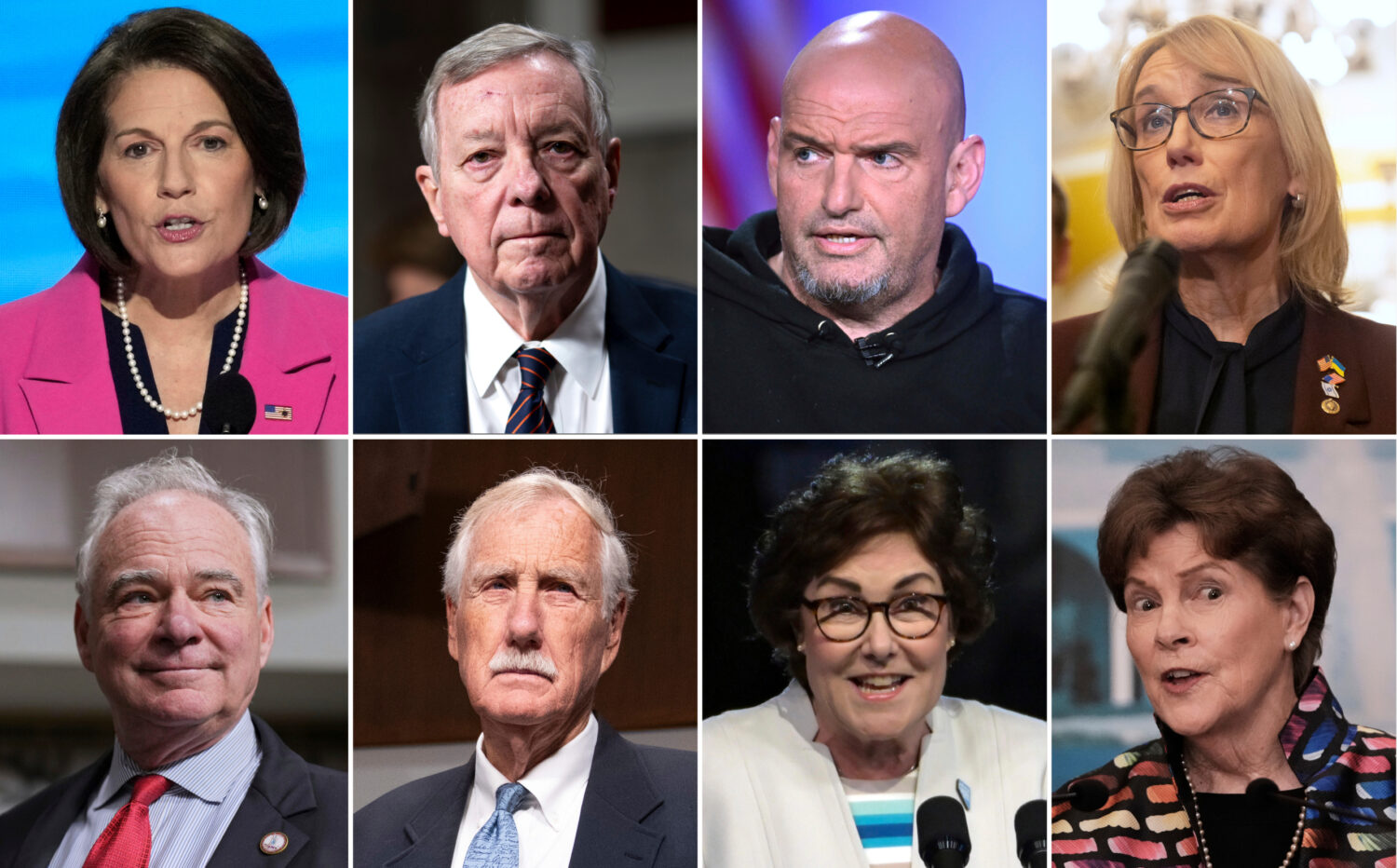
 funds they expend to maintain Head Start or Early Head Start operations during a shutdown. The mechanism requires entities to front the cost and seek federal reimbursement after funding is restored.
  While the bill responds to a specific shutdown scenario, its implications reach further: it underscores
  From a policy-perspective, the bill raises questions about the role of federal contingency mechanisms in essential services. If local entities bear the upfront cost of continuity, states and districts with fewer resources may be disadvantaged—raising equity concerns. And while reimbursement after the fact provides relief, it does not necessarily mitigate the risk of short-term service interruption or cash-flow stress.
 environment will be challenging. The bill’s fate depends on the broader shutdown resolution, appropriations discussions and negotiations over federal priorities. However, its introduction signals a push to protect early-education infrastructure from future funding volatility.