
 Jill Stein, an American physician, activist, and politician. In another world, she might have been a democrat, but she tends to remain at arm’s length from party politics, making herself useful to the republican party as a spoiler, or a convienient protest vote for democrats and independents, leary of Republicans in the era of MAGA destructionary divisionist positions.
She is best known for her work as a Green Party leader and her runs for the U.S. presidency in 2012 and 2016. Stein’s political philosophy is rooted in progressive and environmental values, and her campaigns often focused on challenging the two-party system, advocating for a “Green New Deal,” and addressing issues such as climate change, social justice, healthcare, and economic inequality.
Stein’s background as a physician and environmental advocate has greatly influenced her political views. She was born on May 14, 1950, in Chicago, Illinois, and graduated from Harvard College and Harvard Medical School. Before entering politics, Stein practiced internal medicine and focused on treating and preventing environmental illnesses. Through her medical career, she observed the links between health issues and environmental pollution, which ultimately led her to environmental activism. She became involved in grassroots efforts in Massachusetts, advocating for environmental health and green policies, and she played a key role in various environmental advocacy campaigns. Her commitment to health and environmental causes ultimately paved her path into politics.
Iqn 2012, Stein ran for president as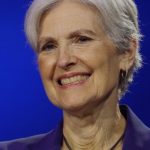 the Green Party nominee, receiving about 0.36% of the national vote. Her platform focused on reducing corporate influence in politics, implementing green policies to combat climate change, and ending U.S. military interventions abroad. Although her support base was relatively small, her campaign highlighted the Green Party’s goals and contributed to the national discussion on environmental issues and third-party representation. Stein’s political platform resonated with a segment of the electorate frustrated by what they perceived as the limitations and failures of the two-party system in the United States.
Stein’s most notable campaign came in 2016 when she ran against Democratic nominee Hillary Clinton, Republican nominee Donald Trump, and Libertarian candidate Gary Johnson. During this election, Stein received 1.07% of the vote, a significant increase from her 2012 performance. Her 2016 campaign emphasized a progressive platform with policies that included a “Green New Deal,” which aimed to transition the U.S. to 100% renewable energy by 2030, create millions of green jobs, and address social justice issues. Stein was also outspoken in her opposition to free trade agreements like the Trans-Pacific Partnership, arguing that they benefited corporations at the expense of workers and the environment.
One of the controversies surrounding Stein’s 2016 campaign was her stance on voting strategy. She was criticized for encouraging voters to consider third-party candidates as a viable alternative to the two major parties, which some argued could inadvertently help Donald Trump by drawing potential votes away from Hillary Clinton. Additionally, Stein faced scrutiny for her participation in a dinner in Russia in 2015, where she was photographed seated at a table with Russian President Vladimir Putin. Though she maintained that her visit was part of her anti-war advocacy, critics questioned the optics and intent of her presence.
Despite the controversies, Stein’s campaigns had a lasting impact on the political landscape by amplifying issues like climate change, healthcare, and social equity. Her advocacy for a “Green New Deal” influenced later political discussions and policies, as seen in the work of progressive politicians who continue to push for green policies. While Stein did not win the presidency, her campaigns underscored the importance of third-party voices in the political system and highlighted progressive and environmental issues that continue to gain traction in the United States.
In sum, Jill Stein’s political career reflects the broader challenge of breaking through the two-party system and advancing environmental and social justice issues. Her contributions to the political dialogue in the United States, particularly on climate change and economic equality, continue to shape the discourse, even as she remains a polarizing figure in American politics.
Doctor Stein supports the right to abortion and advocates for free access to abortion services for low-income women. She believes in safeguarding the availability of safe, legal abortion and advocates for accessible contraception, including the “morning-after” pill without a prescription.
On the subject of immigration, Stein has called for humane immigration policies. She resists deportations, supports a path to citizenship for undocumented residents, and criticizes the criminalization of immigrants, particularly those contributing to the economy and society. Her policies focus on ending fear-based rhetoric around immigration.
With a side eye, one might suspect that she is a perfect foil on the payroll of right leaning advocates.
