Local Girl Scouts Earn Top Awards

Local Girl Scouts Katherine B. and Renee M. Recognized for Lifesaving and Health Equity Projects


Girl Scouts of Greater Los Angeles (GSGLA) recently honored 28 Inglewood-area Girl Scouts for earning the prestigious Gold Award, with two standout honorees—Katherine B. of Hawthorne and Renee M. of Los Angeles—leading impactful health-related initiatives. These projects underscore the role young leaders play in tackling urgent community needs.


The Gold Award, the highest honor in Girl Scouting, challenges recipients to dedicate a minimum of 80 hours to identify and address a significant issue, collaborate with local leaders, and create sustainable solutions. This year’s awardees contributed over 14,720 hours collectively—demonstrating a shared commitment to making the world a better place.


Katherine

Katherine B., a Harvard Westlake School graduate, focused on lifesaving training in underserved communities. Motivated by the urgent need for preparedness in sudden cardiac emergencies, she spearheaded a CPR and AED certification program for teenagers. Her project trained over 50 teens, equipping them with not only vital skills but the confidence to respond to medical crises and potentially save lives.


Meanwhile, Renee M., a recent

Renee

Eagle Rock High School graduate, addressed disparities within the national stem cell registry. Her project combined a compelling video documentary featuring firsthand stories with community outreach. Through registration drives and speaking engagements, Renee personally registered over 250 individuals, directly expanding the diversity of the registry and improving life-saving match opportunities for minority patients.


Theresa Edy Kiene, GSGLA’s chief executive officer, commended the efforts of these young women, saying, “These young women are not just imagining change—they’re making it happen. Through confidence and compassion, they’re solving real-world problems and becoming the leaders our world needs.”


This year’s Gold Award Celebration will be held on June 1 at the Pasadena Civic Center, where the achievements of all 28 local recipients will be recognized. Their projects span topics from environmental conservation to mental health awareness, each demonstrating the Girl Scouts’ mission to develop girls of courage, confidence, and character.


Katherine and Renee’s work comes at a time of heightened awareness about health equity and emergency readiness. Local media have noted the growing importance of community-based health initiatives and the need for equitable access to medical resources. In this context, the projects of these two young leaders offer practical, immediate impacts—empowering others to act and addressing gaps in health education and access.


For Katherine and Renee, the Gold Award marks more than personal achievement; it’s a testament to the power of youth leadership to create real change. As the community gathers to honor them, their stories stand as an inspiring reminder: positive change begins when young people see a problem—and take action.


Play Ball

Inglewood Car Wash Aquired

LUV Car Wash Brings Corporate Shine to Inglewood: A Local Favorite Gets a Makeover


By Charles Jackson


As I often do, I recently made a stop at my go-to carwash at 320 N. La Brea Avenue. For years, it’s been a hidden gem — no frills, no nonsense, and a drying system that left my car gleaming without needing a towel. I could be in and out in five minutes, the lines were not long, and the value was unmatched. So when the manager, Mario, told me that last week was their last under the current ownership, I had to find out what was going on.


It turns out that the Local Favorite Gets a Makeover

— long known to locals as Inglewood Express Car Wash — has been acquired by LUV Car Wash, a rising name in the national car wash industry. The deal, completed on Friday, May 9, 2025, marks LUV’s latest step in its aggressive expansion into the competitive Los Angeles market. The Inglewood site becomes the 77th location for the brand.


Based in Gilbert, Arizona I’m told. LUV Car Wash is a portfolio company of Susquehanna Private Capital, a private equity firm that has backed the chain since 2021. LUV’s leadership includes co-founder and CEO Darren Skarecky and co-founder and Chief Development Officer JT Thomson, two industry veterans who have helped push the chain’s rapid growth by focusing on high-quality, express-style exterior car wash services. According to company statements, the acquisition of Inglewood Express is part of a broader strategy to target high-traffic, high-visibility locations in dense urban markets.


The Inglewood location, just blocks from major redevelopment efforts surrounding SoFi Stadium and the highly favored Intuit Dome, is a prime piece of real estate. Though LUV hasn’t yet released specifics about the remodeling, locals can expect the site to be modernized in the coming weeks. Based on LUV’s national footprint, upgrades will likely include automated pay stations, high-pressure rinse tunnels, advanced water recycling systems, and subscription-based wash club services.


While corporate growth is usually accompanied by promises of efficiency and polish, longtime customers — myself included — may have mixed emotions. Inglewood Express has been a neighborhood standby, known not just for its speed and value, but also for its consistency. You knew what you were getting: no upsells, no wait times, and a car that looked clean without streaks or the need for a wipe-down.


What remains to be seen is whether the remodeled location will live up to the expectations of locals who have come to rely on its simplicity and affordability. I won’t mention specific prices (yet), but trust me — if the new model doesn’t meet the bar set by the old one, I’ll be the first to snitch.


Of course, change in Inglewood is nothing new. The city of Champions has been undergoing a wave of transformation ever since MSG lit up the corner of Prairie and Manchester anew, and the NFL and NBA laid claim to the sports hubs down the street. New development brings opportunity — and rising costs. Small businesses often become casualties or undergo transformations that risk alienating their base. With LUV Car Wash entering the scene, this could go either way.


In their partnership with Susquehanna Private Capital, Skarecky and Thomson have emphasized a founder-focused approach, promising operational autonomy for local managers and a light corporate touch. The hope is that LUV’s leadership will maintain the local spirit of Inglewood Express while enhancing service through technology and consistency. But as with any transition, the proof will be in the pudding and the wash.


For now, the site is expected to undergo renovations, which are already underway, and customers should anticipate changes in layout, services, and potentially pricing. LUV has not announced a reopening date, but given their track record of quick transitions, it likely won’t be long. Meanwhile I found myself down the street, at AutoZone, picking up a chamois so I could manually maintain my shimmer and shine in my driveway for Mother’s Day


In a neighborhood where authenticity is increasingly hard to preserve, the future of the 320 N. La Brea car wash, located on the east side of the street, between El Polo Loco and Walgreens, may serve as a small but telling test case. Can a national chain maintain the trust and loyalty earned by a locally loved business? LUV Car Wash has its work cut out, because we don’t play, when it comes to keeping the ride looking good.


Until then, I’ll be watching, and if the dryers don’t hit like they used to — or if LUV starts hitting us up with vacuum charges, you’ll hear about it here first.


Play Ball.


A Nation On The Brink

A Nation on the Brink: The “Big Beautiful Bill” and the Rise of American Autocracy

 

In what many are calling the most dangerous legislative moment in recent American history, the so-called “Big Beautiful Bill” is now advancing toward a full Senate vote. Championed aggressively by the former president—who has referred to the measure as his “masterpiece”—the bill’s Section 70302 has set off constitutional alarms nationwide. This clause would bar federal courts from enforcing contempt charges, a critical legal mechanism historically used to ensure compliance with subpoenas and uphold the rule of law.


Legal scholars and watchdog organizations have warned that this single clause, buried deep in the legislative jargon, effectively turns the executive branch into a rogue entity, unchecked by either the judiciary or Congress. It’s a development that has echoes not only of banana republics but of authoritarian regimes like Russia, China, and North Korea—nations where power is absolute and the law is merely a tool of the ruler.


The political climate in Washington is already unstable. The former president, recently returned to the national stage after a controversial re-election bid fueled by inflammatory rhetoric and disinformation, has repeatedly demonstrated disdain for constitutional norms. He faces a barrage of lawsuits, investigations, and contempt citations—all of which could be rendered moot if the bill passes in its current form. It’s no wonder his allies, described by critics as “brown-nosing sycophants,” are pushing the bill, also known as the Big Rotten Sonovabill, in Democratic editorials, with such quiet desperation.


To understand the gravity of the situation, one must only examine recent headlines.


In March, a federal judge in D.C. held two administration officials in contempt for ignoring congressional subpoenas related to the mishandling of classified intelligence. One of those officials, who refused to testify before a bipartisan oversight committee, remains unpunished due to the Justice Department’s refusal to prosecute. With Section 70302 in place, there wouldn’t even be a possibility of future contempt enforcement—effectively neutering the court’s authority.


Meanwhile, whistleblowers from within the Justice Department have leaked internal memos describing increasing pressure to “stand down” on enforcement actions tied to administration figures. One memo allegedly ordered federal prosecutors to “consider the political implications” before pursuing legal action. This chilling directive aligns with the wider narrative: a steady dismantling of the separation of powers.


Social media platforms have become battlegrounds. Hashtags like #ContemptClause and #SaveTheConstitution are trending, as citizens, legal experts, and even some former Republican officials raise alarm bells. A viral TikTok video posted by a law student in Michigan broke down Section 70302 in under a minute and ended with a stark message: “This is how democracy dies—not with a bang, but with a loophole.”


Yet, all hope is not lost.


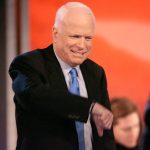
The Senate, currently split 53–47, sits at a precipice. Four GOP senators, quietly dubbed “the marionettes” for their historic pattern of grappling with the party line, have emerged as the last remaining hope to halt the bill. Comparisons are already being drawn to the late Senator John McCain’s dramatic 2017 thumbs-down vote, which killed the effort to repeal the Affordable Care Act in its final hour. That single act was heralded as a moment of conscience in an otherwise polarized chamber.
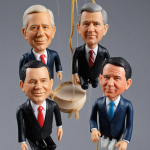
 

The eyes of the nation are now on these four senators. Their names are being whispered in corridors and shouted from protest podiums. Their silence has been deafening, but rumors persist that at least two are “deeply uncomfortable” with the bill’s implications, particularly the nullification of court authority.


Pressure is mounting from civil rights organizations, bar associations, and even retired federal judges. In an unprecedented move, the National Conference of Federal Judges issued a joint statement warning that “the passage of Section 70302 would mark the beginning of an authoritarian slide we may not be able to reverse.”


And what of the president himself?

He has declared victory prematurely, telling supporters at a recent rally, “Once this bill passes, nobody can touch me. Nobody. Not crooked judges, not loser prosecutors, not even the fake news.” The crowd erupted in cheers—but for the millions watching in disbelief, the message was clear: we are witnessing the open dismantling of democratic accountability.


This is not just political theatre. This is a real and present danger to the republic.


If passed, the bill could set a precedent that outlasts even the current administration. Future leaders—regardless of party—could exploit the same legal immunities, turning a temporary power grab into a permanent erosion of checks and balances. The judiciary would be left toothless. Congress would be neutered. And the president—any president—would stand above the law.


In hindsight, the late Senator John McCain already knew that he was dying of cancer, and his courageous vote against the grain would not and could not be primaried or fatally end his political career. But courage may not be uppermind for the four senators, who’s careers will certainly be challenged by a supercharged, vindictive, manchild should they fail to bend to his unyielding narcissistic will.


It’s a sobering reality that has led some to declare, “May we rest in peace,” as if mourning the democracy we once knew.


But perhaps it’s not time to mourn—yet. Perhaps it’s time to rise. There yet remains a vote in the senate, and there yet remains time to appeal to their better angels. History will remember this moment, and the question will be asked: Did we fight, or did we surrender?


Four senators. One vote. And the soul of a nation hanging in the balance. Understand this. If we lose, this moment, we all ultimately lose together, as perhaps only one soul, on earth – and certainly in these United States, will emerge to maintain free will and his will be done.


Play Ball.



Beyond Trump’s little sneak attack on Ramaphosa, China is a strong supporter of South Africa. Their relationship has deepened significantly over the years, moving beyond just economic ties to encompass strategic, political, and even military cooperation.

Here’s a breakdown of how China supports South Africa:

1. Economic Partnership:

* Major Trading Partner: China is South Africa’s largest trading partner, with bilateral trade soaring to tens of billions of dollars annually.

* Investment: Chinese companies have substantial investments in South Africa, particularly in mining, manufacturing, energy, and infrastructure. They also participate in South Africa’s Belt and Road Initiative projects.

* Loans: China provides loans to South Africa, though some analysts raise concerns about potential debt sustainability.

* Market Access: China has committed to opening its markets to more South African products, especially agricultural goods, to help address South Africa’s persistent trade deficit with China (where South Africa primarily exports raw materials and imports manufactured goods).

2. Political and Strategic Alignment:

* “All-Round Strategic Cooperative Partnership”: The relationship has been elevated to this high level, signifying strong political, economic, and social ties.

* Global South Solidarity: Both countries emphasize their commitment to strengthening cooperation within the Global South and advocating for a more equitable international order.

* BRICS Membership: South Africa’s inclusion in the BRICS group (Brazil, Russia, India, China, South Africa) in 2010 was largely facilitated by China and has further solidified their economic and political ties.

* Multilateral Coordination: China supports South Africa’s role in international forums, including its G20 presidency, and encourages greater African participation in alternative global institutional architectures.

* Support for South Africa’s Development: China has expressed firm support for South Africa’s chosen path of economic and social development, offering to share experience in poverty alleviation and rural revitalization.

3. Other Areas of Cooperation:

* Infrastructure: China has committed to investing in South Africa’s infrastructure build program, including ports, rail, and road networks.

* Energy: Chinese companies are investing in South Africa’s energy sector, including renewable energy and addressing its electricity challenges.

* Technology Transfer: There are initiatives for skills transfer and technology collaboration, especially in areas like manufacturing and advanced technologies.

* Military Ties: China and South Africa engage in joint military training and defense sales.

While the relationship is characterized by strong support from China, it’s also important to note that the trade imbalance favoring China and concerns about the nature of some Chinese investments and loans are subjects of ongoing discussion and analysis.


Play Ball